Seasonal Fruit Picking Work Abroad: A Guide for First-Time Workers
Seasonal fruit picking work abroad for first-time workers: harvest seasons, picking duties, daily life, hiring steps, documents and scam warnings in one guide.
New Zealand · Working Abroad · Jobs & Visa Guidance
Seasonal fruit picking is one of the most common ways for first-time workers to find a job abroad. Orchards and farms hire large numbers of pickers for a few weeks or months at harvest time, when ripe fruit must be gathered quickly before it spoils. Workers pick apples, pears, kiwifruit, cherries, berries, grapes and citrus, depending on the country and the season. For a worker who has never travelled abroad for a job, picking can be a useful first step: the work is practical, training is usually given on the farm, and you work outdoors in a team. It is also demanding work, with early starts, long days and weather that changes quickly. What you will earn is agreed with the employer during hiring, not fixed in advance.
MapleLeaf Jobs is an independent international jobs and visa guidance service. It is not affiliated with Maple Leaf Foods, the food company.
What Seasonal Fruit Picking Work Involves
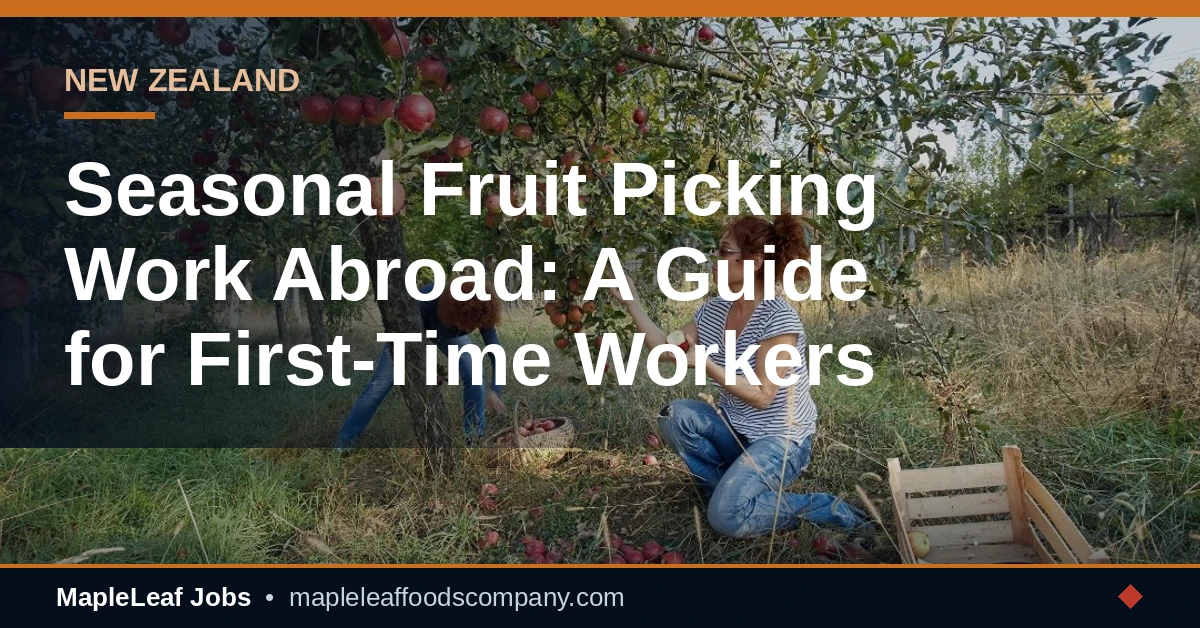
A fruit picker gathers ripe fruit from trees, vines or bushes and places it carefully into picking bags, buckets, crates or bins without bruising it. In orchards, pickers often work from ladders or from raised platforms that move slowly along the rows. In berry fields, workers pick while standing or walking between low rows. Some workers sort fruit after picking, removing damaged pieces and packing the best fruit into boxes for transport. Others load crates onto trailers or help move full bins from the field to the packing shed. Speed matters, but quality matters just as much, because damaged fruit cannot be sold fresh.
Where the Work Happens and When the Season Runs
Harvest seasons follow the fruit, so the work moves through the year. In New Zealand, apple and kiwifruit picking runs through the autumn months, with cherries and summer fruit earlier in the year. New Zealand is a well-known destination for seasonal horticulture work, and our New Zealand seasonal farm jobs guide explains the seasons there in more detail. In Canada, fruit picking runs through the summer and early autumn, with apples, cherries and berries among the common crops, and our Canada farm worker guide covers the roles there. In other regions, citrus and grape harvests fall at different times again. Because seasons are short, employers hire in large groups just before harvest begins, and the work ends when the crop is finished.
A Typical Day on the Orchard
A picking day usually starts early, often before sunrise, when the fruit is cool and firm. Workers meet at a central point, receive their instructions for the day, and walk or are driven to the block that is ready to pick. The supervisor explains which rows to work, how full each bag or crate should be, and where to leave full bins. Picking continues through the morning, with short breaks for water and rest. In hot weather, workers drink water regularly and wear hats and sunscreen. The afternoon continues in the same way until the day's target is reached or the light fades. After work, pickers return to their accommodation, shower, eat and rest. Days can be long during peak harvest, and rest days depend on the weather and the ripeness of the fruit. Rain can stop picking, and a very hot day may shorten the hours.
Skills, Fitness and Living Arrangements
Fruit picking suits workers who are fit, patient and careful with their hands. You will be on your feet for most of the day, climbing ladders, reaching, bending and carrying bags of fruit, so stamina and balance matter. You also need to follow instructions exactly, because each variety is picked in a particular way. Teamwork matters too, since a whole row is picked together and everyone keeps the same pace. Accommodation for seasonal pickers is often provided near the farm, in shared houses, cabins or worker lodgings, and the employer will explain the arrangement before you travel. Ask what is included, how many workers share a room, whether meals are provided, and how workers travel to the orchard each day. See the latest guidance under jobs, with more reading in articles.
How Workers Are Hired for Harvest Work
Hiring for harvest work usually starts with the farm or a licensed labour contractor advertising the number of pickers needed and the dates of the season. Workers apply with a short resume describing any farm, outdoor or physical work they have done, even if it was on a family farm or in a garden. Previous picking experience helps, but many farms train first-time pickers on arrival, so a lack of experience does not always rule you out. If you are shortlisted, the employer or contractor may interview you by phone or video call and ask about your fitness, your availability for the full season and whether you can travel on the dates given. When a worker is picked, the employer normally sends a job offer, which then supports a work permit or visa application. Wait until your permit is approved before you travel, and keep your current job until you have written confirmation. When you are ready, begin through apply.
Papers to Have Ready Before You Apply
Harvest hiring moves fast, so get your papers ready before the season starts. Check that your passport stays valid well beyond your planned travel dates, and keep photocopies of your identity papers together. Prepare a short, honest resume that lists any physical work, farm work or outdoor work you have done, with dates and a brief description of your duties. Hold on to copies of any training certificates, such as first aid or health and safety training. Before a visa is issued, you may need a medical check or police clearance, and our documents checklist lists which papers most applicants should gather. You may also need proof that you can support yourself while you travel, so check the official requirements for the country you are going to. Hand over originals only when an official channel asks for them in writing.
Scam Protection
Never share full passport details, a passport copy, bank details, passwords or one-time codes (OTPs) with anyone unverified. Verify the employer and any agent's licence through official channels first. Never pay a fee just because someone promises a guaranteed job or visa. Never send money to a personal bank account. Nobody can sell you a work permit, a job offer or a visa, and nobody can promise you a guaranteed outcome. Anyone who claims they can is almost certainly running a scam. Check the employer's name, website and contact details, and ask for the offer in writing with clear terms. For help checking an agent, read how to check an agent's licence by country and how to spot fake job offer letters.
Frequently asked questions
Do I need experience to get fruit picking work abroad?
Not always. Many orchards train first-time pickers on arrival and value fitness, reliability and a willingness to learn. Experience with farm work, gardening or other outdoor physical work helps your application, but it is not always required.
How long does a fruit picking season last?
It depends on the fruit and the country. A single crop harvest may last a few weeks, while a full season across several crops can run for several months.
Is accommodation provided for seasonal fruit pickers?
Often yes, especially on larger farms, but the arrangement varies. Some employers provide shared housing near the orchard, while others expect workers to arrange their own. Ask what is included and what workers pay before you travel.
Can I move to another farm after one harvest ends?
Sometimes, but each new farm is a separate arrangement, and you may need a new offer or permission depending on the country and your visa. Check the rules for your visa before you change employers or locations.
How can I tell if a fruit picking job offer is real?
Look the employer up online for a real website, address and contact details, and walk away if anyone asks for a fee, sensitive documents or a same-day decision.
Disclaimer
No job, sponsorship or visa is promised. Final decisions rest with employers and immigration authorities. Rules vary by job, employer and programme and change over time. Pay is to be confirmed with the employer during recruitment. Fees and other costs vary — check official sources such as the relevant embassy and the employer before applying. This guide is general information only, not legal or immigration advice.
Apply for jobs abroad
Ready to apply? Browse current jobs and apply with your documents ready.