Canada Farm Worker and Fruit Picker Jobs: How to Apply
Canada Farm Worker and Fruit Picker Jobs: How to Apply
By MapleLeaf Foods Company | Published 9 November 2026
Published 9 November 2026
Canada grows a large share of its fruit and vegetables with the help of foreign farm workers. Every year, orchards in British Columbia and Ontario, berry farms, vegetable farms and vineyards need pickers, packers and general farm workers. For workers from Pakistan, India, Bangladesh, Nepal and South Africa, these jobs are often the first step into Canada. This guide explains what the work involves, which visa routes apply, and how to apply without falling for a scam.
MapleLeaf Jobs is an independent international jobs and visa guidance service. It is not affiliated with Maple Leaf Foods, the food company. This guide is general information only, not legal or immigration advice.
What Farm Worker and Fruit Picker Jobs Involve
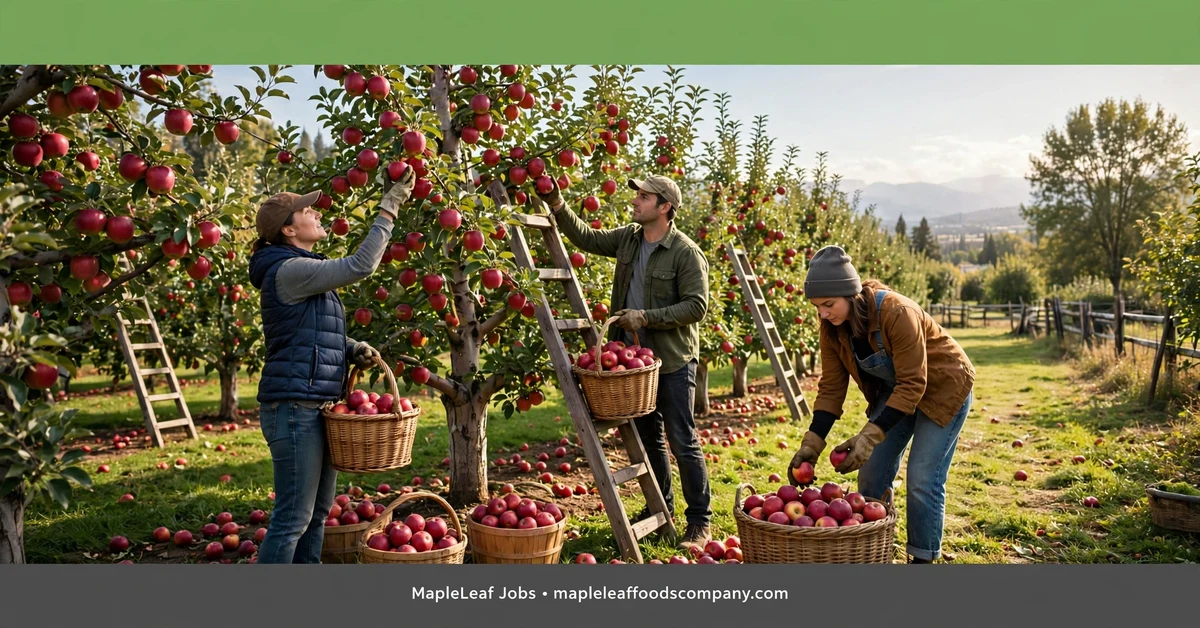
A fruit picker harvests fruit and vegetables by hand: picking apples, cherries, berries, grapes or vegetables, placing them carefully in containers, and sorting out damaged produce. The work is outdoors, in sun, rain and sometimes cold mornings, and it is paid by the hour or, in some cases, by the amount picked. Speed and care both matter, because bruised fruit cannot be sold.
A general farm worker does a wider range of tasks: planting and weeding, watering and feeding crops, caring for livestock, operating simple farm machinery, maintaining fences and buildings, and helping with sorting and packing. Greenhouse workers grow vegetables and plants indoors, year-round, in a warm and humid environment. Packing workers sort, grade and pack produce for transport.
Most fruit picking jobs are seasonal, tied to the harvest. Cherry picking in British Columbia runs in summer, apple picking in Ontario runs in late summer and autumn, and berry seasons are short and intense. Some farm jobs, especially in greenhouses, mushroom production and livestock, run all year. Seasonal work usually lasts a few months; year-round work can last much longer and may support a longer work permit.
The work is physical. Expect long days, early starts, standing, bending and lifting, and working in all weather. Housing is sometimes provided by the employer, sometimes not. Always ask for housing details in writing before you accept an offer, including whether there is a charge for it. Pay for farm and fruit picking roles is to be confirmed with the employer during recruitment.
Which Visa Routes Apply to Farm Workers
The main route for most foreign farm workers is the Temporary Foreign Worker Program (TFWP), usually with a Labour Market Impact Assessment (LMIA). Under the agricultural stream, a Canadian employer who cannot find local workers applies for an LMIA. If it is positive, the worker can apply for an employer-specific work permit. The employer applies for the LMIA and pays for it. Read LMIA explained before you deal with any employer or agent.
The Seasonal Agricultural Worker Program (SAWP) is a separate bilateral programme between Canada and participating countries, including Mexico and several Caribbean nations. It covers seasonal farm work, typically up to eight months. Workers from Pakistan, India, Bangladesh, Nepal or South Africa are not part of SAWP, and should not pay anyone who claims to enrol them in it. Your route is the TFWP agricultural stream.
For permanent residence, farm work can help, but it is not automatic. The main routes now are the Rural Community Immigration Pilot (RCIP), the Atlantic Immigration Program (AIP) and Provincial Nominee Programs (PNPs). The RCIP covers 14 rural communities, several in agricultural areas. The AIP covers Atlantic Canada. Saskatchewan's Agriculture Talent Pathway is the only dedicated agriculture immigration stream currently operating. The Agri-Food Pilot, which once offered a dedicated route for experienced agri-food workers, ended on 14 May 2025 and no longer accepts new applications. Read the Agri-Food Pilot guide, the RCIP guide and the Atlantic Immigration Program guide to compare them.
Documents and Requirements
Most farm worker roles do not need a degree or formal qualification. Employers usually look for physical fitness, reliability, a willingness to work outdoors in all weather, and basic English or French so you can follow safety instructions. Previous farm, factory or outdoor work is a strong advantage. A driving licence can help, especially on larger farms, but it is not usually required for a picking role.
Prepare the documents in the documents checklist: a valid passport, a simple CV in English listing your real farm or manual work with dates and duties, work references if you have them, and any certificates such as food safety training or a driving licence. A medical examination may be required for your work permit, depending on your country of residence and the job. A criminal record check may also be requested.
Your work permit application will need the job offer and the LMIA confirmation number from your employer. Keep copies of everything you submit. Once you are working in Canada, keep your contracts, pay slips and employer letters. That record of Canadian work experience is what can later support a permanent residence application.
How to Apply Step by Step
First, read the Canada jobs apply guide and prepare your CV and documents. Keep your CV honest and simple: real experience, real dates, real duties.
Second, search for jobs on Job Bank Canada, the official Canadian job board, and on provincial job portals. Look for employers who state clearly that they hire through the Temporary Foreign Worker Program. Fruit picking jobs are advertised most heavily before each harvest season, so timing matters. Applying months before the season is usually better than applying after it has started.
Third, expect an interview. A genuine employer or their authorised representative will speak to you, ask about your experience and fitness, and explain the job, the hours, the housing and the pay. If there is no interview at all and you are simply asked to pay a fee, stop.
Fourth, once you have a genuine offer and a positive LMIA, apply for your work permit through IRCC. Apply early, because processing takes time and harvest seasons do not wait. Check the current processing times on the IRCC website.
Fifth, prepare for arrival. Bring suitable work clothes, including waterproofs and sturdy boots, and enough money for your first weeks. Confirm your housing and transport arrangements before you travel, and keep the employer's contact details with you.
Common Mistakes and Realistic Expectations
The biggest mistake is believing a post that promises a farm job with no experience, no interview, free flights, free housing and a visa in days. Real farm recruitment takes time, and real employers check who they hire.
Another mistake is arriving unprepared for the work. Fruit picking is hard physical labour. If you have never done manual outdoor work, be honest with yourself about whether you can do it for long days in difficult weather. Workers who leave after a few days because the work was not what they expected lose money and harm their chances of future sponsorship.
A third mistake is not keeping records. Without contracts, pay slips and employer letters, it is much harder to prove your Canadian experience later for permanent residence.
Finally, do not assume seasonal work automatically leads to permanent residence. It can be a step towards it, but only if you build a longer-term plan — a year-round role, a qualifying programme such as the RCIP, AIP or a PNP, language ability and the other requirements. Plan before you travel.
Scam Protection
Never share full passport details, a passport copy, bank details, passwords or one-time codes (OTPs) with anyone unverified. Verify the employer and any agent's licence through official channels first. Never pay a fee just because someone promises a guaranteed job or visa. Never send money to a personal bank account. A genuine Canadian farm employer does not charge you for a job offer or for an LMIA, and no one can enrol you in SAWP if your country is not part of it. Farm jobs are heavily used in scams because they sound simple; a message offering a guaranteed farm job with no interview and an urgent payment is almost certainly a scam. For help checking an agent, read how to check an agent's licence by country and how to spot fake job offer letters.
Frequently Asked Questions
Do I need experience to get a Canada farm worker or fruit picker job?
Many entry-level picking and farm labour roles do not require formal qualifications, but previous farm, factory or outdoor work is a strong advantage. Employers value physical fitness, reliability and a willingness to work outdoors in all weather.
How long do fruit picking jobs in Canada last?
Most are seasonal, lasting a few months around the harvest. Cherry, berry and apple seasons are short. Greenhouse, mushroom and livestock work is more likely to run year-round.
Can workers from Pakistan, India or Bangladesh use SAWP?
No. The Seasonal Agricultural Worker Program is limited to Mexico and participating Caribbean countries. Workers from South Asia and Africa should use the Temporary Foreign Worker Program agricultural stream, which needs an LMIA-based job offer.
Does farm work in Canada lead to permanent residence?
It can help, but it is not automatic. You need Canadian work experience, a qualifying job offer, language ability and a programme such as the RCIP, AIP or a PNP. The Agri-Food Pilot, which once offered a dedicated route, closed on 14 May 2025.
Where should I look for genuine Canada farm jobs?
Use Job Bank Canada and provincial job portals. Look for employers who state they hire through the Temporary Foreign Worker Program, and expect an interview before any offer is made.
Disclaimer
No job, sponsorship or visa is guaranteed. Final decisions rest with employers and immigration authorities. Rules vary by job, employer and programme and change over time. Check official government sources before applying. You can browse current guidance on jobs, read more in articles, or start an application through apply when you are ready.
Apply Now
Apply Now: If you decide to apply through this site, use the Apply Now option on the Jobs page and follow the steps shown there. Do not send passport copies, bank details, passwords or payments by email or message to an unverified person. Apply only through the official route shown on this site, and check the details on the application page before you submit anything.