Warehouse Worker Jobs Abroad for Malian Workers
Warehouse worker jobs abroad for Malian workers: roles, skills, hiring steps, documents and scam warnings in one clear guide.
Mali · Working Abroad · Jobs & Visa Guidance
Malian workers can find warehouse jobs abroad in several destination countries. The work is about moving goods through a warehouse or distribution centre: receiving deliveries, storing stock, picking orders, packing them and preparing them for dispatch. Most roles do not require a university degree, and employers usually look for dependable people who are physically fit, careful with detail and ready for shift work. French is widely spoken in Mali, which is a clear advantage in French-speaking workplaces, while some basic English helps where labels and safety notices are written in English. Pay for any role is to be confirmed with the employer during recruitment.
MapleLeaf Jobs is an independent international jobs and visa guidance service. It is not affiliated with Maple Leaf Foods, the food company.
What Warehouse Worker Jobs Abroad Involve
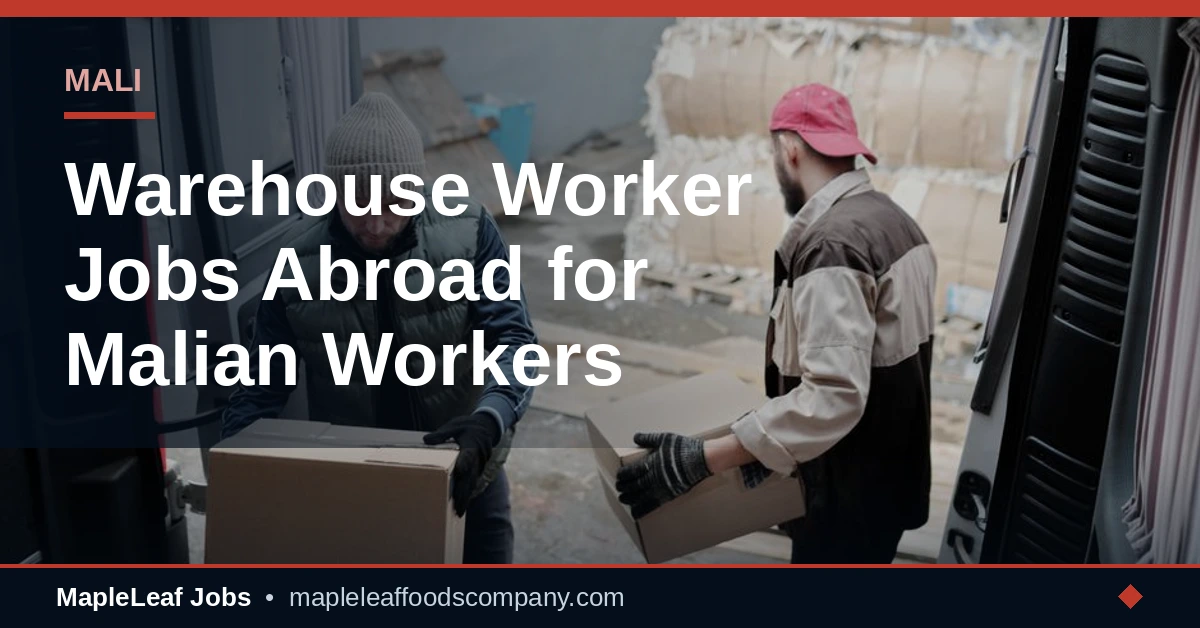
Each warehouse day follows a familiar pattern. Deliveries are unloaded, counted and checked against the delivery note, with damaged or missing items reported straight away. Stock is placed in its assigned location and recorded, so that later it can be found without wasting time. Orders are picked item by item, with quantities and labels double-checked, then packed carefully and moved to dispatch. Workers also take part in stock counts and in keeping storage areas and walkways clean and clear.
Online shopping and retail warehouses work at a fast pace, and small errors can cause real trouble, from delayed deliveries to returned parcels. That is why careful, methodical workers are prized. Driving a pallet jack or forklift is allowed only after the employer has provided training and authorisation, and chilled goods mean working in cold rooms with the clothing supplied. Experience from markets, shops, transport depots or storage work in Mali translates well, because the same habits apply: count carefully, label correctly and keep things tidy.
Countries and Employers That Hire Malian Warehouse Workers
French-speaking destinations are a natural fit for Malian warehouse workers, since French language skills are a clear advantage there, and Gulf countries such as Saudi Arabia, the United Arab Emirates, Qatar and Kuwait also hire warehouse staff widely. Their warehouses, distribution centres and fulfilment sites handle a steady flow of imported goods, retail stock and online orders. Canada is another destination where warehouses and logistics centres hire foreign workers, although the process there usually takes longer. Some employers hire directly and others use licensed recruitment agencies, and the employers themselves range from large companies with formal training to smaller local firms.
Before applying, weigh the language of the workplace carefully, because instructions, briefings and daily teamwork will be in that language. Workers from Bamako and other trading towns often have useful experience with busy markets, transport and storage, and this should be set out clearly in an application. Before accepting a role, ask about the warehouse location, the goods handled, the shift pattern and staff transport. Guidance is available on jobs, with more background in articles. What those destinations usually involve is explained in our guides to warehouse jobs in Canada and warehouse jobs in Qatar.
Skills, Fitness and Safety at Work
A good warehouse worker is methodical. Checking labels, counting quantities and putting stock exactly where it belongs may sound simple, but these habits keep the whole operation running. Teamwork is equally important, since one person's delay in receiving or picking slows the next stage. Reading and counting skills are used all day, and experience in stock control, packing, loading or operating warehouse equipment should be described in the application, with the goods handled and the type of site.
The work is demanding on the body. Shifts are spent standing, walking, bending and lifting, so fitness matters, as does the safe lifting technique the employer will teach. Safety shoes and protective equipment must be used as instructed, marked walkways must be followed, and hazards must be reported to a supervisor. Only trained and authorised staff may operate machinery. In hot conditions, follow the employer's guidance on rest breaks and drinking water. Any task that feels unsafe should be raised immediately.
How the Hiring Process Usually Works for Malian Workers
Hiring normally opens with a vacancy advertised by the employer or a licensed agency. Applicants whose experience and availability suit the posting are shortlisted, then interviewed by video or telephone. Some are asked for references or a short practical test before a decision is made. The chosen candidate may receive a job offer, which is the start of the visa or work permit process rather than a visa itself. Do not travel on an offer letter alone: the employer usually must finish steps on their side first, and this can take weeks.
Before accepting, check the employer and the agency's licence through official channels, and confirm the requirements with your country's labour or foreign-employment authority and the destination country's embassy. Ask for the contract in writing and read the job title, hours, rest days and notice period with care before signing. Anything unclear should be explained by the employer in writing. When the time comes, start through apply. Before relying on any offer, run the checks in our guide on how to verify a job offer letter.
Documents to Prepare Before You Apply
Begin with a short, truthful resume. Record your jobs in order, with the employer, dates and duties, and highlight any warehouse, market, transport or storage experience. Your photo, date of birth, marital status and religion should be left out unless the employer asks for them. Gather reference letters from previous employers and copies of training certificates, including any forklift or safety training completed. Scan the papers clearly and store the originals safely.
Next, prepare your identity and travel documents. Make sure your passport is valid for a good period ahead, and keep your national identity card, education certificates and employment records together. Some destinations require a police clearance certificate or a medical check during the visa process, so find out early whether yours does and allow time to obtain it through the proper official channel. Our documents checklist sets out the papers most applicants usually need. Keep copies of everything you submit, including the offer and the contract.
Scam Protection
Full passport details, passport copies, identity card details, bank details, passwords and one-time codes should never be shared with anyone unverified. Check the employer and the agency's licence through official channels before engaging with them, and deal only with properly licensed agencies. Be suspicious of anyone asking for money in exchange for a promised job or visa, since nobody can sell a work permit, a job offer or a visa, and nobody can promise a guaranteed outcome. Never pay into a personal bank account or an individual's mobile wallet. A person who claims they can guarantee your result is almost certainly running a scam. Help with checking offers is in how to spot fake job offer letters and what to do if you receive a fake job offer letter.
Frequently asked questions
Can I work in a warehouse abroad without experience?
Yes, in many cases. Employers train some new starters from scratch, while others ask for warehouse, factory, market or logistics experience. Reliability, fitness and a willingness to learn matter, so describe any related work clearly in your application.
Can Malian workers apply for warehouse jobs in French-speaking countries?
Yes, and French language skills are a real advantage there. Read each posting to see who may apply, and ask whether the employer or agency will support a visa application before you assume anything.
Can I travel as soon as I receive a job offer?
No. An offer is just the beginning, and a visa or work permit is usually still needed, with the employer finishing steps on their side first. Check what is required with the destination country's embassy and your country's labour or foreign-employment authority before planning travel.
Do warehouse workers abroad work nights and weekends?
Shift work is the norm in many warehouses. Evening, night and weekend cover keeps goods moving, so expect these hours in most roles. Ask the employer about start times, rest breaks and days off before accepting.
How do I know if a warehouse job offer is real?
Start with the employer's website, address and contact details, confirm the agency holds a proper licence, and be wary of fee demands, requests for sensitive documents or pressure to accept at once without an interview.
Disclaimer
No job, sponsorship or visa is promised. Final decisions rest with employers and immigration authorities. Rules vary by job, employer and programme and change over time. Pay is to be confirmed with the employer during recruitment. Fees and other costs vary — check official sources such as the relevant embassy and the employer before applying. This guide is general information only, not legal or immigration advice.
Apply for jobs abroad
Ready to apply? Browse current jobs and apply with your documents ready.