Fruit Picker Jobs in Australia for Foreign Workers
Fruit picker jobs in Australia for foreign workers: harvest regions, picking work, visa options, pay and accommodation, and how to avoid fake offers.
Australia · Working Abroad · Jobs & Visa Guidance
Australia is one of the world's largest fruit producers, and its harvests stretch across a vast country, from the tropical north to the cooler south. Mangoes, bananas, citrus, grapes, berries, apples and stone fruit all ripen at different times and in different states, so orchards and farms need pickers for much of the year. For foreign workers, fruit picking in Australia is a well-known entry point: the work is physical, outdoors and seasonal, and employers regularly hire overseas workers when local labour is short. This guide explains the work, the regions and seasons, the visa options, and how to find a genuine job without falling for a false offer. Pay for any role is to be confirmed with the employer during recruitment.
MapleLeaf Jobs is an independent international jobs and visa guidance service. It is not affiliated with Maple Leaf Foods, the food company.
What the Work Looks Like Day to Day
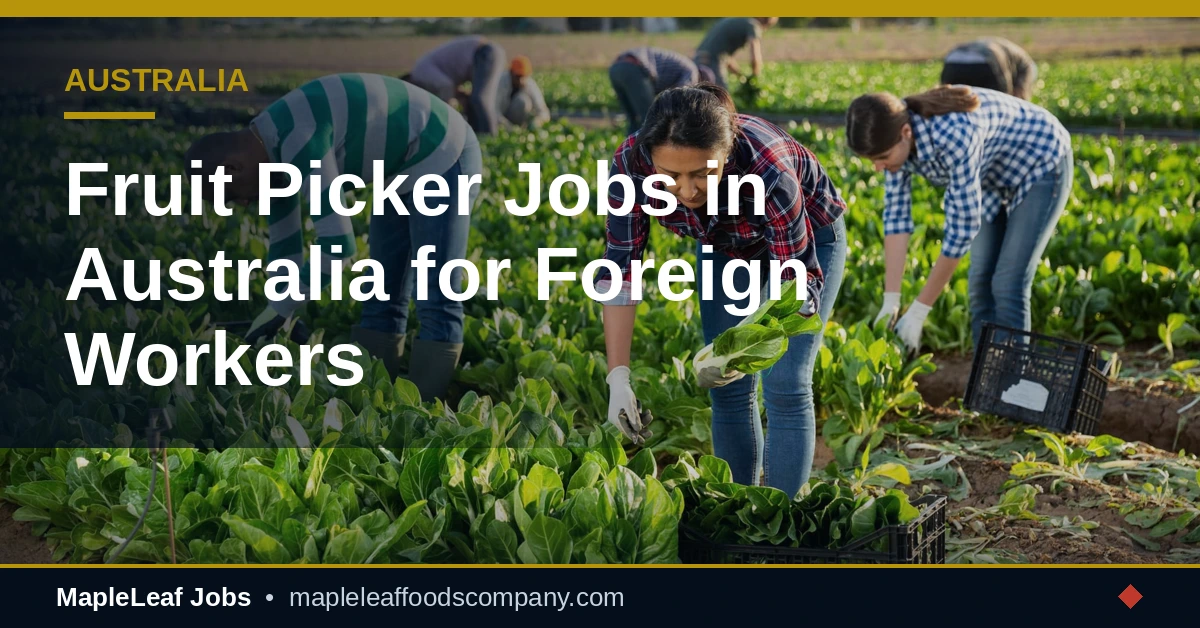
A fruit picker in Australia works in orchards and fields, picking ripe fruit by hand and placing it into buckets, bins or bags without damaging it. The day often starts early, before the heat builds, and pickers work in teams moving through rows of trees or vines. Some crops need ladders, and some need picking bags worn across the body. Speed and care both matter: fruit picked too early or too late loses value, and bruised fruit cannot be sold at full quality. Beyond picking, workers may be asked to help with pruning, thinning, packing, sorting and loading. The work is repetitive and physical, with long hours during the peak of a harvest and shorter hours when a crop is finishing. Weather is a constant factor: heat, rain and dust are all part of the job, and employers should provide shade, water and rest breaks. Workers who are fit, reliable and comfortable outdoors tend to do well, and those who return for a second season often find the work easier once they know the pace.
Harvest Regions and Seasons Across Australia
Because Australia is so large, its harvest calendar runs almost all year. Mangoes ripen in the Northern Territory and Queensland in the warmer months, and bananas are picked in Queensland for much of the year. Citrus comes from the Riverland in South Australia and the Riverina in New South Wales, while grapes are picked in Victoria, South Australia and New South Wales. Berries grow in Tasmania and Victoria, and apples and stone fruit ripen in Victoria, New South Wales and Tasmania in the warmer months. A worker who finishes one harvest can sometimes move to another state for the next crop, but that depends on the visa conditions and on finding a new employer in time. Before you accept a job, ask the employer which crop you will pick, where the farm is, and how long the season is expected to last.
Visa Options for Foreign Fruit Pickers
Foreign workers need the right visa before they can work in Australia, and the options depend on nationality, age and circumstances. Young people from certain countries can use a working holiday visa, which allows travel and work including farm and harvest jobs, and some working holiday makers extend their stay by completing specified regional work. Another route is a sponsored work visa, where an employer sponsors a worker for a specific role, and the rules for that route are set out in our guide to the Australia 482 visa and labour market testing. There are also seasonal worker programmes for workers from Pacific Island countries and Timor-Leste, arranged through approved employers. Each route has different conditions on how long the worker can stay, whether they can change employer, and what work they can do. Check the official immigration website for the current rules before applying, and do not rely on an agent's summary alone.
Pay, Hours, Accommodation and Living Costs
Fruit picking pay is often arranged by the amount picked, by the hour, or by a mix of both, and the arrangement should be set out in writing before work begins. Australian law sets a minimum wage, and employers must pay at least that level, whatever the arrangement. Ask how the pay is calculated, how often it is paid, and what deductions, if any, will be made, and keep your own record of the hours you work and the amount you pick. Hours vary with the season and the weather, and long days are common at the peak of a harvest. Accommodation is often in rural areas, and some employers provide it or help workers find it, while others expect workers to arrange their own housing. Ask where you will live, what it costs, and how far it is from the farm.
Finding Genuine Work and Staying Safe
Genuine fruit picking jobs are advertised by farms, labour hire companies, industry bodies and government harvest services. Be careful with offers that come only through social media messages or forwarded images, with no farm name, no location and no written agreement. A genuine employer can tell you the name of the business, where the farm is, which crop you will pick, and how you will be paid. They will not ask you to pay for the job itself or to send money to a personal account. If a recruiter asks for payment before you have a visa or a written offer, treat it as a warning sign. Check the employer online, look for a real business website and address, and ask for the employment agreement in writing before you travel. Workers should also know their rights: the employer must provide a safe workplace, clean water, shade and rest breaks, and must not take your passport from you. Our documents checklist lists the papers most applicants need. General guidance is available on jobs and in articles, and when you are ready to proceed you can start through apply.
Scam Protection
Never share full passport details, a passport copy, bank details, passwords or one-time codes (OTPs) with anyone unverified. Verify the employer and any agent's licence through official channels first. Never pay a fee just because someone promises a guaranteed job or visa. Never send money to a personal bank account. Nobody can sell you a work permit, a job offer or a visa, and nobody can promise you a guaranteed outcome. Anyone who claims they can is almost certainly running a scam. Check the employer's name, website and contact details, and ask for the offer in writing with clear terms. For help checking an offer, read how to verify a job offer letter is real and how to spot fake job offer letters.
Frequently asked questions
Do I need experience to pick fruit in Australia?
Not usually. Most employers train new pickers on the job, and the main requirements are physical fitness, reliability and a willingness to work outdoors in all weather. Experience with farm work helps, but it is not always required.
Which visa do I need for fruit picking in Australia?
It depends on your nationality, age and situation. Options include a working holiday visa for young people from certain countries, a sponsored work visa where an employer sponsors you, and seasonal worker programmes for workers from Pacific Island countries. Check the official immigration website for the route that fits you.
When is the fruit picking season in Australia?
It runs for much of the year, because different crops ripen in different states at different times. Mangoes ripen in the north in the warmer months, citrus in the Riverland and Riverina, and apples and stone fruit in Victoria, New South Wales and Tasmania. Ask the employer how long the season lasts.
Is accommodation provided for fruit pickers in Australia?
It depends on the employer. Some provide accommodation or help workers find it, while others expect workers to arrange their own housing. Ask where you will live, what it costs, and how far it is from the farm before you accept a job.
How is fruit picking pay arranged in Australia?
Pay may be by the amount picked, by the hour, or by a mix of both. The employer must pay at least the minimum wage set by Australian law, and the arrangement should be in writing before you start. Keep your own record of hours worked and amounts picked.
Disclaimer
No job, sponsorship or visa is promised. Final decisions rest with employers and immigration authorities. Rules vary by job, employer and programme and change over time. Pay is to be confirmed with the employer during recruitment. Fees and other costs vary — check official sources such as the relevant embassy and the employer before applying. This guide is general information only, not legal or immigration advice.
Apply for jobs abroad
Ready to apply? Browse current jobs and apply with your documents ready.