Canada Agri-Food Pilot: Farm and Food Processing Work Routes
Canada Agri-Food Pilot: Farm and Food Processing Work Routes
By MapleLeaf Foods Company | Published 9 November 2026
Published 9 November 2026
If you are searching for the Canada Agri-Food Pilot in 2026, there is one fact you need first: the pilot ended on 14 May 2025 and no longer accepts new applications. Applications submitted before the deadline are still being processed, but no new applicant can use this pathway today.
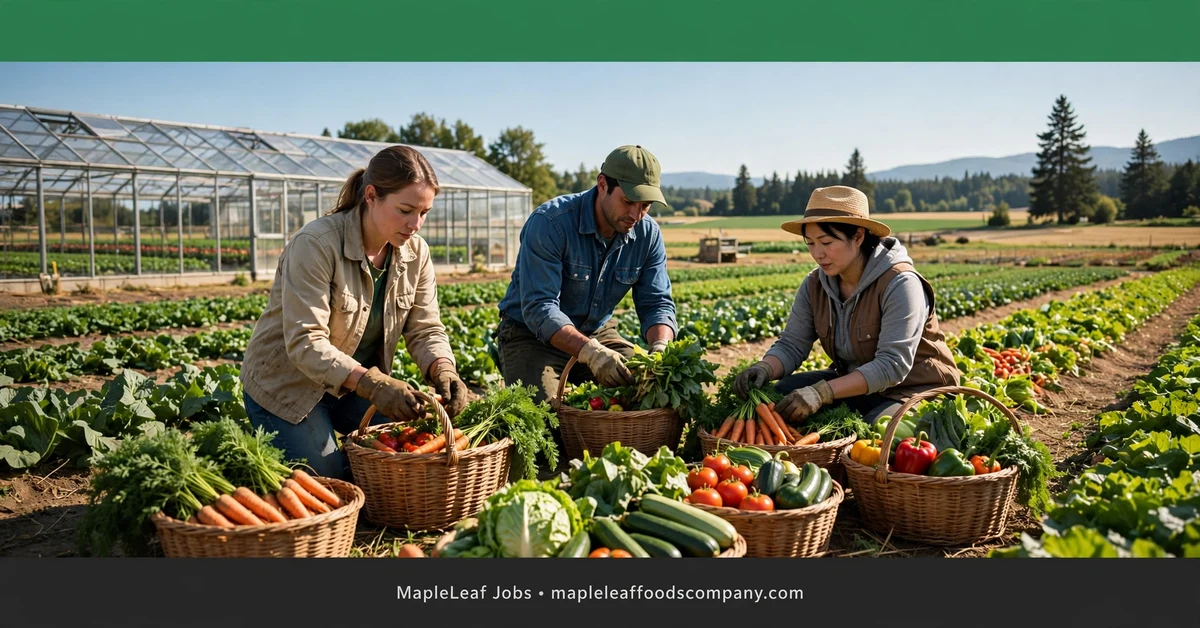
That does not mean farm and food processing work in Canada is closed. It means the route has changed. This guide explains what the Agri-Food Pilot was, which industries and occupations it covered, and — most importantly — which routes are actually open now for farm workers, harvest workers, greenhouse workers and food processing workers.
MapleLeaf Jobs is an independent international jobs and visa guidance service. It is not affiliated with Maple Leaf Foods, the food company. This guide is general information only, not legal or immigration advice.
What Was the Agri-Food Pilot?
The Agri-Food Pilot ran from 2020 to 2025 as a federal permanent residence pathway for experienced, non-seasonal workers in Canada's agri-food sector. It was designed for workers who were already in Canada on a temporary work permit and had built up Canadian experience in the sector.
The pilot covered specific industries: meat product manufacturing, greenhouse, nursery and floriculture production, mushroom production, and livestock raising. Eligible occupations included industrial butchers and meat cutters, food processing labourers, harvesting labourers, general farm workers and livestock workers.
To qualify, a worker generally needed at least one year of non-seasonal, full-time Canadian work experience in an eligible agri-food industry and occupation, gained through the Temporary Foreign Worker Program, plus a job offer from an eligible employer, language ability and education. The pilot had an annual intake cap, and its final cap for 2025 was 1,010 applications. When the pilot reached the end of its five-year lifespan on 14 May 2025, it closed to new applications.
The pilot helped thousands of agri-food workers and their families become permanent residents. Its closure was a scheduled end, not a suspension, and as of 2026 IRCC has not published a confirmed reopening date or a named replacement programme. Anyone who tells you they can still submit a new Agri-Food Pilot application for you is not telling the truth.
Farm and Food Processing Work Routes Open Now
The main way foreign farm and food processing workers come to Canada today is the Temporary Foreign Worker Program (TFWP), usually with a Labour Market Impact Assessment (LMIA). Under the agricultural stream, a Canadian employer who cannot find local workers applies for an LMIA, and if it is positive, the worker can apply for an employer-specific work permit. Read LMIA explained to understand this process before you deal with any employer or agent.
The Seasonal Agricultural Worker Program (SAWP) is a separate bilateral programme between Canada and participating countries, including Mexico and several Caribbean nations. It covers seasonal farm work, typically up to eight months. Workers from countries that are not part of SAWP cannot use this programme, and should not pay anyone who claims to enrol them in it. If you are from Pakistan, India, Bangladesh, Nepal or South Africa, SAWP is not your route; the TFWP agricultural stream is the one to understand.
For permanent residence, the routes that now matter most for agri-food workers are the Rural Community Immigration Pilot (RCIP), the Atlantic Immigration Program (AIP) and Provincial Nominee Programs (PNPs). The RCIP covers 14 rural communities, several of them in agricultural regions, and needs a job offer from a designated employer plus a community recommendation. The AIP covers Atlantic Canada, where farming and food processing employers also hire. Some provinces run agriculture-focused PNP streams, and Saskatchewan's Agriculture Talent Pathway is the only dedicated agriculture immigration stream currently operating. Read the RCIP guide and the Atlantic Immigration Program guide to compare them.
The Express Entry agriculture and agri-food category was also retired in 2026, so do not plan around it. Butchers moved into the Express Entry trades category, while other agri-food workers now generally need a PNP, RCIP or AIP route for permanent residence.
What Farm and Food Processing Jobs Involve
General farm workers plant, tend and harvest crops, feed and care for livestock, maintain equipment and buildings, and help with sorting and packing. Harvesting labourers pick fruit and vegetables, often in orchards and fields in Ontario and British Columbia. Greenhouse workers grow vegetables, flowers and plants in controlled indoor environments, year-round. Mushroom production workers prepare growing rooms, harvest mushrooms and pack them. Meat processing workers, including industrial butchers and meat cutters, work in federally or provincially inspected plants, cutting, trimming and packing meat.
The work is physical, often outdoors in heat, cold or rain, and often involves early starts, weekend work and standing for long hours. Some jobs are seasonal, tied to planting and harvest; others, such as greenhouse, mushroom and meat processing work, run all year. Housing is sometimes offered by the employer, sometimes not — ask for the details in writing before you accept any offer. Pay for any of these roles is to be confirmed with the employer during recruitment.
Experience helps, but many entry-level farm roles do not need a degree. What employers usually want is physical fitness, reliability, a willingness to work outdoors and in all weather, basic English or French, and a clean record. For meat processing and butchery roles, previous cutting or processing experience is a real advantage.
How to Apply Safely
Start with the documents checklist and the Canada jobs apply guide. Prepare a simple, honest CV in English that lists your real farm or factory experience with dates, duties and employer names. Get your passport, any work references and your education documents ready. If you have a driving licence or a food safety certificate, include it.
Search for jobs on Job Bank Canada, the official Canadian job board, and on provincial job portals. Look for employers who state clearly that they hire through the Temporary Foreign Worker Program. A genuine employer will interview you, check your experience, and explain the LMIA and work permit steps. The employer applies for the LMIA and pays for it. It is illegal in Canada for an employer or recruiter to charge a foreign worker for an LMIA or a job offer.
Be careful with social media job posts. Farm work is one of the most common subjects of job scams, because the jobs sound simple and the demand sounds large. A post that promises a farm job with no interview, no experience needed, free flights and a visa in days is almost certainly a scam. Real recruitment takes time.
Once you are working in Canada, keep records of your employment: contracts, pay slips, hours worked and employer letters. That Canadian experience is what can later support a permanent residence application through a PNP, the RCIP or the AIP.
Scam Protection
Never share full passport details, a passport copy, bank details, passwords or one-time codes (OTPs) with anyone unverified. Verify the employer and any agent's licence through official channels first. Never pay a fee just because someone promises a guaranteed job or visa. Never send money to a personal bank account. Nobody can submit a new Agri-Food Pilot application for you in 2026, because the pilot is closed — anyone charging a fee to do so is running a scam. For help checking an agent, read how to check an agent's licence by country and how to spot fake job offer letters.
Frequently Asked Questions
Is the Canada Agri-Food Pilot open in 2026?
No. The Agri-Food Pilot ended on 14 May 2025 and stopped accepting new applications. IRCC continues to process applications submitted before the deadline, but no new applications can be made.
What is the best route for farm workers to Canada now?
For most foreign farm workers, the Temporary Foreign Worker Program with an LMIA under the agricultural stream is the main route to a work permit. For permanent residence, the RCIP, the Atlantic Immigration Program and provincial nominee streams, including Saskatchewan's Agriculture Talent Pathway, are the main options.
Can workers from Pakistan, India or Bangladesh use the Seasonal Agricultural Worker Program?
No. SAWP is a bilateral programme limited to Mexico and participating Caribbean countries. Workers from South Asia and Africa should look at the TFWP agricultural stream instead.
Do I need experience to get a farm worker job in Canada?
Many entry-level farm and harvesting roles do not require formal qualifications, but previous farm, factory or outdoor work is a strong advantage. Meat processing and butchery roles usually need relevant experience.
Will farm work in Canada lead to permanent residence?
It can, but it is not automatic. Canadian work experience, a job offer from an eligible employer, language ability and a qualifying immigration programme are all needed. Plan your route — RCIP, AIP or PNP — before you travel, and keep records of all your employment.
Disclaimer
No job, sponsorship or visa is guaranteed. Final decisions rest with employers and immigration authorities. Rules vary by job, employer and programme and change over time. Check official government sources before applying. You can browse current guidance on jobs, read more in articles, or start an application through apply when you are ready.
Apply Now
Apply Now: If you decide to apply through this site, use the Apply Now option on the Jobs page and follow the steps shown there. Do not send passport copies, bank details, passwords or payments by email or message to an unverified person. Apply only through the official route shown on this site, and check the details on the application page before you submit anything.