Factory Worker Jobs in Canada for Foreign Workers
Factory worker jobs in Canada for foreign workers: duties, shifts, skills, documents, hiring steps and scam warnings in one plain guide.
Canada · Working Abroad · Jobs & Visa Guidance
Across Canada, factories turn raw material into finished goods, and factory workers keep those lines moving. A typical day can mean loading ingredients or parts, watching a machine as it works, and checking each finished piece for faults. For a worker arriving from another country, plant work is often a realistic first step, because most employers ask first for careful hands, a steady rhythm and a dependable attitude. The setting is hands-on and noisy, the pace is set by the line, yet newcomers settle quickly because the tasks are clear and the team works together. Any pay figure is something to confirm directly with the employer during recruitment.
MapleLeaf Jobs is an independent international jobs and visa guidance service. It is not affiliated with Maple Leaf Foods, the food company.
What Factory Worker Jobs in Canada Involve
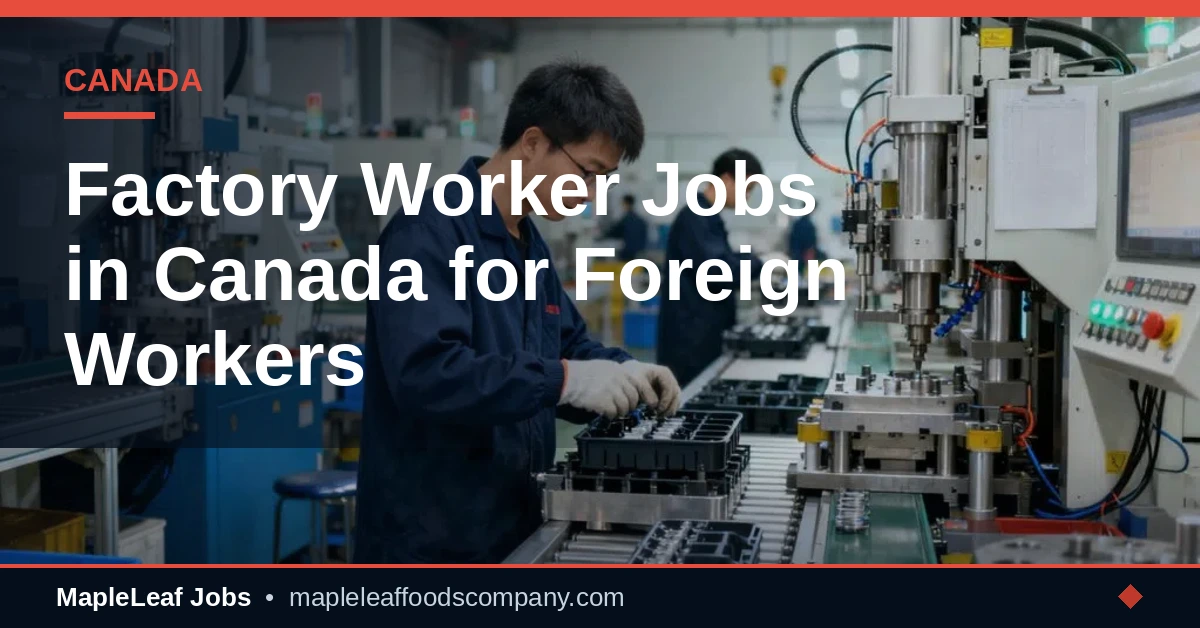
A factory shift usually follows the product from one end of the building to the other. At the start of the line, workers load raw material — flour, timber, sheet metal, plastic pellets or fresh produce — and feed it into the first machine. Further along, machine tenders watch gauges, listen for unusual sounds and clear small jams so the line keeps moving. Assemblers then fit the pieces together, by hand or with power tools, working from a diagram at the bench. After assembly comes inspection: checking measurements and looking for scratches, dents or missing parts. The last stage is packing — counting, weighing, wrapping and stacking cartons onto pallets. Between stages, someone records the units made and reports machine faults.
Types of Factories and Roles Hiring Foreign Workers
Canada's factory map is wide, and the kind of plant decides much of the routine. Food processing is one of the largest employers of newcomers: meat plants in Alberta, bakeries and dairy plants in Ontario, seafood plants on both coasts, and produce packing houses in the Okanagan and Niagara regions. Metal and plastics plants make parts for cars and appliances, while wood-product mills and furniture makers are common in Quebec and British Columbia. Each setting feels different: a bakery is warm, a seafood plant is cold and wet, and a metal shop is loud. Job titles follow the work: production associate, machine tender, assembler, packer, quality inspector and material handler. Plants sit in cities such as Toronto, Montreal and Calgary, but many are in smaller towns, so ask about the location and the journey to work before accepting. Current guidance is listed on jobs, with further reading in articles.
Skills, Fitness and Safety at Work
Supervisors in a Canadian plant notice a few things quickly. First is steadiness: the same motion, done the same way, hundreds of times, without quality slipping. Second is an eye for detail — a misprint on a label, a crack in a moulded part, a seal that has not closed. Third is speaking up: a strange noise, a spill or a guard left open should reach the supervisor before it becomes an accident. Reading and numbers matter too, because work orders and safety signs are written, and instructions may be given in English or, in Quebec, in French. Hands-on experience helps, so mention the products you handled and the machines you used when you apply.
Most shifts are spent on your feet, walking between stations and lifting boxes or trays. Training covers how to lift safely, where the emergency stops are, and which protective gear each task needs: safety shoes, gloves, ear protection, hair nets in food plants, or eye protection near cutting and grinding. If a task ever feels unsafe, stop and tell the supervisor rather than carrying on.
How the Hiring and Work Permit Process Usually Works
The path from application to a factory floor usually follows the same order. It begins with a vacancy posted by the employer, and workers apply with a resume and a short note about their experience. Shortlisted applicants are contacted for a phone or video interview about past plant work, shift availability and a start date. Some add a short skills check or ask for previous supervisors they can contact. If the interview goes well, the employer sends a written offer setting out the role, location, shift pattern and conditions. That offer matters, but it is not permission to work or travel: a separate work permit is still needed.
In many cases the employer must first obtain an LMIA — a Labour Market Impact Assessment — showing the role needs a foreign worker. That step is covered in more detail in our LMIA guide. Other roles may use a different route, depending on the province and the programme. Once the employer's side is ready, the worker applies for a work permit, and may be asked for biometrics or a medical. Immigration authorities then decide, and waiting periods differ, so leave room for a delay. Before you apply, see Canada jobs requirements for what employers usually expect.
Documents to Prepare Before You Apply
Putting your papers in order before you apply saves time. Start with the work history: a Canadian-style resume, usually one or two pages, listing each job with the employer's name, the dates, the kind of plant and the tasks you handled. Short bullet points about what you did — the machines you ran, the products you packed — tell an employer more than general claims. Keep it honest and leave out your photograph, date of birth and other personal details Canadian resumes do not carry. If past employers can give a written reference, collect those letters now, with any training certificates for machine operation, food handling or workplace safety. The documents checklist sets out the papers most applicants need.
Next comes identity and travel: a passport with plenty of validity left, plus school and employment records in one folder. Make clear scans of each paper and store the originals somewhere secure. A paper not in English or French may need a certified translation. Hand over originals only when an official channel asks for them. Once everything is ready, you can begin through apply.
Scam Protection
Never share full passport details, a passport copy, bank details, passwords or one-time codes (OTPs) with anyone unverified. Verify the employer and any agent's licence through official channels first. Never pay a fee just because someone promises a guaranteed job, LMIA or visa. Never send money to a personal bank account. Nobody can sell you a work permit, a job offer or a visa, and nobody can promise you a guaranteed outcome. Anyone who claims they can is almost certainly running a scam. For help checking an agent, read how to check an agent's licence by country and how to spot fake job offer letters.
Frequently asked questions
Do I need previous factory experience to work in Canada?
Not always. Some employers hire workers with no factory experience and provide training, while others prefer applicants who have worked in a factory, warehouse or production role before. Experience helps, but reliability, care and a willingness to learn are also valued.
Can I apply for factory jobs in Canada from outside Canada?
Yes, you can apply from outside Canada, but only to employers who are willing to hire foreign workers. Read each posting carefully, check who can apply, and ask the employer whether they will support a work permit application before you assume anything.
Does a job offer mean I can start work in Canada straight away?
No. A job offer is only the first step. You usually still need a work permit, and in many cases the employer needs an LMIA first. Do not travel to Canada for work until you have a work permit decision in writing from immigration authorities.
Do factory workers in Canada work nights and weekends?
Many factories operate in shifts, including evenings, nights and weekends, so these hours are common. The exact pattern depends on the employer and the role, so ask about shifts, start times and rest breaks before you accept a job.
How can I tell if a factory job offer from Canada is real?
Check the employer online, look for a real company website, address and contact details, and be cautious if you are asked to pay a fee, share sensitive documents, or accept quickly without an interview.
Disclaimer
No job, sponsorship or visa is promised. Final decisions rest with employers and immigration authorities. Rules vary by job, employer and programme and change over time. Pay is to be confirmed with the employer during recruitment. Fees and other costs vary — check official sources such as the relevant embassy and the employer before applying. This guide is general information only, not legal or immigration advice.
Apply for jobs abroad
Ready to apply? Browse current jobs and apply with your documents ready.