Tailor Jobs in Saudi Arabia for Foreign Workers
Tailor jobs in Saudi Arabia for foreign workers: stitching duties, garment types, tools, workshop life, skills, hiring steps and scam warnings in one guide.
Saudi Arabia · Working Abroad · Jobs & Visa Guidance
Tailoring is a skilled trade with steady demand in Saudi Arabia. Tailors make, alter and repair clothes for men, women and children, and foreign workers with good stitching skills find work in small tailoring shops, garment workshops, department stores and hotel uniform departments. Much of the work in the Kingdom centres on traditional dress, including the thobe, the abaya and the bisht, alongside western-style shirts, trousers and suits. A tailor who can cut cloth accurately, sew clean seams and finish garments neatly is valued everywhere, because customers return to a tailor whose work fits well and lasts. Your pay is something to agree with the employer when you are hired.
MapleLeaf Jobs is an independent international jobs and visa guidance service. It is not affiliated with Maple Leaf Foods, the food company.
What a Tailor's Daily Work Involves
A tailor's day begins with the garments waiting for attention. For new orders, the tailor takes the customer's measurements with a tape measure, noting chest, waist, shoulder, sleeve length and other measurements depending on the garment. The tailor then marks and cuts the cloth, following a pattern or the customer's chosen design, and sews the pieces together on a sewing machine, finishing edges, collars, cuffs and hems by hand where needed. For alterations, the tailor shortens trousers, takes in a waist, replaces a zip, repairs a torn seam or adjusts a garment so it fits better. Fittings are part of the job: the customer tries the garment on, the tailor pins the changes, and the garment is adjusted again. A busy tailor may handle several garments in a day, keeping each order labelled and finished by the promised date.
Garments Tailors Make Most Often in Saudi Arabia
The thobe is the most common garment a tailor in Saudi Arabia will make, and it comes in many styles. Some customers want a simple everyday thobe, others want a formal thobe with detailed collar work, embroidered cuffs or a particular fabric. The abaya is another major garment, and tailors who work on women's clothing need skill with lighter fabrics, neat hems and delicate finishing. The bisht, a formal cloak worn over the thobe, requires careful cutting and a steady hand, and only experienced tailors usually take on bisht work. Alongside traditional dress, tailors make and alter western-style clothes: shirts, trousers, jackets and suits for office workers, school uniforms for children, and work uniforms for hotels, hospitals and companies. A tailor who can work across several types of clothing has more chances of steady work.
Tools, Machines and Skills a Tailor Needs
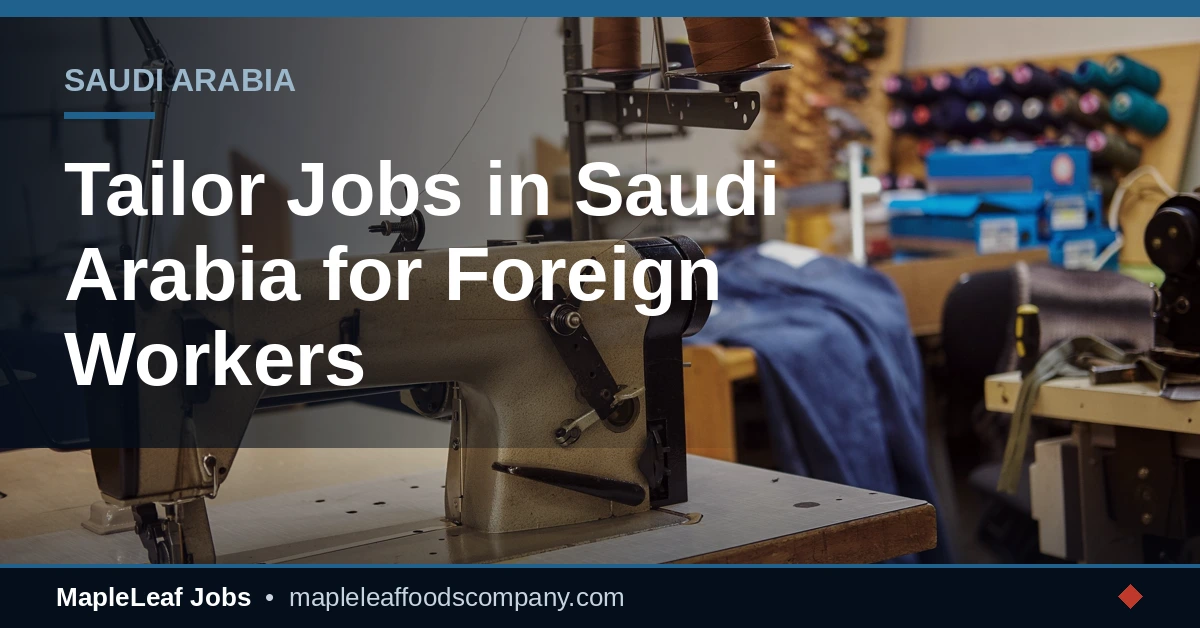
A tailor's main tools are a sewing machine, an overlock machine for finishing raw edges, scissors, a measuring tape, chalk, pins, needles, thread and an iron. Many shops use industrial sewing machines that sew faster and handle heavier fabrics than a home machine. A good tailor knows how to thread the machine, change needles, adjust tension for different fabrics and fix simple jams. Cutting is a skill of its own: a tailor must read a pattern, lay cloth flat without stretching it, and cut accurately, because a mistake in cutting wastes expensive fabric. Sewing skill shows in straight seams, even stitching, neat corners and tidy finishing on the inside of the garment as well as the outside.
Where Tailors Work and What Workshop Life Is Like
Most tailors in Saudi Arabia work in small tailoring shops in markets, shopping streets and malls, often with a small team of two to ten workers. The shop front takes measurements and receives customers, while the back room holds the machines, cutting tables and ironing boards. Some tailors work in larger garment workshops that supply uniforms or bulk orders to companies. Hotels, hospitals and large businesses sometimes employ tailors in-house to maintain uniforms for their staff. Working hours in tailoring shops are usually long, and shops are busiest before festivals and wedding seasons, when many customers order new clothes at once. The work is done sitting at a machine for long periods, so good posture, good light and regular short breaks matter. Look at jobs for current guidance and articles for more reading.
How Hiring and the Saudi Work Visa Usually Work
Hiring usually starts with the employer or shop owner advertising a vacancy and asking for proof of skill. A tailor is often asked to show photographs of finished garments, or to complete a short practical test, such as stitching a sample seam, cutting a simple garment or altering a piece of clothing. If you are shortlisted, expect a phone or video interview, where the employer explains the type of work, the hours and the accommodation. When the employer picks a worker, a job offer usually follows, and that offer supports your work permit and visa application. Our Saudi work visa process guide explains these steps in more detail. Travel only after the visa is approved, and keep your current job until the paperwork is confirmed in writing. Ready to begin? Start your application at apply.
Getting Your Papers Ready
A skilled tailor is hired fast, so prepare your papers first. Renew your passport early if it runs out soon, and store copies of your identity papers in one folder. Prepare a short, honest resume covering your tailoring jobs in order, naming each employer or shop, the dates, and the garments you made. Photographs of your finished work are valuable, so keep a small portfolio of clear photos showing thobes, abayas, suits or alterations you have completed. Gather any training certificates you hold, and ask former employers for a reference letter when you can. A visa may require a medical check or police clearance first, and our documents checklist sets out the papers most applicants should prepare. Originals stay with you unless an official channel requests them.
Scam Protection
Never share full passport details, a passport copy, bank details, passwords or one-time codes (OTPs) with anyone unverified. Verify the employer and any agent's licence through official channels first. Never pay a fee just because someone promises a guaranteed job or visa. Never send money to a personal bank account. Nobody can sell you a work permit, a job offer or a visa, and nobody can promise you a guaranteed outcome. Anyone who claims they can is almost certainly running a scam. Check the employer's name, website and contact details, and ask for the offer in writing with clear terms. For help checking an agent, read how to check an agent's licence by country and how to spot fake job offer letters.
Frequently asked questions
Is a tailoring certificate needed to work in Saudi Arabia?
Not always. Many employers judge a tailor by a practical test and by photographs of finished work. A certificate from a tailoring course or training institute strengthens your application, especially if you have little work experience.
What garments should a tailor in Saudi Arabia know how to make?
The thobe is the most important, followed by the abaya, the bisht and western-style shirts, trousers and suits. A tailor who can handle several types of garment has more chances of steady work.
Is there a practical test before a tailor is hired?
Often, yes. Employers may ask you to stitch a sample seam, cut a garment or complete an alteration so they can judge your skill. Prepare a small portfolio of photographs of your finished work to support your application.
Do tailors in Saudi Arabia work long hours?
Hours vary by shop, but tailoring shops are often busy and open for long hours, especially before festivals and wedding seasons. Ask about working hours, rest days and the busiest periods before you accept a role.
How do I know a tailor job offer is genuine?
Search for the shop or company online, confirm it has a real address and phone number, and be wary of any fee, document request or rushed acceptance.
Disclaimer
No job, sponsorship or visa is promised. Final decisions rest with employers and immigration authorities. Rules vary by job, employer and programme and change over time. Pay is to be confirmed with the employer during recruitment. Fees and other costs vary — check official sources such as the relevant embassy and the employer before applying. This guide is general information only, not legal or immigration advice.
Apply for jobs abroad
Ready to apply? Browse current jobs and apply with your documents ready.