Steel Fixer Jobs in Saudi Arabia for Foreign Workers
Steel fixer jobs in Saudi Arabia for foreign workers: reinforcement work on construction sites, skills and safety, recruitment, visa steps and scam warnings.
Saudi Arabia · Working Abroad · Jobs & Visa Guidance
Beneath the concrete of every tower, bridge and road in Saudi Arabia sits a frame of steel bars, bent and tied into shape by hand before the pour begins. The people who build that frame are steel fixers, also called reinforcement workers, and their work decides whether the finished structure holds its strength. This guide covers what the job involves, the abilities that count, the places fixers work, how hiring tends to unfold and the checks to make before accepting a post. For any steel fixer role, earnings are a matter to confirm with the employer while the job is being arranged.
MapleLeaf Jobs is an independent international jobs and visa guidance service. It is not affiliated with Maple Leaf Foods, the food company.
What a Steel Fixer Does on Site
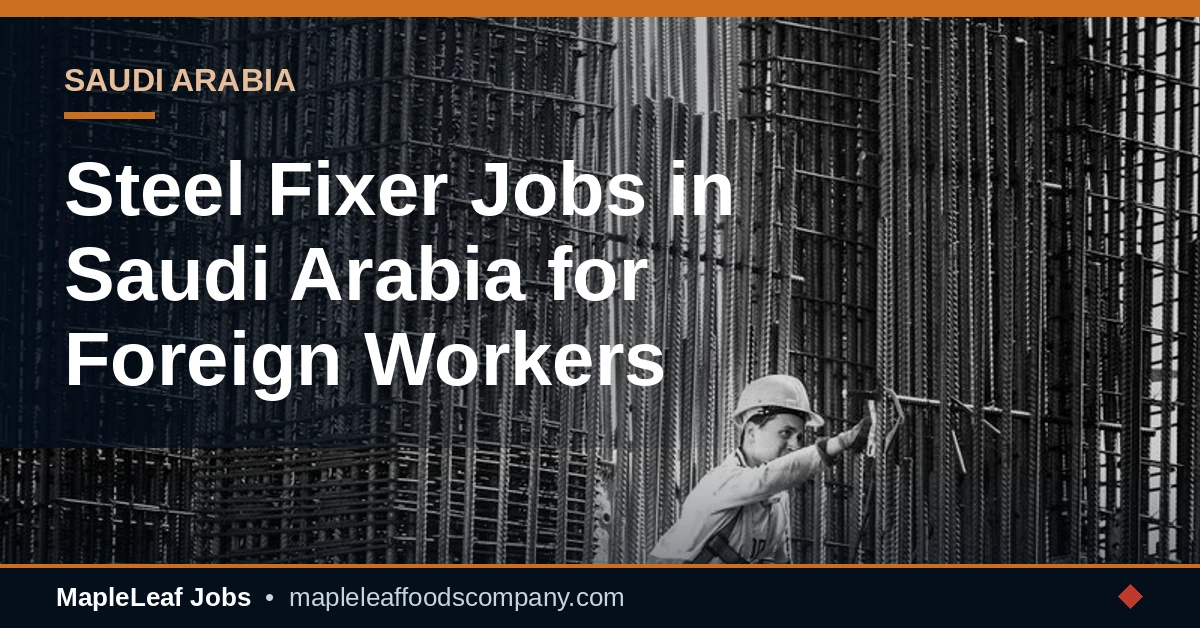
The day starts with the drawing. A bar bending schedule, or the reinforcement drawing itself, sets out the length, the bend and the spacing of the bars for the piece of structure being built, and the fixer works from those numbers all day. Bars are measured and cut with a bar cutter, bent to shape on a bending bench or by hand, and then tied together with binding wire into cages and mats that match the drawing. Those cages are lifted into the formwork, held at the right height on spacers and chairs, and checked over before the concrete crew moves in. Those weighing a move can look at current guidance on jobs and read more background in articles.
Skills and Experience Employers Look For
Contractors hiring from abroad want to see site time they can verify. A work history that names the projects, the kinds of structures built and the years spent on reinforcement carries real weight. Reading the drawing is the skill that sets a good fixer apart: someone who can follow a bar bending schedule without constant supervision saves the foreman time and keeps the crew moving. The hands-on side covers cutting bars cleanly, bending them to the right angle, tying fast and tight with a wire reel, and setting spacers so the steel sits at the correct cover. Awareness of danger runs through it all, because the bars are heavy, the cut ends are sharp and the edges are often open, so gloves, a helmet and safety boots are worn as a matter of course. The Saudi construction jobs guide looks at the wider building world this trade sits inside, and the Saudi Takamol skill test guide covers how skill testing works for some trades.
Where Steel Fixers Work
Fixers go wherever big concrete structures are rising. In Riyadh and Jeddah, high-rise towers call for heavy steel in their foundations, columns and floor slabs, with crews working floor by floor as the building climbs. Roads, bridges and flyovers need reinforcement in their decks, piers and retaining walls, often on long stretches of open site. Industrial plants, warehouses, water tanks and new districts across the Kingdom all rest on reinforced concrete too, so the work is spread widely rather than tied to one city. The Pakistan construction workers in Saudi Arabia guide gives background on how building crews from abroad are put together.
How Recruitment and the Visa Process Usually Work
Contractors usually pass their vacancies to a recruitment partner, which sifts applications for construction experience and puts forward the ones that fit. Then comes a call or a video chat, during which the contractor asks about the structures the fixer has worked on, the drawings they can follow and the tools they have handled. Once a contractor decides to hire, the offer should be written down with the trade, the project site, the hours and the conditions listed, and the worker should go through it line by line before accepting. The contractor then opens the work visa application, while the worker pulls together the papers that are asked for: a passport that will not expire in the near future, any trade certificates, and a character certificate from the police in the worker's home country. A medical fitness test, taken before travel and repeated on arrival, is a step every worker takes. The Saudi work visa process guide runs through these steps one by one, and the documents checklist lets a worker check that each paper usually needed is ready.
Safety, Heat and Looking After Yourself
Steel fixing on a Saudi site is hard on the body, and the hazards are easy to see. The bars themselves are heavy and their cut ends can slice a hand, so gloves and a proper lifting posture are part of every shift. Work at height needs guardrails and harnesses wherever the site rules call for them, and open edges deserve a wide berth. Summer heat is the quieter danger: water should be drunk through the day, the breaks the site provides should be taken, and a fixer should watch their crewmates for the early signs of heat exhaustion just as they watch themselves. The contractor should supply protective equipment and a safe place to work, and any unsafe condition should be reported to the foreman without delay. The residence permit has to remain up to date, and the contractor usually sorts out the renewal. The Saudi iqama renewal guide covers how that renewal is handled.
Common Problems and How to Handle Them
Fixers working abroad run into a familiar set of difficulties. One is the job turning out different from the one described, such as a reinforcement worker being sent to carry materials or dig trenches with no agreement to change trades. That should be raised with the supervisor in writing, with a copy kept. Another is wages that arrive late, which can be raised through the official labour route, with the contract and pay records in hand. A third is hours that stretch past what the agreement promises, with rest days quietly disappearing; pointing to the written agreement and asking for the pattern it promises is the right first move. A fourth is a permit allowed to expire, which can block banking and travel until renewal is done. Keeping documents in order is the strongest protection: a signed contract, written requests and copies of everything filed safely. A fixer who is ready can get the process under way through apply.
Scam Protection
Never share full passport details, a passport copy, bank details, passwords or one-time codes (OTPs) with anyone unverified. Verify the employer and any agent's licence through official channels first. Never pay a fee just because someone promises a guaranteed job or visa. Never send money to a personal bank account. Nobody can sell you a steel fixer job, a work permit or a visa, and nobody can promise you a guaranteed outcome. Anyone who claims they can is almost certainly running a scam. Check the employer's name, website and contact details, and ask for the offer in writing with clear terms. For help checking an agent, read how to check an agent's licence by country and how to spot fake job offer letters.
Frequently asked questions
What does a steel fixer do?
A steel fixer cuts, bends and ties steel bars into cages and mats, then sets them in formwork following engineering drawings, so the concrete poured around them gains its strength.
Do I need to read drawings to work as a steel fixer?
Following a bar bending schedule and a reinforcement drawing is one of the most valued abilities, because a fixer who can work from the drawing needs far less supervision.
Where do steel fixers work in Saudi Arabia?
Fixers work on towers, bridges, roads, industrial plants and large projects right across the Kingdom, usually in a construction crew under a foreman.
Who arranges the work visa for a steel fixer?
The contractor begins the work visa side, while the worker provides a passport that will not expire soon, trade certificates and a police character certificate and goes through the medical fitness tests.
Is steel fixing dangerous work?
It is heavy work with hazards from weighty bars, sharp cut ends and height, so protective equipment, proper lifting and reporting unsafe conditions all matter.
Disclaimer
No job, sponsorship or visa is promised. Final decisions rest with employers and immigration authorities. Rules vary by job, employer and programme and change over time. Pay is to be confirmed with the employer during recruitment. This guide is general information only, not legal or immigration advice.
Apply for jobs abroad
Ready to apply? Browse current jobs and apply with your documents ready.