Police Clearance & Medical by Gulf Destination Guide
Police Clearance and Medical by Destination: The Timing Trap Most Workers Miss
By MapleLeaf Foods Company | Published 5 November 2026
Published 5 November 2026
Police clearance and medical fitness are often treated as simple paperwork: get them done, tick the box, move on. In Gulf employment, that approach causes more delays than almost any other step. The reason is timing. Both documents have limited currency, both must come from the right authority or centre, and both differ by destination. A police certificate obtained too early can expire before the visa stage. A medical done at the wrong centre can be rejected outright. A "fit" result in one system does not automatically satisfy another destination. This guide explains those differences in general terms. It is general information only. Requirements vary by destination, job, employer, and programme, and they can change, so always check the official embassy, ministry, and medical-system sources for your destination before you act.
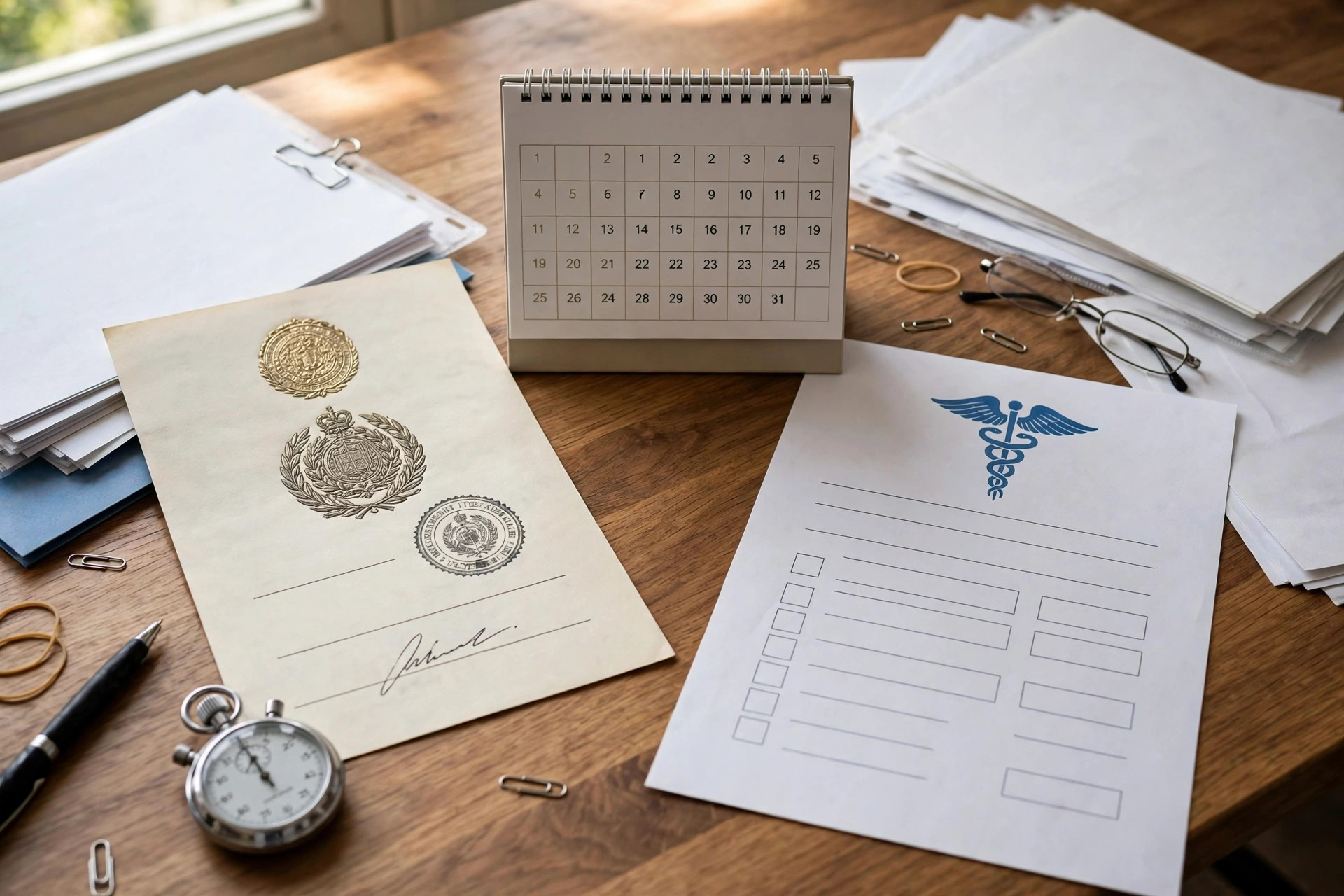
Think of police clearance and medical checks as two separate gates, not one combined "health and character" step. Police clearance answers a question about your record, through the authority in your home country that issues such certificates. Medical fitness answers a question about your health for employment, through an approved centre system used by Gulf states. An employer, an embassy, or a visa process may require one, both, or neither in a particular form, depending on the destination and role. Do not assume that because one Gulf country required both, another will require exactly the same versions.
Police Clearance: Who Issues It, and What It Must Show
In Pakistan, police clearance is normally obtained through the police system, with district-level issuance and further attestation where the destination or visa process requires it. In India, a Police Clearance Certificate for employment abroad is normally issued through the passport system, via the Regional Passport Office, with police verification behind it. In Nepal, police clearance follows the Nepal Police route, with the certificate issued through the relevant police authority. In Bangladesh, police clearance is issued through the police system, normally via the district police and the police headquarters process. Those routes differ, but the worker's task is the same: use the official route for your country, ensure the details match your passport exactly, and check whether attestation is required for your destination.
Name spelling is the detail that causes the most trouble. If your police certificate spells your name differently from your passport, or uses a different date of birth, it may be questioned or rejected. Check the certificate as soon as you receive it, before you pay for attestation or submit it to an employer. If there is an error, correct it through the issuing authority. Do not alter a certificate yourself, and do not accept a certificate that has been altered by anyone else. A clean, official certificate with matching details is worth far more than a quickly obtained document with a mismatch.
Validity is the second trap. Police certificates are expected to be recent. How recent depends on the destination and the visa stage, and different sources give different validity periods for different destinations and purposes. That variation is exactly why this guide does not state a single validity figure. Instead, ask the employer or embassy, in writing, how recent the certificate must be at the visa-submission stage, and time your application so the certificate is still current at that stage, not only on the day you applied for it. Getting clearance months before the employer is ready to submit can mean doing it twice.
Medical Fitness: The Approved Centre Is the Whole Point
For Gulf employment, medical fitness is not a general health check from any doctor. It is an examination at a centre approved under the Gulf system, historically known as GAMCA and now operated through the Wafid platform of the Gulf Health Council. The examination normally includes a physical check, blood tests, and a chest X-ray, among other checks set by the destination. Results are uploaded to the Wafid system, where the employer and the visa process can access them. A report from an unapproved clinic, however thorough, is not a substitute, because it is not in the system the destination checks.
The practical steps are therefore specific. First, confirm that a Wafid medical is required for your destination and role, and when it should be done in the sequence. Second, generate or obtain the appointment slip through the official Wafid channel, with your details exactly as in your passport. Third, attend only the accredited centre assigned or listed for you, bringing the documents the centre requires. Fourth, check the result status through the official channel, and keep your own copy of the slip and any report you are given. Do not pay an intermediary to "arrange" a fit result. A genuine medical result cannot be bought, and a falsified result, if discovered, can end your employment process and damage future applications.
A result of "unfit" is distressing, but it is not a reason to seek a second, unofficial medical in the hope of a different answer. If you receive an unfit result, ask through official channels what the finding was, whether re-examination is allowed, after what interval, and through which centre. Some conditions allow re-testing after treatment or after a set period. Others do not. The official route, not a private shortcut, is the only safe way to understand your options. Keep all medical paperwork private. Do not share medical results with unverified people, and do not post them online.
How Destinations Differ in Practice
Saudi Arabia, the UAE, Qatar, Kuwait, Oman, and Bahrain all use medical and police checks, but they do not use them identically. Some destinations place greater emphasis on the pre-departure Wafid medical. Others place greater emphasis on a second medical after arrival, which can confirm or revisit the pre-departure result. Some roles, such as food handling, healthcare, or domestic work, can attract additional health requirements. Some visa categories require police clearance as a standard document, while others require it only where the employer or embassy asks for it. Those differences mean a checklist copied from a friend going to a different country, or for a different job, can mislead you.
The safest method is destination-specific confirmation. For each destination, write down four answers from official or employer-written sources: is police clearance required, and from which authority; is a Wafid medical required, and at which stage; is attestation required for either document; and is a further medical or check required after arrival? If any answer is unclear, ask before you spend money. An employer that cannot answer those four questions clearly may not have a confirmed process for your role.
Ordering the Steps So Nothing Expires
The ideal order is: confirm the employer and role, confirm the permit or visa route, then time police clearance and medical so they are current at submission. Doing medical and police checks before an employer is confirmed is a common waste of money, because both can expire and because the medical slip and police application may need employer or destination details. Doing them too late, after the employer is ready to submit, can delay the visa. The balance is to wait until the role is confirmed and the submission window is known, then complete both checks promptly, in the correct centres and through the correct authorities, and submit without unnecessary delay.
Scam Protection: Pause, Verify, Never Send Money or Codes
Scammers copy real medical centres, real police-clearance services, and even Wafid-style messages. Protect yourself with a simple rule: verify the employer and the agent licence first, through the official contact page and official government sources, before you share anything sensitive or pay anything. Do not share full passport details, a passport copy, bank details, passwords, one-time codes, or original documents with a fake or unverified person. A genuine employer or licensed recruiter will not ask for your passwords or codes, and will not need your original documents by chat message to "reserve" a job.
Never pay a fee just because someone promises a guaranteed job or visa. No genuine process can guarantee a job, visa, or sponsorship outcome. Never send money to a personal bank account or by an untraceable method, and never pay because of urgency or secrecy. Pause if there is urgency, secrecy, or a request for passwords or banking details. Pressure is the scammer's main tool. A real offer can wait while you verify it through official medical, police, embassy, and employer channels. For medical and police steps themselves, use only official centres and official police routes, and keep your results private.
Frequently Asked Questions
Is a police clearance certificate required for every Gulf job?
Not always in the same form. Some destinations and roles require it as standard, others only where the employer or embassy asks. Confirm the requirement for your destination, role, and visa stage in writing before you apply.
Can I do my Gulf medical at any clinic?
No. For Gulf employment, the medical must normally be done at a Gulf Health Council-accredited centre through the Wafid system. A report from an unapproved clinic is not a substitute.
What if my medical result is unfit?
Ask through official channels what was found, whether re-examination is allowed, and after what interval and through which centre. Do not seek an unofficial second medical to obtain a different result.
Why did my friend's police certificate expire before his visa?
Police certificates are expected to be recent, and the required recency depends on the destination and submission stage. Time your application so the certificate is still current when it is submitted, not only when you applied.
Should I share my medical results with my recruiter by chat?
No. Keep medical and police documents private, share them only through official or employer-verified channels where required, and never with an unverified person.
Apply Now — With Checks Timed, Not Rushed
If you are preparing for Gulf work, browse roles on our jobs page, learn how sponsorship generally works on our visa sponsorship page, and read more guides on our articles page. For preparation, see our documents checklist, and for warning signs in any offer, read our fake job offer guide. Apply Now through the site's normal application route when you are ready — with police and medical checks done at the right centre, at the right time, for the right destination.
Disclaimer: This article is general information only. It is not medical or legal advice, and it does not guarantee a job, visa, medical outcome, police-clearance outcome, or any employment outcome. Requirements vary by destination, job, employer, and programme. Always verify police and medical requirements through official embassy, ministry, Wafid, and other government sources before applying, attending a centre, or paying any fee.