Passport Lost Abroad: What a Worker Should Do Step by Step
Passport Lost Abroad: What a Worker Should Do Step by Step
By MapleLeaf Foods Company | Published 9 November 2026
Published 9 November 2026
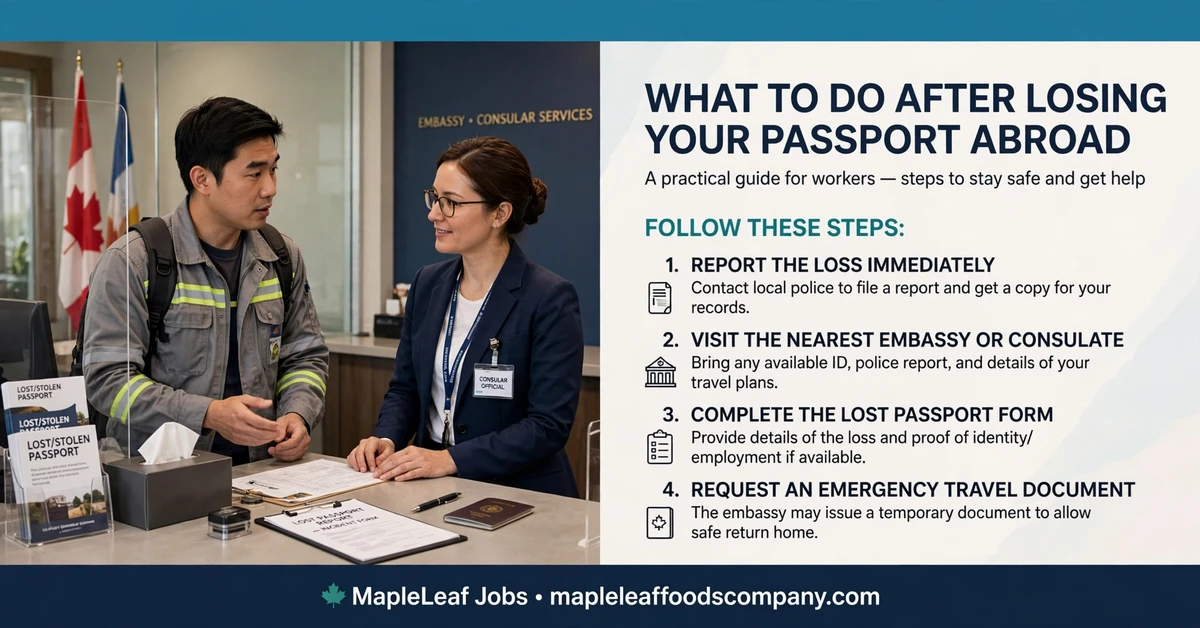
Losing your passport abroad is frightening, but it happens, and it can be fixed. Your passport is your identity and your right to stay and travel, so losing it feels like losing everything. The most important thing is to act quickly, in the right order: report the loss, contact your embassy, get a replacement or an emergency travel document, and protect yourself from anyone who might misuse your passport. Do not panic, and do not pay a stranger who promises to find it or replace it.
This is general guidance only. Passport, police and embassy procedures vary by country, and they change over time. Always follow the instructions of your embassy and the local authorities. No job, sponsorship or visa is guaranteed; final decisions rest with employers and immigration authorities.
Step 1: Stay calm, retrace your steps, and search properly
First, stay calm and search carefully. Check every pocket, bag, drawer and place you have been in the last day. Ask your employer, your colleagues, your housemates and the places you visited whether anyone has handed in a passport. Many lost passports are found quickly because they were left in a jacket, a locker or a taxi. If you find it, check that it is undamaged and that your visa or permit is still valid. If you cannot find it after a proper search, move to the next step without delay — waiting only makes the process longer, and a lost passport in the wrong hands can be misused.
Step 2: Report the loss to the local police
Report the loss to the local police as soon as you are sure it is lost. Go to the nearest police station and explain what happened, when and where you last had the passport, and your personal details. The police will give you a loss report or a reference number — keep this document safe, because your embassy and the immigration authorities will ask for it. Keep a copy of the report with your other records. If you do not speak the local language, ask your employer, a trusted colleague or your embassy for help with translation, and do not sign any police statement you do not understand. Reporting the loss promptly also protects you if someone uses your passport for fraud, because there is an official record that it was lost.
Step 3: Contact your embassy or consulate immediately
Contact your country's embassy or consulate in the destination country as soon as you have the police report. Find the embassy's official phone number, email and address from its official website — not from a stranger or an unverified message — and explain that you are a worker who has lost a passport. The embassy will tell you what to do next: usually you will need to attend in person with the police report, a passport photo, proof of identity such as a copy of your lost passport or your national identity card, and your visa or residence details. Keep copies of your passport and your national identity card at home and in a secure digital place before you travel, because a copy makes the embassy's work much faster. Ask the embassy about the fee, the waiting time, and whether you need an appointment.
Step 4: Get a replacement passport or an emergency travel document
Your embassy will usually issue either a replacement passport or an emergency travel document, depending on your situation. A replacement passport takes longer but allows you to continue working and living in the destination country. An emergency travel document is faster but is usually valid only for a single journey home, so it may not allow you to keep working abroad. Ask the embassy which document is right for you, how long each takes, and what it costs, and get the answer in writing. Pay the fee only through the embassy's official payment channel, and keep the receipt. Do not pay anyone else who offers to get you a passport faster, and never buy or use a fake passport — that is a serious offence that can end your job and your right to stay abroad.
Step 5: Tell your employer and fix your visa and residence records
Tell your employer as soon as you have reported the loss and contacted the embassy. Your employer may need to help with your visa or residence permit, because those records are linked to your passport number. Ask your employer, in writing, what documents they need from you and whether your work can continue while the replacement is processed. You may need to visit the immigration authorities with your new passport or travel document to transfer your visa or residence permit, and your employer or the embassy can advise you on the proper process. Keep copies of your new passport, your police report, your embassy receipts and every letter from the immigration authorities. Do not work on a document that is not valid, and do not let anyone keep your new passport without a proper, written reason.
Step 6: Protect yourself from misuse and prevent it happening again
A lost passport can be misused for fraud, so protect yourself. Tell your bank that your passport is lost, so no one can use it to open accounts or take loans in your name. Watch your bank statements and phone messages for anything unusual. Keep your new passport in a safe, locked place you control, and carry a photocopy for everyday use instead of the original where that is allowed. Do not hand your passport to anyone except an official at a border, an embassy, a police station or a verified employer process, and if anyone asks to keep it, ask for the reason in writing. Before your next journey, keep a copy of your passport and your national identity card with a trusted family member at home and in a secure digital place, so a loss abroad is easier to fix.
For related guidance, see our Documents Checklist guide, browse current job listings, read all guides, and use the apply route when you are ready. Applying does not guarantee a job, a visa or sponsorship.
Scam protection: check before you share or pay anything
Never share full passport details, a passport copy, bank details, passwords or one-time passwords (OTPs) with anyone unverified. If someone contacts you claiming to have found your passport, verify their identity through official channels first, and meet only at a police station or an embassy if you must meet at all. Never pay a fee to a stranger who promises to return or replace your passport, and never send money to a personal bank account. A genuine official will not ask for your password or an OTP, and will not ask you to pay through an informal channel. Pause if there is urgency, secrecy, or a request for passwords or banking details. Keep your police report and embassy receipts, and check through official channels before you reply, pay or send anything further.
Frequently asked questions
What is the first thing to do if I lose my passport abroad?
Search carefully, then report the loss to the local police and get a loss report or reference number. Then contact your embassy with the police report.
Do I need a police report to get a replacement passport?
Usually yes. Your embassy and the immigration authorities will normally ask for the police loss report, so get it as soon as you are sure the passport is lost.
Can the embassy give me a new passport straight away?
It depends. The embassy may issue a replacement passport, which takes longer, or an emergency travel document, which is faster but usually only valid for a single journey home. Ask the embassy which is right for you.
Should I tell my employer?
Yes, as soon as you have reported the loss and contacted the embassy. Your visa and residence records are linked to your passport number, and your employer may need to help with the process.
Can someone misuse my lost passport?
Yes, so report the loss promptly, tell your bank, watch your statements, and keep your new passport in a safe place you control. A prompt police report is your protection.
Disclaimer: This article is general information only. Passport, police, embassy and immigration rules vary by country, and they change over time. No job, sponsorship or visa is guaranteed; final decisions rest with employers and immigration authorities. Always check official government and embassy sources, and seek regulated or official advice for your own case before travelling or paying any fee.
Apply Now
Apply Now: If you decide to apply through this site, use the Apply Now option on the Jobs page and follow the steps shown there. Do not send passport copies, bank details, passwords or payments by email or message to an unverified person. Apply only through the official route shown on this site, and check the details on the application page before you submit anything.