Pakistan Protector Stamp: Documents and Process for Workers
Pakistan protector stamp guide for workers: what the OEC is, documents usually needed, the Protector of Emigrants process, and mistakes to avoid before departure.
Pakistan · Working Abroad · Jobs & Visa Guidance
Every year, large numbers of Pakistani workers leave for jobs in the Gulf and beyond. Before most of them board a flight, there is one step that many first-time workers have never heard of: the protector stamp. It is a stamp placed on the travel document, or an emigration clearance issued alongside it, that shows the worker has registered with the Pakistani authorities before leaving for employment abroad. It may look like a small formality, but it can matter a great deal if anything goes wrong while the worker is abroad. This guide explains what the protector stamp is, which papers are usually asked for, how the process works, and the mistakes that cause the most delays. Pay for any role is to be confirmed with the employer during recruitment.
MapleLeaf Jobs is an independent international jobs and visa guidance service. It is not affiliated with Maple Leaf Foods, the food company.
What the Protector Stamp and OEC Actually Are
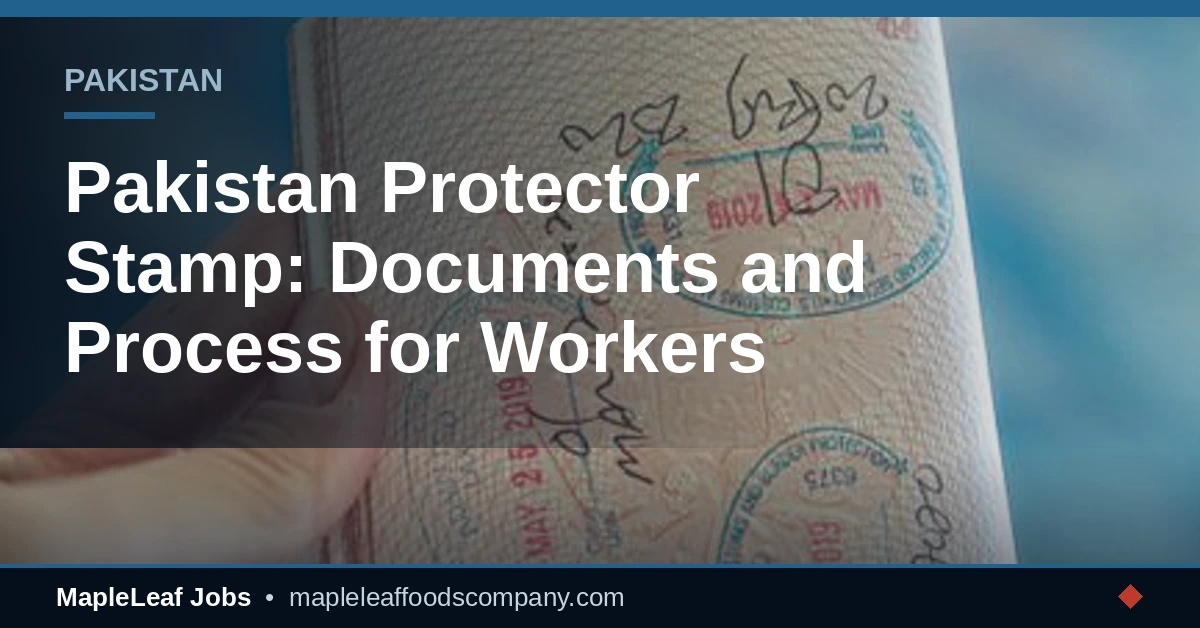
The protector stamp is issued under the emigration system run by the Bureau of Emigration and Overseas Employment, and it is often linked to the Overseas Employment Certificate, known as the OEC. In simple terms, the stamp is official proof that a Pakistani worker has been cleared to leave the country for a specific job with a specific employer.
The stamp is placed after the worker's documents have been checked, and it is not the same thing as a visa. A visa is issued by the country the worker is travelling to, while the protector stamp is Pakistan's own clearance for the departure. A worker can hold a valid visa and still need the protector stamp, and the two should not be confused. Workers who want the background in more depth can read the guide to the protector stamp and the Bureau of Emigration, which explains how the system is organised.
Why Workers Should Get It Before Departure
The protector stamp exists to protect the worker. Once a worker is registered, the authorities have a record of the employment, which can help if the employer fails to honour the contract, if the worker is not paid, or if the worker needs help while abroad. Workers who leave without the stamp may find it harder to get official help, because there is no record of their employment on file. In some cases, a worker without the stamp can even be stopped at the airport and prevented from boarding.
Getting the stamp is therefore not only a rule to follow, but a layer of protection that is worth having before departure. Workers can browse current guidance on jobs and wider reading in articles while they prepare.
Documents Usually Asked For
The exact list of documents can vary with the destination and the type of employment, but the same papers come up again and again. A valid travel document with enough life left in it is essential, and so is the visa for the destination country. The signed employment contract, showing the role, the place of work and the terms, is normally required, because the protector office checks that the job on paper matches the job the worker has been offered.
The national identity card, known as the CNIC, is usually asked for, along with recent photographs. Many workers also need to show medical examination results, and some need a police clearance certificate. The guide to police clearance certificates explains how that paper is obtained, and the medical examination guide for Gulf jobs sets out the medical side of the preparation.
The Process Through the Protector of Emigrants Office
The process usually begins with the worker, or the licensed recruitment agent acting for the worker, submitting the file to the Protector of Emigrants office. The office checks the documents, verifies the employment contract and the visa, and confirms that the recruitment agent, where one is involved, holds a valid licence. If everything is in order, the stamp is issued and the worker is cleared to travel.
The file should be complete before the visit: travel document, visa, contract, identity card, photographs, medical report and police clearance, together with any other paper the office has asked for. A worker who arrives with a complete file is usually dealt with far more quickly than one who has to keep returning. The OEC and protector guide for Pakistani workers walks through the same steps in more detail.
Common Mistakes That Cause Delays
The most common mistake is leaving the protector stamp to the last moment. Workers sometimes book a flight first and only then discover that the stamp takes time, or that a paper is missing. A travel document close to expiry is another frequent problem, because it can be rejected at the protector office or at the airport. A contract that does not match the visa, for example where the employer's name differs, can also stop the process.
Another mistake is trusting an unlicensed agent to handle the paperwork. An agent who is not licensed may submit an incomplete or incorrect file, or may charge for services that the worker could arrange directly, and the worker is the one who pays the price in lost time. Questions about who should pay which fee are answered in the guide to recruitment fees, which explains what workers are normally expected to pay and what they are not.
What to Do If Something Goes Wrong
Sometimes a file is returned with a query, or the office asks for an extra paper. The best response is to read the query carefully, supply exactly what was asked for, and keep a record of the reply. Arguing at the counter rarely helps, while a calm, complete response usually moves the file forward. If the problem is a mismatch between the contract and the visa, the employer or the agent should be asked to correct it, because the protector office cannot stamp a file where the papers disagree.
Workers should also keep their own copies of everything: the stamped travel document, the contract, the visa, the medical report and the police clearance. A simple folder with the originals and a set of copies is enough. If a problem arises after arrival abroad, those copies, together with the registration record, are what the authorities and the worker's family will rely on. A worker who has prepared properly can begin the process through apply with far more confidence.
Scam Protection
Never share full passport details, a passport copy, bank details, passwords or one-time codes (OTPs) with anyone unverified. Verify the employer and any agent's licence through official channels first. Never pay a fee just because someone promises a guaranteed job or visa. Never send money to a personal bank account. Nobody can sell you a job, a work permit or a visa, and nobody can promise you a guaranteed outcome. Anyone who claims they can is almost certainly running a scam. For help checking an agent, read how to check an agent's licence by country and how to spot fake job offer letters.
Frequently asked questions
What is the protector stamp for Pakistani workers?
It is the official clearance, linked to the Overseas Employment Certificate, that records a Pakistani worker's employment abroad and shows the worker has been cleared to depart for a specific job.
Is the protector stamp the same as a visa?
No, a visa is issued by the destination country, while the protector stamp is Pakistan's own clearance for the worker's departure, and most workers going abroad for employment need both.
Which documents are usually needed for the protector stamp?
A valid travel document, the visa, the signed employment contract, the national identity card, recent photographs, and usually a medical report and sometimes a police clearance certificate.
Where is the protector stamp issued?
It is issued through the Protector of Emigrants office, after the worker's documents, contract and visa have been checked and any recruitment agent involved has been verified.
What happens if I travel without the protector stamp?
A worker may be stopped at the airport and prevented from boarding, and may also find it harder to get official help abroad, because there is no registration record of the employment.
Disclaimer
No job, sponsorship or visa is promised. Final decisions rest with employers and immigration authorities. Rules vary by job, employer and programme and change over time. Pay is to be confirmed with the employer during recruitment. This guide is general information only, not legal or immigration advice.
Apply for jobs abroad
Ready to apply? Browse current jobs and apply with your documents ready.