Jobs Abroad Without a Degree for Pakistani Workers
Jobs abroad without a degree for Pakistani workers: practical roles, skills that matter, documents and scam warnings in one plain guide.
Pakistan · Working Abroad · Jobs & Visa Guidance
Many Pakistani workers worry that without a university degree they cannot work abroad, but that is not true. A large number of jobs overseas — in construction, factories, warehouses, farms, hotels, cleaning, driving, security and care work — do not ask for a degree at all. Employers for these roles usually care far more about practical skills, physical fitness, reliability and a willingness to work hard than about formal education. What matters most is matching your real skills to a real vacancy, preparing honest documents, and avoiding agents who promise shortcuts that do not exist. Pay for any role is to be confirmed with the employer during recruitment.
MapleLeaf Jobs is an independent international jobs and visa guidance service. It is not affiliated with Maple Leaf Foods, the food company.
Which Jobs Abroad Do Not Need a Degree
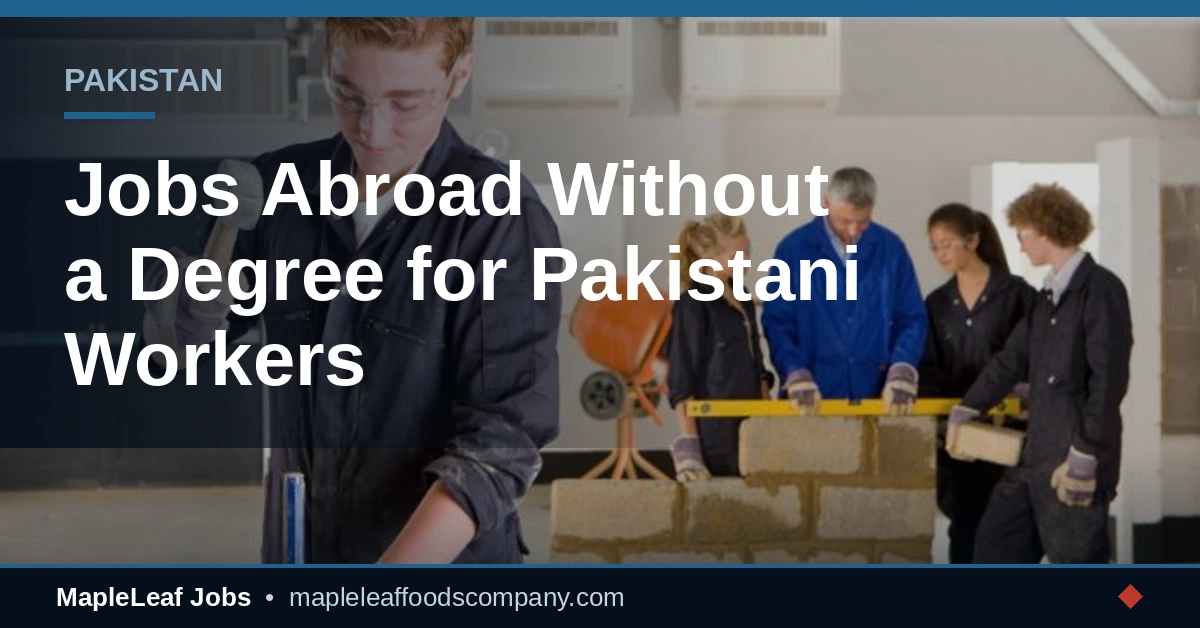
A wide range of roles abroad are open to workers without a degree. In construction, employers hire labourers, masons, steel fixers, painters, plumbers and electricians, and a trade skill or apprenticeship often counts for more than a degree. In factories and warehouses, employers hire packers, machine operators, loaders, pickers and store keepers. In hotels and restaurants, employers hire cleaners, housekeepers, kitchen helpers, waiters and cooks. Farms hire workers for planting, harvesting and caring for animals, and transport companies hire drivers and delivery workers.
Other common roles include security guards, cleaners, laundry workers, gardeners, office helpers and care assistants. Some of these roles need a short training course or a licence — for example, a driving licence for driving work or a safety certificate for construction — but none of them needs a university degree. The key is to look at what each vacancy actually asks for, rather than assuming every job abroad needs higher education. You can browse current guidance on jobs and read more in articles.
Skills That Matter More Than a Degree
When you do not have a degree, your skills and your work record become your strongest asset. Employers look for practical ability: can you do the work safely, follow instructions, turn up on time every day, and work well in a team? If you have learned a trade — welding, electrical work, plumbing, masonry, cooking, tailoring, driving, machine operation — describe it clearly, with the tools you can use, the kind of work you have done, and how long you have done it.
Reliability is one of the most valued qualities in workers without degrees, because employers need people they can count on for every shift. Physical fitness matters for manual roles, and attention to safety matters everywhere. Basic English can help in many workplaces, especially for reading safety signs, following written instructions and talking with supervisors, and even a modest level of English can strengthen your application. If you have certificates from a technical institute, a vocational course or an apprenticeship, keep them safe and mention them in your resume, because they show real, verified skill.
How to Present Yourself Without a Degree
A clear, honest resume is your main tool. List your work experience in order, with the name of each employer or workplace, the dates you worked there, and the duties you performed. Focus on what you actually did: the machines you operated, the materials you worked with, the size of the team you worked in, and any responsibility you were given. Do not invent qualifications, job titles or experience you do not have, because employers and embassies check, and a false claim can end your application.
Ask previous employers for reference letters if you can, and keep copies of any training certificates, trade licences and safety courses you have completed. If you have no formal work history yet, describe any informal work honestly — helping in a family shop, working on a family farm, or assisting a tradesman — and explain what you learned. A short, honest application is far stronger than a long, exaggerated one. For a step-by-step overview of applying from Pakistan, read our Pakistan jobs guide.
Documents Pakistani Workers Should Prepare
Pakistani workers applying for jobs abroad should prepare their documents early. A valid passport is the first requirement, so check its expiry and renew it in good time if needed. Your national identity card should also be current. Prepare a clear resume, and gather any trade certificates, training records and reference letters you hold. Keep originals safe and carry clear copies.
For Gulf destinations, a medical fitness test is usually part of the process, and you may need a police clearance certificate as well. Our documents checklist lists the papers most applicants need and explains how to organise them. If you are applying through a licensed overseas employment promoter, check the promoter's licence first through our guide on how to check an OEP licence. Workers going abroad also need a Protector stamp from the Bureau of Emigration and Overseas Employment, and our Protector stamp guide explains that step. Do not send original documents to anyone unverified.
How the Hiring Process Usually Works
Hiring usually starts with the employer or a licensed recruiter advertising a vacancy and shortlisting applicants whose skills and availability match the posting. If you are shortlisted, you may be invited to an interview in person, by telephone or by video call. The interviewer may ask about your previous work, your trade skills, your health, your willingness to work shifts, and whether you can travel. Some employers ask for a short practical test — for example, asking a welder to show a sample weld or a driver to show a licence — before making an offer.
If you are selected, the employer or recruiter will explain the next steps, which usually include a job offer, a work visa application, a medical test and travel arrangements. Read the offer carefully before signing, and make sure you understand the job title, the work location, the working hours, the accommodation arrangement and who pays for travel. A genuine offer will be in writing and will not ask you to pay a large fee to a personal account. When you are ready to proceed, you can start through apply.
Scam Protection
Never share full passport details, a passport copy, bank details, passwords or one-time codes (OTPs) with anyone unverified. Verify the employer and any agent's licence through official channels first. Never pay a fee just because someone promises a guaranteed job, visa or sponsorship. Never send money to a personal bank account. Nobody can sell you a work permit, a job offer or a visa, and nobody can promise you a guaranteed outcome. Anyone who claims they can is almost certainly running a scam. Be especially careful with adverts that say "no degree, no experience, no English needed" and then demand a large upfront payment — that combination is a classic warning sign. For help checking an agent, read how to check an agent's licence by country and how to spot fake job offer letters.
Frequently asked questions
Can I work abroad without a degree?
Yes. Many jobs abroad — in construction, factories, warehouses, farms, hotels, cleaning, driving and security — do not require a degree. Employers usually look for practical skills, experience, fitness and reliability instead.
Which jobs abroad are best for workers without a degree?
It depends on your skills. Trade roles such as electrician, plumber, welder and mason are often in demand, as are factory, warehouse, farm, hotel, cleaning and driving roles. Choose a role that matches what you can actually do.
Do I need English to work abroad without a degree?
Not always, but basic English helps in many workplaces, especially for safety instructions and talking with supervisors. Some roles need very little English, while others need enough to follow written instructions and communicate clearly.
Can I get a work visa without a degree?
A work visa depends on the job, the employer and the destination country's rules, not only on your education. Many work visa routes are open to skilled and semi-skilled workers without degrees, but you should check the rules for your destination through official sources.
How can I tell if a no-degree job offer abroad is real?
Check the employer online, look for a real company website, address and contact details, and verify any recruiter's licence through official channels. Be cautious if you are asked to pay a large fee quickly, share sensitive documents, or accept without an interview.
Disclaimer
No job, sponsorship or visa is promised. Final decisions rest with employers and immigration authorities. Rules vary by job, employer and programme and change over time. Pay is to be confirmed with the employer during recruitment. Fees and other costs vary — check official sources such as the relevant embassy and the employer before applying. This guide is general information only, not legal or immigration advice.
Apply for jobs abroad
Ready to apply? Browse current jobs and apply with your documents ready.