Farm Worker Jobs Abroad for Pakistani Workers
Farm worker jobs abroad for Pakistani workers: duties, seasons, skills, documents, hiring steps and scam warnings in one plain guide.
Pakistan · Working Abroad · Jobs & Visa Guidance
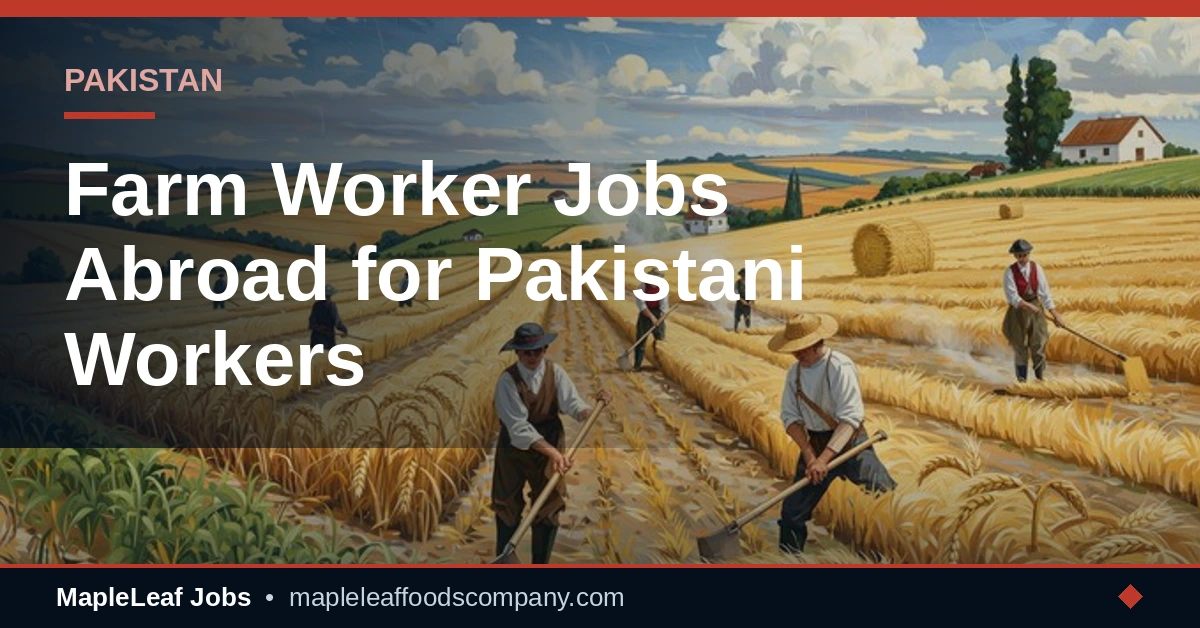
Farm work is one of the oldest routes for Pakistani workers going abroad, and it remains a practical option for people who are used to physical work and outdoor life. Farm workers plant, tend, harvest and pack crops, care for livestock, and help keep farms running through the seasons. The work is physical and often outdoors in all kinds of weather, but it usually does not require a degree, and many employers value farming experience, stamina and a strong work ethic more than formal qualifications. For workers from rural Pakistan, skills learned at home — handling animals, working with crops, using farm tools — can transfer directly to farm jobs abroad. Pay for any role is to be confirmed with the employer during recruitment.
MapleLeaf Jobs is an independent international jobs and visa guidance service. It is not affiliated with Maple Leaf Foods, the food company.
What Farm Worker Jobs Involve
A farm worker's duties depend on the type of farm and the season. On crop farms, workers prepare soil, sow seeds, plant seedlings, water and weed crops, apply fertiliser under supervision, and harvest fruit, vegetables or grain when the crop is ready. Harvest work can be intense, with long days during picking season, and workers are expected to handle produce carefully so it is not damaged.
On livestock farms, workers feed and water animals, clean sheds and pens, help with milking, and watch for signs of illness in the animals. Some farms combine crops and livestock, so workers may do a mix of tasks across the week. Other duties include operating simple farm machinery, repairing fences, loading and unloading produce, and packing harvested crops for transport. The work follows the rhythm of the farm, so early starts are common and the busiest periods depend on the season.
Types of Farms and Destinations
Farm work abroad covers a wide range of settings. Fruit and vegetable farms need workers for planting, picking and packing, and these roles are often seasonal, with the busiest time during harvest. Grain and field-crop farms need workers for sowing, irrigation and harvesting, and the work may involve operating tractors and other machinery. Dairy farms need workers all year round for feeding, milking and cleaning, and the hours are often early in the morning and again in the evening.
Poultry farms, greenhouses and nurseries also hire farm workers, and greenhouse work can involve tending plants in a warm, humid environment. Some farm jobs are in Gulf countries, where large agricultural projects and date palm farms hire workers, while others are in countries with seasonal worker programmes for fruit picking and harvesting. Before accepting a role, ask what kind of farm it is, what crops or animals you will work with, whether the work is seasonal or year-round, and what accommodation is provided. You can browse current guidance on jobs and read more in articles.
Skills, Fitness and Experience Employers Look For
Farm employers look for workers who are physically fit, reliable and willing to work outdoors. Stamina matters, because farm work involves standing, walking, bending, lifting and carrying for most of the day. Experience with farming at home is a real advantage, so describe it clearly in your application: the crops you grew, the animals you cared for, the tools and machines you used, and the seasons you worked in.
Honesty and care matter as well, because crops and animals need consistent attention. Workers who notice a sick animal, a broken irrigation pipe or a damaged crop early can save the farmer real losses. Basic safety awareness is important around machinery, animals and chemicals, and you should always follow the employer's instructions on protective clothing and safe handling. Some employers provide training on machinery and safety, but you should never operate a machine you have not been trained to use. If you can drive a tractor or have experience with irrigation systems, mention it, and be honest about what you can and cannot do.
Documents Pakistani Workers Should Prepare
Pakistani workers applying for farm jobs abroad should prepare their documents early. A valid passport is the first requirement, so check its expiry and renew it in good time if needed. Your national identity card should also be current. Employers usually ask for a clear resume listing your work history in order, with the type of farm or workplace, your duties and the dates you worked there. Keep it short, honest and focused on relevant farming experience.
For Gulf destinations, a medical fitness test is usually part of the process, and you may need a police clearance certificate as well. Our documents checklist lists the papers most applicants need and explains how to organise them. If you are applying through a licensed overseas employment promoter, check the promoter's licence first through our guide on how to check an OEP licence. Workers going abroad also need a Protector stamp from the Bureau of Emigration and Overseas Employment, and our Protector stamp guide explains that step. Keep copies of every document in one safe place and do not send originals to anyone unverified.
How the Hiring Process Usually Works
Hiring usually starts with the employer or a licensed recruiter advertising a vacancy and shortlisting applicants whose experience and availability match the posting. If you are shortlisted, you may be invited to an interview in person, by telephone or by video call. The interviewer may ask about your farming experience, your health, your willingness to work outdoors in different weather, and whether you can work long hours during harvest season. Some employers ask for references from previous employers or from people who know your farming work.
If you are selected, the employer or recruiter will explain the next steps, which usually include a job offer, a work visa application, a medical test and travel arrangements. For seasonal programmes, the visa may be tied to a specific season and employer, so read the terms carefully. Make sure you understand the job, the location, the working hours, the accommodation and who pays for travel before you sign anything. A genuine offer will be in writing and will not ask you to pay a large fee to a personal account. When you are ready to proceed, you can start through apply.
Scam Protection
Never share full passport details, a passport copy, bank details, passwords or one-time codes (OTPs) with anyone unverified. Verify the employer and any agent's licence through official channels first. Never pay a fee just because someone promises a guaranteed job, visa or sponsorship. Never send money to a personal bank account. Nobody can sell you a work permit, a job offer or a visa, and nobody can promise you a guaranteed outcome. Anyone who claims they can is almost certainly running a scam. Be especially careful with social media adverts for farm jobs that show pictures of green fields but give no farm name, no location and no licence number. For help checking an agent, read how to check an agent's licence by country and how to spot fake job offer letters.
Frequently asked questions
Do I need experience for farm worker jobs abroad?
Experience helps a great deal, especially if you have worked on a farm in Pakistan, but some employers hire workers with no farm experience and provide training. Reliability, fitness and a willingness to learn are also valued.
Do I need a degree for farm work abroad?
No. Farm worker roles usually do not require a degree. Employers are more interested in your physical fitness, your farming experience and your ability to work outdoors in different conditions.
Are farm jobs abroad seasonal or year-round?
Both exist. Fruit picking and harvesting are often seasonal, while dairy, poultry and greenhouse work can be year-round. Ask the employer whether the role is seasonal, how long the season lasts, and what happens when the season ends.
What documents do Pakistani workers need for farm jobs abroad?
You will usually need a valid passport, a national identity card, a resume, a medical fitness certificate and a police clearance certificate. For Gulf destinations, a Protector stamp is also required. Check the requirements for your destination and keep copies of every document.
How can I tell if a farm job offer is real?
Check the employer online, look for a real farm or company website, address and contact details, and verify any recruiter's licence through official channels. Be cautious if you are asked to pay a fee quickly, share sensitive documents, or accept without an interview.
Disclaimer
No job, sponsorship or visa is promised. Final decisions rest with employers and immigration authorities. Rules vary by job, employer and programme and change over time. Pay is to be confirmed with the employer during recruitment. Fees and other costs vary — check official sources such as the relevant embassy and the employer before applying. This guide is general information only, not legal or immigration advice.
Apply for jobs abroad
Ready to apply? Browse current jobs and apply with your documents ready.