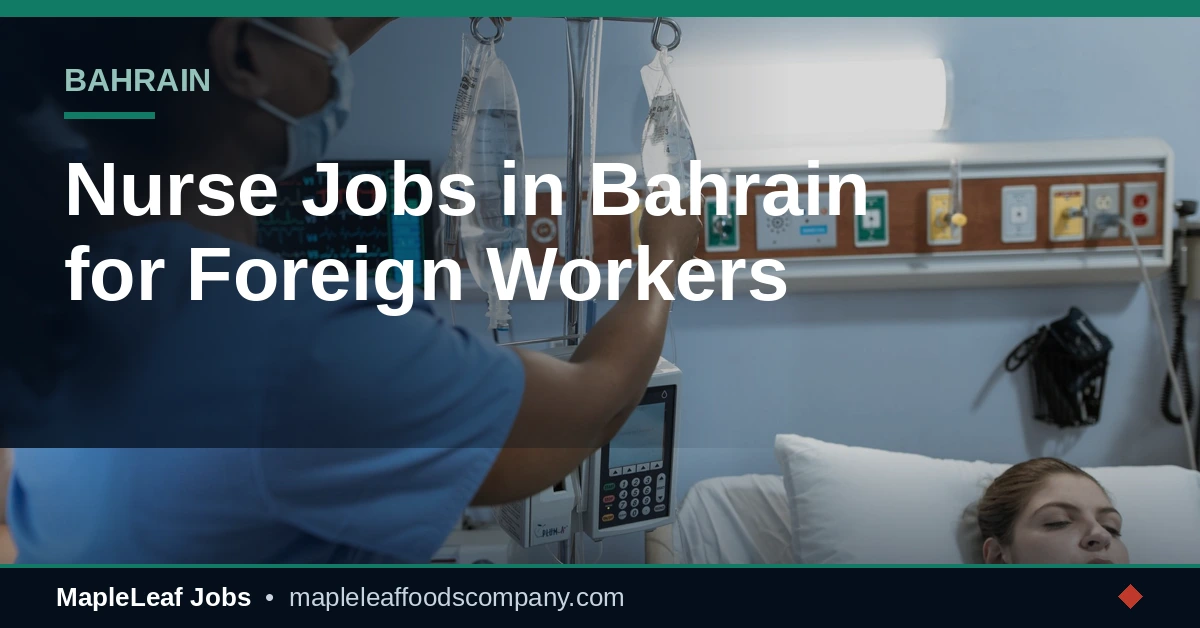
Nurse Jobs in Bahrain for Foreign Workers
Nurse jobs in Bahrain for foreign workers: hospitals and clinics that hire, NHRA licensing, the recruitment process, documents, medical checks and arrival steps.
Bahrain · Working Abroad · Jobs & Visa Guidance
Bahrain is small enough to cross by car in under an hour, yet its hospitals and clinics stay busy around the clock, and nurses who trained overseas fill many of the posts on their wards. Salmaniya Medical Complex in Manama anchors public care, and King Hamad University Hospital, the Bahrain Defence Force Hospital and a spread of private hospitals and specialist centres add further beds in Muharraq, Riffa and Isa Town. English is the working language on most wards, and the licensing route is clear. What a nurse earns here is settled between the nurse and the hiring hospital while recruitment is under way.
MapleLeaf Jobs is an independent international jobs and visa guidance service. It is not affiliated with Maple Leaf Foods, the food company.
Hospitals, Health Centres and Home Care in Bahrain
Salmaniya Medical Complex takes the largest share of foreign nurses in the country, with posts across general medicine, surgery, intensive care, paediatrics and maternity. King Hamad University Hospital and the Bahrain Defence Force Hospital run busy departments of their own, and their wards also rely heavily on overseas-trained staff. Smaller private hospitals in Manama and Muharraq usually concentrate on a narrower mix, such as day surgery, obstetrics or heart care. Away from hospitals, Ministry of Health primary health centres, school clinics, company clinics on industrial sites in Sitra and Hidd, and home care teams that visit patients where they live all employ nurses too. Each setting asks for a slightly different background, so weigh the department and employer type, not just the title, when reading a vacancy. Current guidance sits on jobs, with further background reading in articles.
Getting Licensed with the NHRA
A licence from the National Health Regulatory Authority, known as the NHRA, is what allows a foreign-trained nurse to practise in Bahrain. The regulator looks at the nursing qualification you hold, the registration you carry in your home country, and the clinical work you have done since qualifying. Hospitals generally look for a diploma or a degree in nursing together with some experience gained after training, and the NHRA weighs those records when it reviews an application. An employer or agency usually walks you through the steps, and an assessment may form part of the process. Papers the regulator commonly wants to see include the nursing certificate, the home-country registration certificate, a transcript showing what the training covered, and letters from earlier employers confirming where you worked. A basic life support certificate strengthens an application, while intensive care, theatre or midwifery posts may call for further training. Keep the originals and hand over certified copies. Our Bahrain healthcare nurses guide carries more detail on nursing in Bahrain.
How Recruitment Works for Nurses
The route usually opens with an application sent straight to a hospital or through a licensed agency working for that hospital. After the papers are screened, shortlisted nurses are invited to an interview, very often by video call, with the hospital's senior nursing team. Expect questions about the wards you have worked on, the patients you have cared for, and the way you respond when a ward gets busy or a patient deteriorates. A successful candidate receives a written offer naming the post, the workplace, the hours and the remaining terms; read it carefully before signing, and raise unclear points in writing. Once the offer is accepted, the employer applies for the work visa through the Labour Market Regulatory Authority, the LMRA, while the nurse attends to the medical test and the attestation of documents. Travel only after the visa has been issued and its details checked against the passport. The process itself can be started through apply when you are ready.
Paperwork to Have Ready Before You Apply
Start with the qualification papers: the diploma or degree certificate, the licence or registration from home, and the training transcript, attested first by the authorities at home and then by the Bahraini embassy or consulate. Next comes the passport, which should stay valid well beyond the planned stay, stay in good condition, and hold blank pages for stamps. A police clearance certificate from the home country is frequently asked for, so request it early because issuing it can take time. Letters from hospitals or clinics where you have worked help the employer confirm the experience you claim, so collect them before leaving a post. Photographs in the size the employer names are needed as well, and a medical fitness certificate from an approved centre in the home country may be requested before travel. Photocopy everything you submit and never let the originals out of your own hands. Use the documents checklist to pull together what you need, and see our Bahrain work visa LMRA guide for the visa steps.
Health Checks, Fingerprinting and Your CPR Card
A medical test is a normal part of moving to Bahrain for nursing work, and many nurses sit it at a centre their employer or the embassy has named before the entry visa is granted. The examination generally screens for communicable disease and for general fitness to work on a ward, and a second medical check follows after arrival. Use only a centre the employer or embassy has named, and answer health questions openly. When the entry visa arrives, compare the name and passport number on it with the passport itself, and check the visa type and dates before booking travel. In Bahrain the employer guides the nurse through the steps that convert an entry visa into a residence permit: a medical examination in the country, fingerprinting, and an application for a CPR card. That card is the national identity card and main proof of identity in Bahrain, so guard it and report a loss straight away. Our Bahrain CPR card guide covers the steps that follow arrival.
Shifts, Rest Days and Life Outside the Ward
Hospital nursing in Bahrain runs on rotating shifts that cover days, evenings and nights, and the pattern for a particular ward is set out in the contract. Weekly rest days and annual leave appear in the same document and in Bahraini labour rules, so read both first. Many hospitals offer accommodation or an allowance in place of it, and some run transport between staff housing and the hospital, though neither is universal, so get it confirmed in writing. Outside work life is quiet, and the island is compact, so shops, clinics and places of worship are rarely more than a short drive away. Should a difficulty come up at work, hold on to the contract and to any written messages, and turn to official channels for advice. Our Bahrain family visa guide may help if you later plan to bring family members.
Scam Protection
Never share full passport details, a passport copy, bank details, passwords or one-time codes (OTPs) with anyone unverified. Verify the employer and any agent's licence through official channels first. Never pay a fee just because someone promises a guaranteed job or visa. Never send money to a personal bank account. Nobody can sell you a work permit, a job offer or a visa, and nobody can promise you a guaranteed outcome. Anyone who claims they can is almost certainly running a scam. Check the employer's name, website and contact details, and ask for the offer in writing with clear terms. For help checking an agent, read how to check an agent's licence by country and how to spot fake job offer letters.
Frequently asked questions
What licence do I need to nurse in Bahrain?
The NHRA issues the licence, after reviewing the nursing qualification, the home-country registration and the clinical experience behind the application.
Who applies for my work visa?
The hospital or other employer in Bahrain files the work visa application with the LMRA, while the nurse provides the papers and attends the medical test and appointments the employer or embassy arranges.
Do I need a medical test before travelling?
Many nurses sit a medical test at a centre named by the employer or embassy before travel, and a second medical check follows after arrival in Bahrain.
What is the CPR card?
It is the national identity card of Bahrain, issued after arrival, and it acts as the main identity document there.
Can my family join me in Bahrain?
Whether family members can live in Bahrain with a nurse depends on the post, the contract and the rules current at the time, so confirm the position through official channels first.
Disclaimer
No job, sponsorship or visa is promised. Final decisions rest with employers and immigration authorities. Rules vary by job, employer and programme and change over time. Pay is to be confirmed with the employer during recruitment. This guide is general information only, not legal or immigration advice.
Apply for jobs abroad
Ready to apply? Browse current jobs and apply with your documents ready.