Mechanic Jobs in Saudi Arabia for Foreign Workers
Mechanic jobs in Saudi Arabia for foreign workers: roles in workshops and fleets, skills employers look for, documents, visa steps and scam warnings.
Saudi Arabia · Working Abroad · Jobs & Visa Guidance
Mechanics are in steady demand across Saudi Arabia, from small neighbourhood workshops to large fleet operations that keep trucks, buses and construction machines moving. The Kingdom's roads carry heavy traffic, its construction sites run large fleets of equipment, and its logistics companies depend on vehicles that are serviced on time. Foreign workers with practical repair skills fill many of these roles, and employers look for people who can diagnose faults, work safely and keep accurate records of the work they do. This guide explains the kinds of mechanic work available, the skills that matter, how recruitment usually works and what to watch out for. For any mechanic role, pay is to be confirmed with the employer during recruitment.
MapleLeaf Jobs is an independent international jobs and visa guidance service. It is not affiliated with Maple Leaf Foods, the food company.
Where Mechanics Work in Saudi Arabia
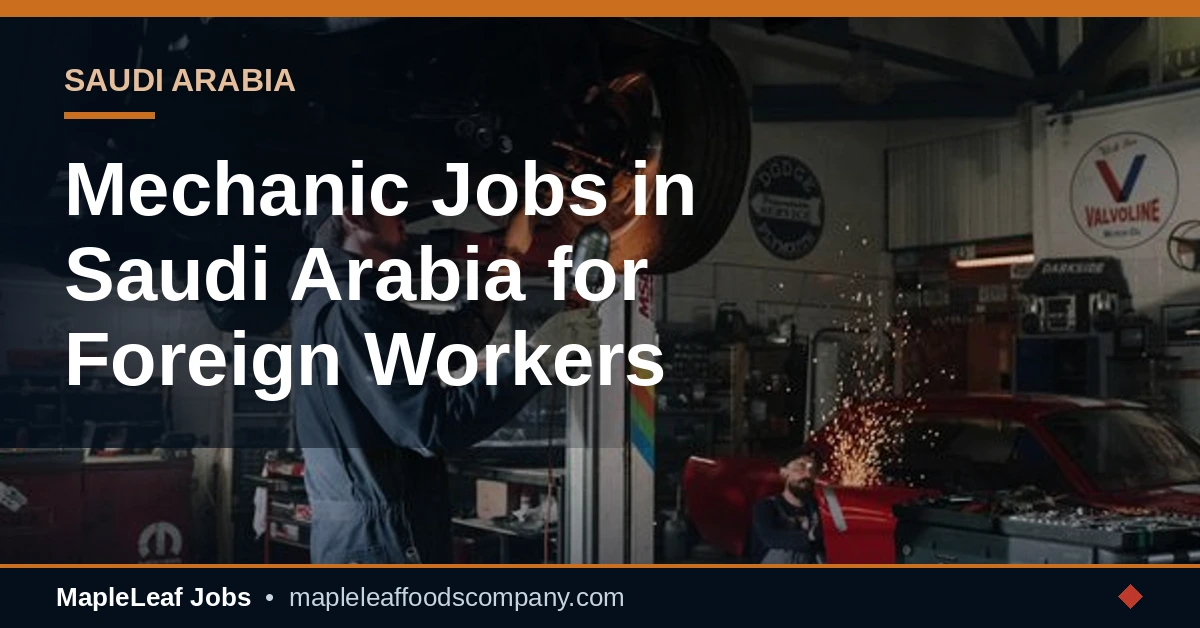
A mechanic in Saudi Arabia may work in several different settings, and the setting shapes the daily routine. Small workshops in towns and cities handle cars and light vehicles for the public, with a fast pace and a wide mix of makes and models. Dealership service centres focus on one brand, follow set procedures and use the manufacturer's diagnostic equipment. Fleet workshops serve a company's own vehicles, such as delivery trucks, buses or construction machines, and the work follows a maintenance schedule rather than walk-in customers. Industrial sites and construction companies employ heavy equipment mechanics who service excavators, loaders, cranes and generators. Each setting asks for a slightly different mix of skills, so a worker should think about which environment suits them before accepting a role. Browse current guidance on jobs and read more background in articles.
The Main Types of Mechanic Roles
Mechanic work is often divided by the kind of vehicle or machine involved. Light vehicle mechanics service cars and small vans, handling engines, brakes, suspension, steering and routine servicing. Heavy vehicle mechanics work on trucks and buses, where the parts are larger, the systems are heavier and the safety rules are stricter. Diesel mechanics specialise in diesel engines, which power most trucks, buses and generators in the Kingdom. Auto electricians focus on wiring, batteries, lighting, sensors and the electronic systems that modern vehicles rely on. Heavy equipment mechanics look after construction and earth-moving machines, where hydraulic systems and tracks or tyres add another layer of complexity. Some workshops also need air conditioning specialists, since vehicle air conditioning is essential in the Saudi climate. The Saudi welders and fitters guide and the Saudi electricians and plumbers guide describe neighbouring trades that often work alongside mechanics.
Skills and Experience Employers Look For
Employers hiring mechanics from abroad look first for hands-on experience that can be shown, not just claimed. A work history that names the vehicles or machines handled, the workshop or company, and the years spent in the role carries weight. Certificates from a technical institute or a trade test help, and some employers ask for a skill test before the final offer. Diagnostic ability matters more than it used to: modern vehicles carry sensors and electronic control units, so a mechanic who can use a diagnostic scanner and read fault codes has an advantage. Safe working habits are also important, including the use of jacks and stands, lockout procedures and proper handling of fuel and oil. A clean record, a willingness to follow the workshop's rules and a steady attitude under time pressure round out what employers want. The Saudi Takamol skill test guide explains how skill testing works for some trades.
How Recruitment and the Visa Process Usually Work
Recruitment for mechanic roles usually starts with the employer or its recruitment partner advertising the vacancy and shortlisting candidates with relevant experience. Shortlisted workers may be interviewed by phone or video, and may be asked to describe a repair they have done or to complete a practical test. If the employer makes an offer, it should be given in writing with the job title, the work location, the working hours and the terms clearly stated, and the worker should read it carefully before accepting. The employer then applies for the work visa, and the worker prepares the documents the employer asks for, such as a valid passport, certificates and a police clearance. A medical check is usually part of the process, both before travel and after arrival. The Saudi work visa process guide explains this sequence in more detail, and the documents checklist helps a worker gather the papers that are usually needed.
Daily Life and Working Conditions
Life as a mechanic in Saudi Arabia is physical and hands-on. A typical day involves inspecting vehicles, diagnosing faults, replacing parts, carrying out scheduled servicing and recording the work done. Workshops can be hot, especially in summer, and the work involves lifting, bending and standing for long periods, so stamina matters. Many employers provide accommodation and transport, and the working week and rest days follow the contract and the labour rules in force. Workers should read the contract before signing so they know the working hours, the weekly rest day and the leave they are entitled to. Keeping the iqama valid is essential, and the employer is normally responsible for renewing it. The Saudi iqama renewal guide explains how residence stays valid, and the Saudi drivers and delivery jobs guide describes a trade that depends on the vehicles mechanics keep running.
Common Problems and How to Handle Them
A few problems come up often for mechanics working abroad. One is a mismatch between the job promised and the job given, for example a light vehicle mechanic asked to work on heavy equipment without training or proper tools. A worker who faces this should raise it with the supervisor in writing and keep a record. Another problem is unpaid or delayed wages, which should be reported through the official labour channels with the contract and any pay records as evidence. A third problem is unsafe working conditions, such as missing safety equipment or pressure to work under a vehicle that is not properly supported; no worker should accept a task that puts their life at risk. When you are ready to take the next step, you can start the process through apply.
Scam Protection
Never share full passport details, a passport copy, bank details, passwords or one-time codes (OTPs) with anyone unverified. Verify the employer and any agent's licence through official channels first. Never pay a fee just because someone promises a guaranteed job or visa. Never send money to a personal bank account. Nobody can sell you a mechanic job, a work permit or a visa, and nobody can promise you a guaranteed outcome. Anyone who claims they can is almost certainly running a scam. Check the employer's name, website and contact details, and ask for the offer in writing with clear terms. For help checking an agent, read how to check an agent's licence by country and how to spot fake job offer letters.
Frequently asked questions
What kinds of mechanic jobs exist in Saudi Arabia?
Light vehicle, heavy vehicle, diesel, auto electrical and heavy equipment mechanic roles exist across workshops, dealerships, fleets and construction sites.
Do I need a certificate to work as a mechanic?
Certificates from a technical institute help, and some employers ask for a skill test, but a clear work history showing the vehicles and machines handled also carries weight.
Who arranges the work visa for a mechanic?
The employer applies for the work visa, while the worker supplies a valid passport, certificates, a police clearance and attends the required medical checks.
What should a mechanic check in the job offer?
The offer should state the job title, work location, working hours and terms in writing, and the worker should read it carefully before accepting.
Who renews the iqama for a mechanic in Saudi Arabia?
The employer, as the sponsor, is normally responsible for renewing the iqama, while the worker keeps the passport valid and cooperates with the process.
Disclaimer
No job, sponsorship or visa is promised. Final decisions rest with employers and immigration authorities. Rules vary by job, employer and programme and change over time. Pay is to be confirmed with the employer during recruitment. This guide is general information only, not legal or immigration advice.
Apply for jobs abroad
Ready to apply? Browse current jobs and apply with your documents ready.