Low Wage LMIA Jobs in Canada: Sectors and Roles That Hire Foreign Workers
Low wage LMIA jobs in Canada by sector: food service, hospitality, agriculture, food processing, retail, care and warehouse roles that hire foreign workers.
Canada · Working Abroad · Jobs & Visa Guidance
Foreign workers often ask which sectors actually hire through the low wage LMIA route, and which roles appear most often. The answer changes by region, by season and by the needs of local employers, yet some sectors return again and again because they struggle to fill vacancies locally. This guide looks at the main sectors where low wage LMIA hiring is common, the kinds of roles involved, and what each type of work usually demands. It is a general picture, not a list of open vacancies, and workers should always check the details of a specific posting before applying. Pay for any role is to be confirmed with the employer during recruitment.
MapleLeaf Jobs is an independent international jobs and visa guidance service. It is not affiliated with Maple Leaf Foods, the food company.
Food Service and Hospitality Roles
Food service and hospitality form one of the largest areas for low wage LMIA hiring in Canada. Restaurants, cafes, hotels, resorts and catering businesses in many towns and cities need cooks, kitchen helpers, servers, housekeepers and front desk staff, and some of these employers turn to foreign workers when local hiring falls short. Cooks prepare meals to the standard set by the kitchen, follow recipes and hygiene rules, and work in hot, busy conditions during peak hours. Kitchen helpers wash dishes, clean work surfaces, store deliveries and support the cooks. Servers take orders, serve food and drink, and handle payments with care. Housekeepers clean rooms and public areas in hotels, change linen and report maintenance problems. Front desk staff greet guests, manage bookings and answer questions about the property. These roles often involve shift work, including evenings, weekends and holidays, and workers need stamina, reliability and a polite manner. Language ability matters here, because most of these roles involve speaking with customers or guests every day.
Agriculture and Food Processing Work
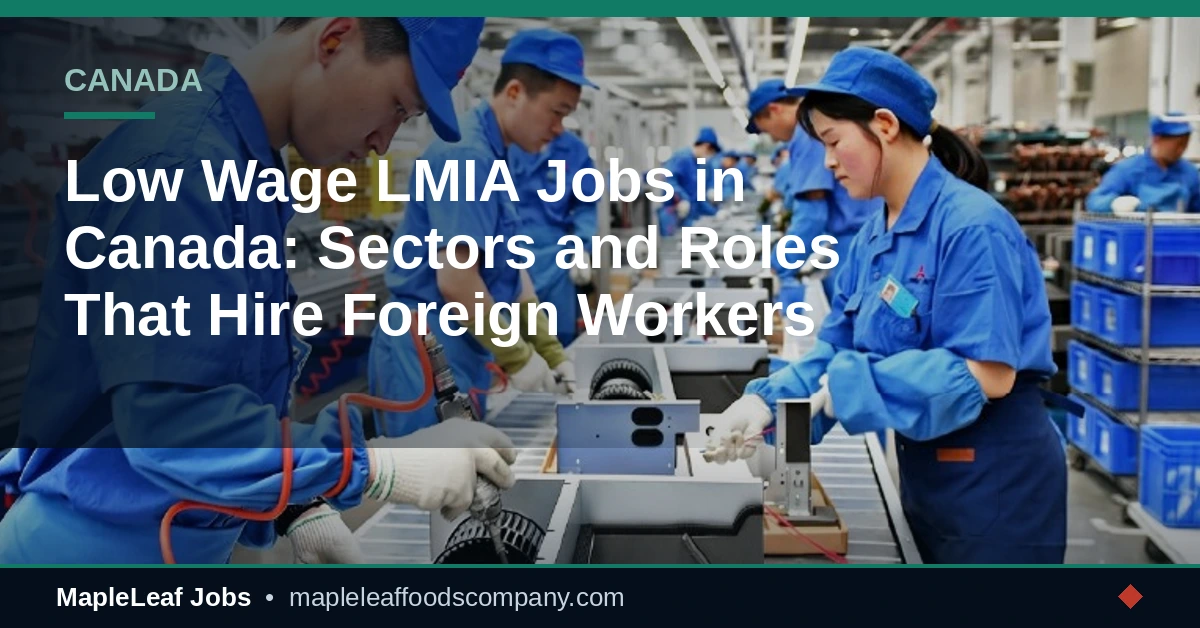
Agriculture and food processing provide a large share of low wage LMIA roles, especially outside the major cities. Farms hire workers for planting, harvesting, packing and sorting crops, and for caring for livestock, while greenhouses need workers to tend plants, pick produce and prepare it for sale. Food processing plants hire workers to prepare, pack and label meat, fish, vegetables and baked goods, and to keep production lines clean and running. The work is physical, and it often follows the seasons, with busy harvest periods and quieter months in between. Workers may need to stand for long hours, lift crates and work in cool or damp conditions. Safety training matters, because the work involves machinery, sharp tools and strict hygiene rules. Employers in these sectors often provide orientation on arrival and explain the daily routine, the safety equipment and the production targets. Workers should ask about the season, the hours and the location before accepting, since some farms and plants are far from towns. Read how the LMIA works in Canada for the hiring sequence.
Retail, Cleaning and Warehouse Roles
Retail shops, cleaning companies and warehouses also hire foreign workers through the low wage stream in many regions. Retail roles include sales assistants, cashiers and stock staff, who help customers, handle payments and keep shelves full and tidy. Cleaning roles include cleaners for offices, hotels, hospitals and schools, who work early mornings or late evenings and must follow hygiene and safety routines. Warehouse roles include pickers, packers and loaders, who receive goods, store them correctly, prepare orders and load vehicles for delivery. These roles suit workers who are organised, careful and able to follow instructions, and some need basic reading and writing in English or French to handle labels and delivery notes. Shift patterns vary, and night or weekend work is common in warehouses and cleaning. Employers usually provide training on the equipment and the safety rules, and workers should only use machinery after proper instruction. You can browse general guidance on jobs and read more explainers in articles, including warehouse worker jobs in the UAE for a comparison of warehouse work abroad.
Caregiving and Support Roles
Caregiving and support work is another sector where low wage LMIA hiring appears, although the requirements are stricter than in many other sectors. Home support workers and caregivers help elderly people or people with disabilities with daily tasks, such as bathing, dressing, meals, light housework and companionship. Child care workers look after children in homes or daycare settings, following routines set by parents or supervisors. These roles need patience, kindness, reliability and a genuine interest in the people being cared for. Workers may need a medical check, a background check and first aid training, and the employer will usually ask for references that show the worker can be trusted in a home setting. Language ability matters a great deal, because the worker must communicate clearly with the person in their care and with family members. Hours can include evenings and weekends, and the work can be emotionally demanding, so workers should think carefully about whether the role suits them before applying.
Choosing a Sector That Fits You
The best sector for a worker is the one that matches their experience, their health and their long-term plans, not the one that sounds easiest. A worker with farm experience will usually do better in agriculture than in a hotel kitchen, while a worker with customer service experience will usually do better in hospitality or retail. Workers should think about physical demands, shift patterns, language needs and the location of the work, and should be honest with themselves about what they can sustain over a full contract. It also helps to think about the region, since a role in a small town brings a different daily life from a role in a large city, with different housing, transport and community options. Workers should read each posting fully, ask the employer about training and support, and compare a few roles before choosing one. When you are ready to proceed, you can begin through apply, after checking that the sector, the role and the employer all fit your situation. For background on the assessment itself, read how the LMIA works in Canada.
Scam Protection
Never share full passport details, a passport copy, bank details, passwords or one-time codes (OTPs) with anyone unverified. Verify the employer and any agent's licence through official channels first. Never pay a fee just because someone promises a guaranteed job or visa. Never send money to a personal bank account. Nobody can sell you a work permit, a job offer or a visa, and nobody can promise you a guaranteed outcome. Anyone who claims they can is almost certainly running a scam. Check the employer's name, website and contact details, and ask for the offer in writing with clear terms. For help checking an agent, read how to check an agent's licence by country and how to spot fake job offer letters.
Frequently asked questions
Which sectors hire most often through low wage LMIA?
Food service, hospitality, agriculture, food processing, retail, cleaning, warehousing and caregiving are among the sectors where low wage LMIA hiring is most often reported, though this varies by region.
Do I need experience for a low wage LMIA role?
Experience helps and is often required, especially in caregiving and skilled kitchen roles. Some entry roles provide training, but the employer must still be able to justify choosing you.
Are low wage LMIA jobs only in rural areas?
No. These roles appear in cities, towns and rural areas, although agriculture and food processing are more often outside the major cities. Always check the workplace location in the offer.
Can I move to a different sector after arriving in Canada?
Usually not without a new process. Many LMIA-based permits are tied to the named employer and role, so changing sectors normally requires a new LMIA and a new permit.
How do I find genuine low wage LMIA vacancies?
Look for detailed postings with a real employer name, address and duties, check the employer through official channels, and be cautious of vague offers or demands for payment.
Disclaimer
No job, sponsorship or visa is promised. Final decisions rest with employers and immigration authorities. Rules vary by job, employer and programme and change over time. Pay is to be confirmed with the employer during recruitment. This guide is general information only, not legal or immigration advice. Always check official sources before acting on any step described here.
Apply for jobs abroad
Ready to apply? Browse current jobs and apply with your documents ready.