Factory Worker Jobs Abroad for Indian Workers
Factory worker jobs abroad for Indian workers: production roles, skills, safety, documents, hiring steps and scam warnings in one plain guide.
India · Working Abroad · Jobs & Visa Guidance
Factory work abroad is one of the most common routes for Indian workers looking for employment overseas. Factories in the Gulf, East Asia, Europe and other regions produce food, garments, electronics, packaging, building materials and many other goods, and they need workers to keep production lines running. For Indian workers, factory roles can be a practical option, because many of them focus on practical ability, care and consistency rather than formal academic qualifications. Employers often look for people who can follow instructions, work steadily through a shift, notice problems early and work safely with others. Pay for any role is to be confirmed with the employer during recruitment.
MapleLeaf Jobs is an independent international jobs and visa guidance service. It is not affiliated with Maple Leaf Foods, the food company.
What Factory Worker Jobs Abroad Involve
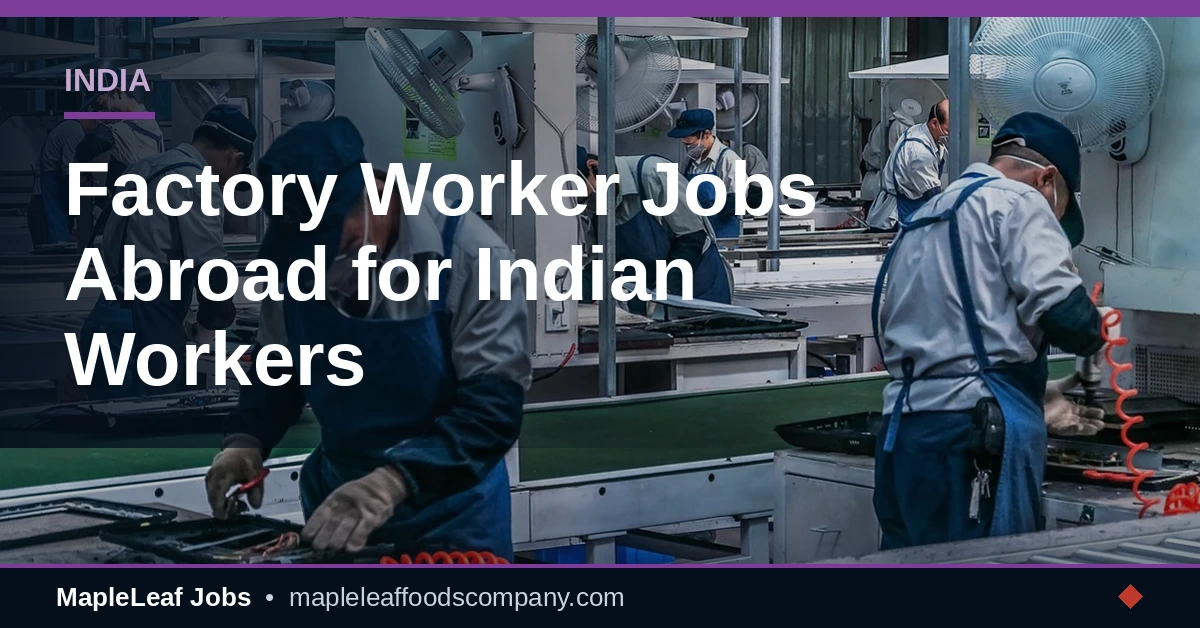
A factory worker helps make, pack, check and move products, and the exact duties depend on the factory and the product. On a production line, workers may feed materials into machines, watch the line for faults, sort items, assemble parts, or pack finished goods into boxes. Quality checking is a common duty, and it involves looking for damaged, wrongly labelled or incomplete items and removing them from the line. Machines are only operated after training and authorisation from the employer, and workers should never adjust or repair equipment they have not been trained to handle.
Countries and Industries Where Indian Factory Workers Are Hired
Indian factory workers are hired in many different countries and industries. Food processing plants prepare and package food and drinks, and they place strong emphasis on hygiene, clean clothing and safe food handling. Garment and textile factories cut, stitch, check and pack clothing, and they look for workers who can handle fabric carefully and work to a steady pace. Electronics factories assemble small parts and test finished products, and the work there needs a steady hand and close attention. Building materials factories produce items such as cement products, pipes and metalwork, and the work there can be dusty and noisy. Ask where the factory is and how workers travel there before you accept a role. You can browse current guidance on jobs and read more in articles.
Skills, Fitness and Safety at Work
Factory employers look for workers who are steady, careful and able to follow instructions exactly. On a production line, small mistakes can affect a whole batch of products, so checking your work, following the sequence and reporting faults quickly are all important. Good hand-eye coordination helps with assembly, packing and sorting, and basic reading is useful for labels, instructions and simple records. If you have experience in a factory, workshop or production role before, describe it clearly in your application, with the type of factory, the products you handled and the tasks you performed. Experience with a particular machine or process should be mentioned honestly, with the level of training you received.
Physical fitness matters, because factory work often involves standing for most of the shift, repeated movements, lifting and carrying. In hot climates, factory floors can be warm, so drink water regularly and follow the rest arrangements your employer provides. Wear the protective clothing and equipment your employer gives you, and keep long hair, loose clothing and jewellery away from moving machinery. Follow marked walkways, keep your workstation tidy, and report hazards or broken equipment to your supervisor straight away.
How the Hiring and Work Visa Process Usually Works
Hiring usually starts with the employer advertising a vacancy and shortlisting applicants whose experience and availability match the posting. If you are shortlisted, you may be invited to a video or telephone interview, asked for references from previous employers, or asked about your experience with production work and machinery. After an interview, the employer chooses a candidate and may issue a job offer. That offer is the starting point for a work visa application, but it is not a work visa by itself, and you should not travel abroad on the strength of an offer letter alone.
The work visa route depends on the country, the job, the employer and the programme involved, and the employer or sponsor usually plays a central part in the process. Our India jobs guide explains the wider picture for Indian workers seeking jobs abroad. Once the employer has the documents needed, you usually apply for a work visa, attend a medical examination if asked, provide biometrics if asked, and wait for a decision from immigration authorities. Processing times vary, so plan for a wait and do not book travel until you have a decision in writing.
Documents to Prepare Before You Apply
Good preparation makes your application stronger and faster. Prepare a clear resume that lists your work experience in order, with the name of each employer, the period you worked there, the type of factory or workplace and the duties you performed. Keep your resume short, focused and honest, and do not include information the employer has not asked for. Scan your documents clearly and keep the originals safe. Indian workers should also check whether their passport needs an emigration check, and follow the official guidance for their destination country.
You should also prepare your identity and travel documents early. Make sure your passport is valid for a good period ahead, and keep copies of your education and employment records in one place. Our documents checklist lists the papers most applicants need and explains how to organise them. If a document is not in English or the language of the destination country, you may need a certified translation. Do not send original documents to an employer or agent unless you are told to do so through an official channel. Read your work contract carefully before signing, and check the contract terms with an official source if anything is unclear. When you are ready to proceed, you can start through apply.
Scam Protection
Never share full passport details, a passport copy, bank details, passwords or one-time codes (OTPs) with anyone unverified. Verify the employer and any agent's licence through official channels first, and check that any recruitment agent in India is properly registered before you deal with them. Never pay a fee just because someone promises a guaranteed job or visa. Never send money to a personal bank account. Nobody can sell you a work permit, a job offer or a visa, and nobody can promise you a guaranteed outcome. Anyone who claims they can is almost certainly running a scam. For help checking an agent, read how to check an agent's licence by country and how to spot fake job offer letters.
Frequently asked questions
Do I need previous factory experience to work abroad?
Not always. Some employers hire workers with no factory experience and provide training on the line, while others prefer applicants who have worked in a factory or workshop before. Experience helps, but reliability, care and a willingness to learn are also valued.
Can I apply for factory jobs abroad from India?
Yes, you can apply from India, but only to employers who are willing to hire foreign workers. Read each posting carefully, check who can apply, and ask the employer whether they will support a work visa application before you assume anything.
Does a job offer mean I can start work abroad straight away?
No. A job offer is only the first step. You usually still need a work visa and residence procedures, and the employer or sponsor is usually involved in that process. Do not travel abroad for work until you have a visa decision in writing from immigration authorities.
Do factory workers abroad work nights and weekends?
Many factories operate in shifts, including evenings, nights and weekends, so these hours are common. The exact pattern depends on the employer and the product, so ask about shifts, start times and rest breaks before you accept a job.
How can I tell if a factory job offer from abroad is real?
Check the employer online, look for a real company website, address and contact details, and be cautious if you are asked to pay a fee, share sensitive documents, or accept quickly without an interview.
Disclaimer
No job, sponsorship or visa is promised. Final decisions rest with employers and immigration authorities. Rules vary by job, employer and programme and change over time. Pay is to be confirmed with the employer during recruitment. Fees and other costs vary — check official sources such as the relevant embassy and the employer before applying. This guide is general information only, not legal or immigration advice.
Apply for jobs abroad
Ready to apply? Browse current jobs and apply with your documents ready.