How to Prepare for a Gulf Job Interview on a Video Call
How to Prepare for a Gulf Job Interview on a Video Call
By MapleLeaf Foods Company | Published 9 November 2026
Published 9 November 2026
Most first interviews for Gulf jobs now happen on a video call. The employer may be in Dubai, Doha, Riyadh, Muscat or Kuwait City, and you may be at home in Pakistan, India, Nepal or Bangladesh. A video interview is a real interview: the employer is judging your experience, your communication and your readiness to work abroad. The good news is that you can prepare for almost everything in advance — your connection, your setting, your documents and your answers — so that the technology disappears and your experience speaks.
This is general guidance only. Interview practice varies by employer and role, and a good interview never guarantees a job, a visa or sponsorship. Salary is to be confirmed with the employer during recruitment. The final hiring and immigration decisions always rest with the employer and the relevant government authority.
Test your technology the day before, not the morning of
A failed connection is the most common reason a good candidate loses a video interview. The day before, test your phone or laptop camera, microphone and speaker on the same app the employer will use, and test it from the exact place you will sit. Charge your device fully and keep a charger nearby. Check your internet connection, close other apps and downloads, and ask family members not to use heavy video or downloads during your call. If your connection is weak, sit close to the router, or ask in advance whether a phone call is an acceptable backup. Keep the employer's message or email open so you can rejoin quickly if the call drops, and stay calm if it does — a dropped call is a technical problem, not a failed interview, if you reconnect promptly and politely.
Set up a quiet, tidy background and dress the part
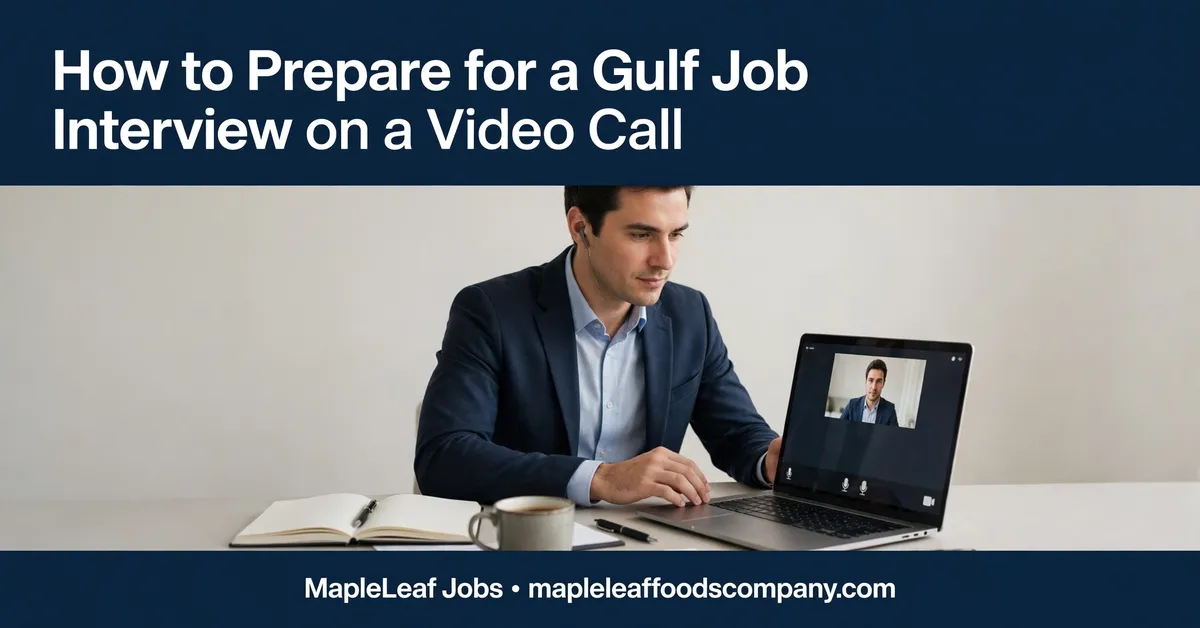
Choose a quiet room with a plain, tidy background — a blank wall is better than a busy room. Face a light source so your face is clearly visible, and avoid sitting with a bright window behind you. Keep your camera at eye level, using books or a stand if needed, and look at the camera when you speak so the employer feels you are speaking to them. Dress as you would for an in-person interview for the same role: neat, clean and work-appropriate, even if only your upper half is visible. Keep water, a pen and a notebook nearby, and keep your phone on silent. Tell your household the time of the interview and ask not to be disturbed. A calm, professional setting tells the employer you take the opportunity seriously.
Know the job, the employer and your own CV
Before the call, read the job description again and note the duties, tools and experience it asks for. Prepare two or three examples from your real work that match those duties: a task you performed, the tools you used, and the result. Be ready to explain every job on your CV, including dates, duties and reasons for leaving, because Gulf employers often verify employment history. Learn a little about the employer from its official website — what it does, where it operates, and what the role involves — so you can explain why you applied. Prepare your own questions too, about the duties, the working hours, accommodation and the recruitment steps, and ask them politely. Do not ask about salary first; pay is to be confirmed with the employer during recruitment, and the interview is your chance to show fit for the role.
Practise the questions Gulf employers ask most
Gulf interviewers often ask straightforward, practical questions. Expect to be asked to introduce yourself, to describe your current or last job, to explain the tools or systems you have used, and to describe how you handle pressure, teamwork, long hours or working far from home. Expect questions about safety at work, following instructions, and dealing with a supervisor or a difficult colleague. Prepare short, honest answers in your own words, and practise them aloud so you do not freeze on the call. If you do not understand a question, say so politely and ask the interviewer to repeat it — that is far better than guessing. If you do not know an answer, say so honestly and explain what you would do to find out. Never invent experience, qualifications or an employer you never worked for; a false claim discovered later can end the job and future visa chances.
Have your documents ready, but share nothing unverified
Keep your CV, certificates and any licence details beside you so you can answer accurately, but do not show or send original documents, passport copies or bank details on a video call unless the employer is verified and the request comes through an official channel. A genuine employer will explain the next steps clearly: a second interview, a trade test, document verification or a formal offer through a proper process. After the call, send a short thank-you message restating your interest and asking about the next steps, and keep a note of what was discussed, including who interviewed you and what was promised. If anything in the call felt wrong — a demand for payment, a request for passwords or banking details, or pressure to decide immediately — pause and verify through official channels before you reply, pay or send anything further.
For related guidance, see our Interview Abroad: Presenting Trade Experience and Documents guide, browse current job listings, read all guides, and use the apply route when you are ready. Applying does not guarantee a job, a visa or sponsorship.
Scam protection: check before you share or pay anything
Scammers sometimes pose as Gulf employers on video calls to steal identities or to charge fees for jobs that do not exist, so protect your information from the first contact. Never share full passport details, a passport copy, bank details, passwords or one-time passwords (OTPs) with anyone unverified. Verify the employer and the agent licence through official channels first — through the official contact page or an official government source, not through a phone number or email address given only by the recruiter. Never pay a fee just because someone promises a guaranteed job or visa, and never send money to a personal bank account. A genuine employer will not ask for your password or an OTP, and will not demand payment during an interview. Pause if there is urgency, secrecy, or a request for passwords or banking details. Keep the messages and the call details, and check through official channels before you reply, pay or send anything further.
Frequently asked questions
What should I do if my video call drops during the interview?
Stay calm, rejoin using the same link or message the employer sent, and apologise briefly. A dropped call is a technical problem, not a failed interview, if you reconnect promptly.
Should I dress formally for a video interview?
Dress as you would for an in-person interview for the same role: neat, clean and work-appropriate. Dressing properly shows the employer you take the opportunity seriously.
What if I do not understand the interviewer's question?
Say so politely and ask them to repeat or rephrase it. That is far better than guessing and answering the wrong question.
Should I ask about salary in the first interview?
It is usually better to ask about the duties, hours and next steps first. Salary is to be confirmed with the employer during recruitment, and the interview is your chance to show fit for the role.
Can I use notes during a video interview?
Yes. Keep short notes beside you with your key examples and questions. Glance at them naturally, but do not read long answers word for word, and keep looking at the camera when you speak.
Disclaimer: This article is general information only. Interview practice, hiring practice and immigration rules vary by country, employer and programme, and they change over time. No job, sponsorship or visa is guaranteed; final decisions rest with employers and immigration authorities. Salary is to be confirmed with the employer during recruitment. Always check official government and employer sources, and seek regulated or official advice for your own case before applying, paying any fee or sharing personal documents.
Apply Now
Apply Now: If you decide to apply through this site, use the Apply Now option on the Jobs page and follow the steps shown there. Do not send passport copies, bank details, passwords or payments by email or message to an unverified person. Apply only through the official route shown on this site, and check the details on the application page before you submit anything.