Factory Jobs in Bahrain for Foreign Workers
Factory jobs in Bahrain for foreign workers: production, packing and machine work, safety, shifts, skills, documents and how to apply safely.
Bahrain · Working Abroad · Jobs & Visa Guidance
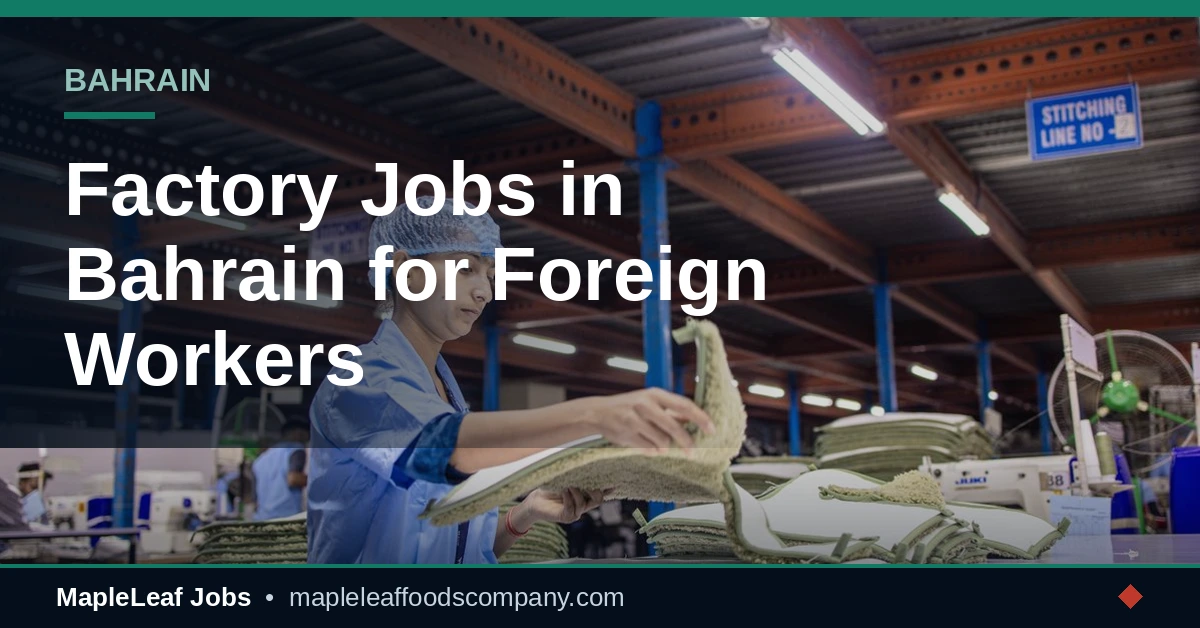
Bahrain's factories make and pack a wide range of goods, from food and drinks to building materials, packaging and light industrial products. Inside these plants, foreign workers keep production lines moving: operating machines, assembling parts, checking quality, packing finished goods and loading them for delivery. Factory work suits people who are comfortable with routine tasks, physical work and shift patterns, and who can follow instructions and safety rules carefully. Many roles do not need a university degree, and employers value reliability, attention to detail and a willingness to learn. This guide explains the main factory roles, the working conditions, and how to apply. For any factory role, pay is to be confirmed with the employer before you start.
MapleLeaf Jobs is an independent international jobs and visa guidance service. It is not affiliated with Maple Leaf Foods, the food company.
The Main Factory Roles and What They Involve
Factory work covers several kinds of roles, and each one fits a different kind of worker. Production line workers stand or sit at a line, fitting parts together, filling containers, labelling products or packing goods into boxes. Machine operators run and watch over equipment, feeding in materials, adjusting settings, and stopping the machine when something looks wrong. Quality checkers inspect products as they come off the line, looking for faults, wrong labels or damaged packaging, and setting aside anything that does not meet the standard. Packers and loaders move finished goods into cartons, stack them on pallets, and help load trucks for delivery. Storekeepers in the factory keep track of raw materials and finished stock, recording what comes in and what goes out. Some factories also need cleaners who keep the production floor and facilities tidy, and maintenance helpers who assist technicians with basic repairs. Whatever the role, the work is organised around targets and schedules, so following the routine and keeping pace with the line matters. Browse current guidance on jobs and read more background in articles.
Safety, Protective Gear and the Factory Floor
Safety is the first rule of factory work, and employers expect every worker to follow it without exception. Before you touch a machine, learn how it works, where the stop button is, and what to do if it jams or makes an unusual sound. Wear the protective gear your employer provides for your role: safety shoes, gloves, a helmet, ear protection or a mask, as the work requires. Never remove guards from machines, and never reach into moving equipment. Keep walkways clear, clean up spills straight away, and report broken equipment, frayed cables or blocked exits to your supervisor. Factories can be noisy, warm and busy, so drink water during breaks and take care with lifting: bend your knees, keep your back straight, and ask for help with heavy loads. A worker who follows safety rules protects themselves, their colleagues and the whole production line.
Skills, Accuracy and Working to a Routine
Factory employers look for workers who are steady, accurate and reliable. The work repeats the same actions many times a day, so concentration matters: a wrong label, a missed fault or a badly packed box can cause problems further down the line. Number skills help, because you may count stock, check batch numbers or record output. Basic English helps too, since instructions, safety signs and labels are often written in English, and supervisors may give directions in English. Previous factory, warehouse or packing experience is useful, so describe it in your application, including the products you worked with and the machines you used. Reliability is highly valued, because a production line depends on every worker arriving on time and staying at their post. Ask questions when a task is unclear rather than guessing, and tell your supervisor early if you are falling behind.
Shifts, Breaks and the Working Week
Factories in Bahrain usually run on shifts, so that production can continue across the day. A typical pattern includes morning, afternoon and night shifts, and weekend work is common in plants that run around the clock. Some factories run a regular daytime week, while others rotate shifts so workers take turns on nights. Your roster is usually set in advance, but it can change during busy periods when orders rise. Rest breaks during the working day and a weekly rest day are part of the arrangement, so check the shift pattern, start and finish times, and break arrangements before accepting. If the employer provides transport or accommodation, ask about the arrangements and the travel time to the factory. Comfortable safety shoes and good rest between shifts help you stay steady and accurate through long days on your feet.
Documents and the Hiring Process
Factories that hire foreign workers usually follow a clear sequence. They read applications, shortlist people whose experience fits the role, and invite them to an interview, often by video call. Some employers add a short practical check, such as packing a set of items, reading a label, or showing how you would handle a simple machine task. The employer then makes a choice and sends a written offer with the role, the factory location, the shift pattern and the start date. An offer is only the beginning. The employer usually files the work permit and entry permit for you, and you will be asked to complete a medical fitness test and biometrics for the residence visa. Before any of that, get your papers in order: a short resume showing your factory, warehouse or packing history, a passport with plenty of validity left, and references from past employers if you have them. Read the Bahrain work visa guide for the full sequence, and use our documents checklist to gather what you need.
Settling In and Doing the Job Well
A new factory job takes a few weeks to learn, so be patient with yourself and ask questions. Learn the names of your supervisor and team leaders, and find out who to tell when a machine stops or a product looks wrong. Keep your workstation tidy, put tools back where they belong, and follow the cleaning routine at the end of your shift. Look after your health: eat properly, rest between shifts, and speak up if the work is causing pain or strain. Many factory workers build their reputation on simple things: arriving on time, keeping pace with the line, checking their work, and helping a colleague who is struggling. Those habits are what lead to a contract being renewed and to better roles opening up later. When you are ready, you can start the process through apply.
Scam Protection
Fraudsters often pose as recruiters, so verify everyone before you share documents or money. Keep your full passport details, passport copy, bank details, passwords and one-time codes to yourself until you are dealing with a verified employer through a proper channel. Check the employer and any agent's licence through official channels, and walk away from anyone who demands a fee for a promised job or visa. Money sent to a personal bank account is very hard to recover. No one can sell a work permit, a job offer or a visa, and no one can promise an outcome that rests with the employer and the immigration authorities. Ask for the employer's full name, website and contact details, and insist on a written offer that sets out the terms clearly. For help checking an agent, read how to check an agent's licence by country and how to spot fake job offer letters.
Frequently asked questions
What factory jobs in Bahrain are open to foreign workers?
Production line work, machine operation, quality checking, packing, loading and factory storekeeping are the common openings for foreign workers.
Do I need factory experience to work in a factory in Bahrain?
Experience helps, especially for machine roles, but many factories train new production and packing workers from scratch.
Do factory workers in Bahrain work nights and weekends?
Many factories run shifts, so evening, night and weekend work is common, with rosters set in advance.
Can I apply for a factory job in Bahrain from outside the country?
Yes. Applications from abroad are welcome where the factory hires foreign workers, so check the posting for who may apply.
Can I begin work in Bahrain as soon as I get an offer?
Not immediately. A written offer is only the beginning. The employer still has to file the work permit and entry permit, and you still have to complete the medical fitness test and biometrics. Wait until those permits are approved before travelling.
Disclaimer
Nothing here promises a job, sponsorship or visa. Employers and immigration authorities decide each case, and the rules vary by job, employer and programme and change over time. Pay is to be confirmed with the employer during recruitment. This is general information only, not legal or immigration advice.
Apply for jobs abroad
Ready to apply? Browse current jobs and apply with your documents ready.