Croatia Work Permit: Employer-Led Route Explained
A permit tied to a job offer, an employer and the local labour market
By MapleLeaf Foods Company | Published 5 November 2026
Published 5 November 2026
If you want to work in Croatia, start with the job offer. In most cases, your employer applies for your work permit and residence permit together. You do not start by booking a flight or paying someone to sell you a permit.
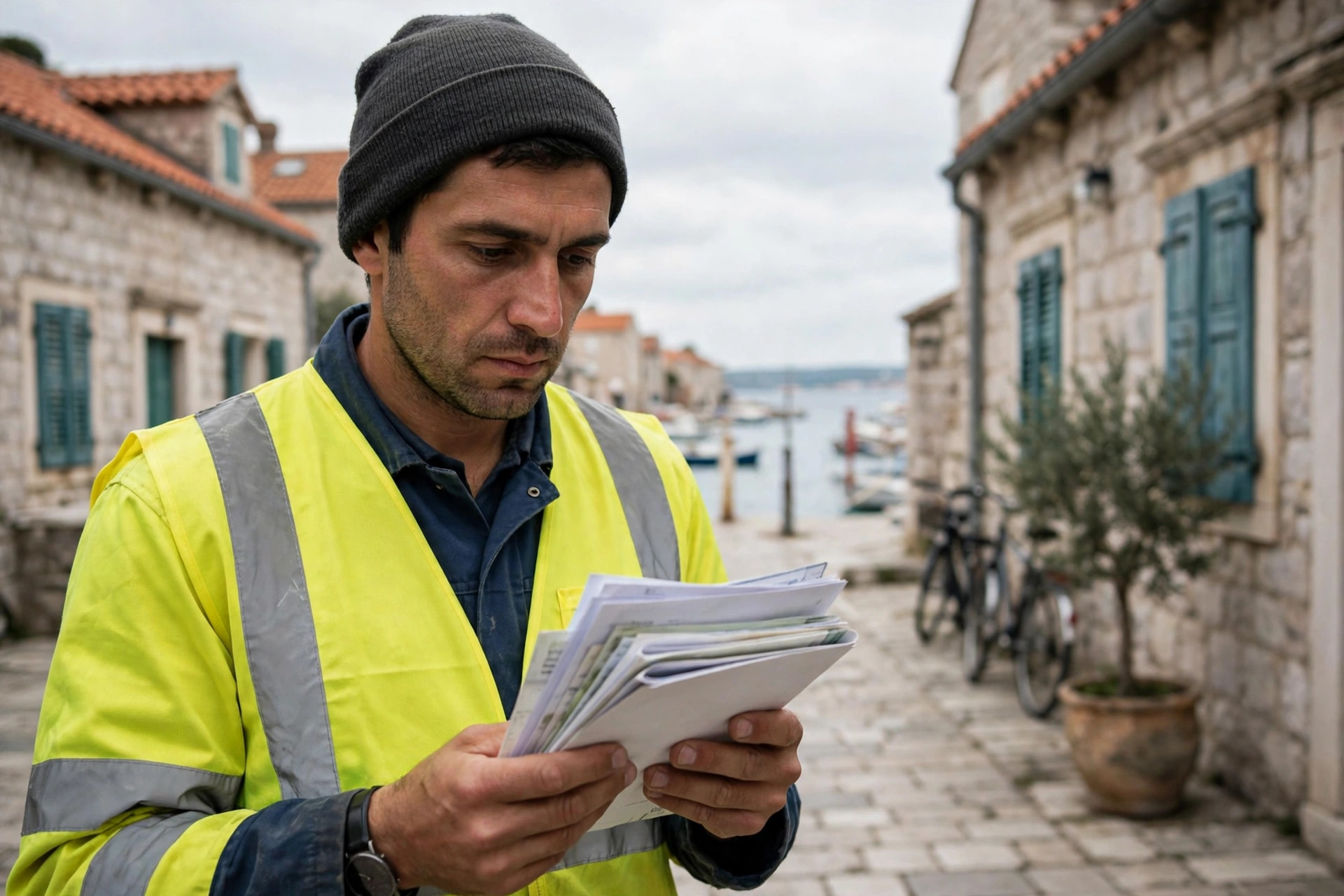
Croatia is in the EU, and it uses a single permit that covers both the right to work and the right to live in the country for a named employer, in a named job, for a named period. That link between the job and the permit shapes every step that follows.
Who needs a work permit, and who does not
Citizens of the EU, the EEA and Switzerland can usually work in Croatia without a work permit. Everyone else usually needs one before they can start work. That is the basic rule, and it is worth checking before you accept a job or pay for anything.
If you need a permit, it is not a document you buy on its own. It is linked to a real job, with a real employer, and it is issued for that job. If the job changes, the permit usually has to change too.
Who files the application
In most cases, your employer files the application. You do not usually file it yourself. The employer applies to the Ministry of the Interior (MUP) for a work and residence permit for you, and provides the details of the job, the contract and your documents.
That does not mean you have nothing to do. You will need to provide your passport and other documents, and to check that the information the employer files about you is correct. If the employer asks you to pay for the permit itself, treat that as a warning sign.
The labour market test, in plain terms
In many cases, the employer must first check whether a suitable worker is already available in Croatia or in the wider EU, EEA and Switzerland labour market. That check is done through the Croatian Employment Service. If no suitable worker is available, the employer can proceed with the application for a worker from outside that labour market.
The test is about the job, not about you as a person. It asks whether the vacancy could be filled locally first. Your employer should be able to tell you whether a test applies to your job, and what the result was.
When no labour market test is needed
The Aliens Act lists categories where no labour market test is needed. Those categories include some seasonal workers and some shortage occupations, and the list can change. Do not assume your job is exempt. Check the current official list, and ask the employer to confirm which category, if any, applies to your job.
What the permit covers, and what it does not
The permit is tied to a named employer, a named job and a place of work. It does not give you a general right to work for any employer in Croatia. If you change employer, change job or change place of work, you will usually need a new permit or a new approval, and you should check that before you change anything.
The permit also covers your residence in Croatia for the period it is issued for. It is not a travel document, and it does not replace your passport.
How long it lasts, and renewal
The permit usually follows the length of your employment contract, up to the legal maximum. If the contract is extended, the permit can be renewed. Apply for renewal before the current permit expires, and do not assume you can keep working while a late application is processed. Keep a record of the expiry date, and start the renewal process in good time.
How to apply, step by step
- Find a job with an employer who can sponsor a work permit. Check that the employer is registered, that the job is genuine, and that the contract terms are in writing.
- Your employer files the application for a work and residence permit with the Ministry of the Interior, with the job details, the contract and your documents.
- If the application is approved, you may need to apply for a long-stay visa (D visa) at a Croatian embassy or consulate before you travel, if you need a visa to enter Croatia.
- After you arrive, collect your residence permit card at the police administration, give your biometrics and register your address.
- Start work only when the permit allows it, and only for the employer, job and place of work named in the permit.
What to check before you start
- The job offer is in writing, with the job title, the place of work, the hours and the pay.
- You know who pays for what, and no one has asked you to pay for the permit, the visa or the job offer.
- Your passport is valid, and you have the documents the employer and the authorities ask for.
- You know the expiry date of the permit, and what happens if the contract ends early.
- You have checked the official source, and not relied only on what an agent or a social media post told you.
Protect Yourself From Scams
The most common scams in this area are simple. Someone offers you a job that does not exist, asks you to pay for a work permit or a visa, or sends you a fake contract. A genuine employer will not ask you to pay for a work permit, a visa, or a job offer. If someone asks you to pay for a work permit, a visa, or a job offer, stop. Check the official source before you pay or share your passport or bank details, and do not travel on the basis of a promise that has not been put in writing by a real employer.
Frequently Asked Questions
Do I need a work permit to work in Croatia?
If you are not a citizen of the EU, the EEA or Switzerland, you usually need one before you can start work. Citizens of the EU, the EEA and Switzerland can usually work without one.
Who applies for the permit?
In most cases, your employer applies. The employer files the application with the Ministry of the Interior, with the job details, the contract and your documents.
Can I change employer on the same permit?
Usually not. The permit is tied to a named employer, job and place of work, so a change usually needs a new permit or a new approval. Check before you change anything.
Do I need a visa as well as a permit?
It depends on your nationality. Some workers need a long-stay visa (D visa) to enter Croatia after the permit is approved, while others do not. Check the visa rule for your nationality before you travel.
How long does the permit last?
It usually follows the length of your employment contract, up to the legal maximum. If the contract is extended, the permit can be renewed, and you should apply for renewal before it expires.
General Information Disclaimer
This article is general information, not immigration advice. It was written for people researching a possible move. It does not promise that a job, a licence, a certificate, or a visa will be available, and it is not a substitute for official guidance. Immigration rules and official lists can change. Always check the official source, and the current guidance, before you apply.
See also: Romania Work Permit: A General Guide for Foreign Workers, Poland Work Permit Type A: Employer Sponsored Employment, and Browse Jobs.