Construction Worker Jobs in Saudi Arabia for Foreign Workers
Construction worker jobs in Saudi Arabia for foreign workers: site trades, safety rules, camp life, hiring steps, visa process and scam warnings.
Saudi Arabia · Working Abroad · Jobs & Visa Guidance
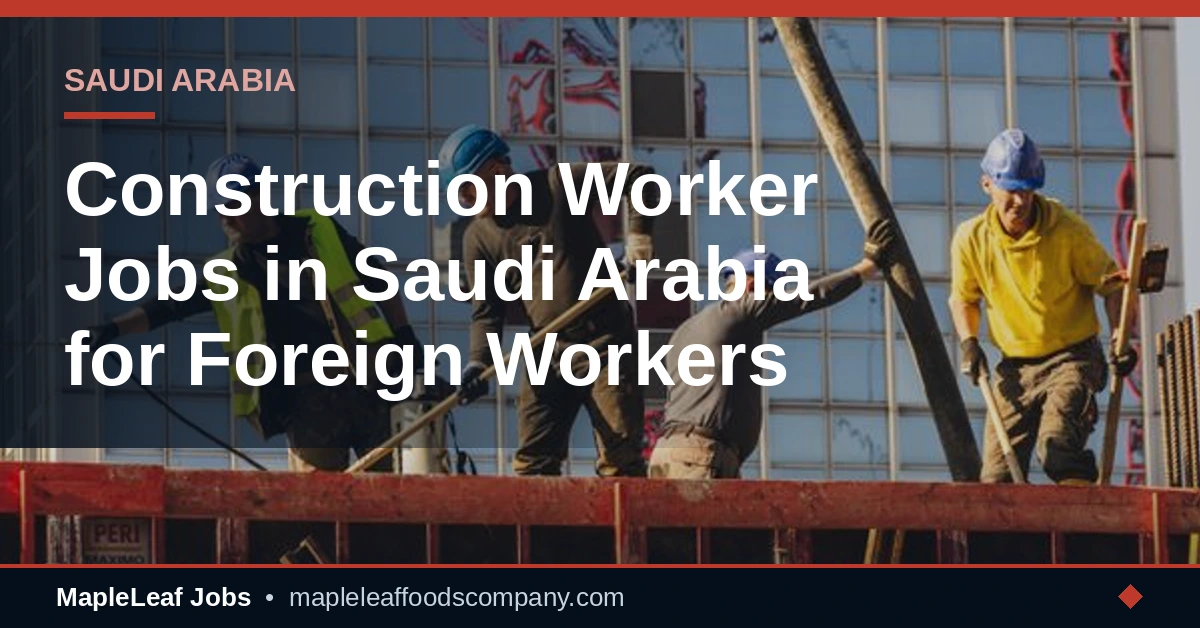
Saudi Arabia is building on a scale few countries can match: new cities, stadiums, hotels, metro lines and vast housing schemes rise across the Kingdom, and behind every one of them stands an army of construction workers. Steel fixers tie reinforcement bars in the heat, masons lay block after block, scaffolders raise the frames other trades stand on, and general labourers move material wherever it is needed. Most of these workers arrived from abroad, and contractors keep recruiting because the work never really stops. This guide explains the trades on offer, the safety rules that govern site life, how hiring works and what to check before boarding a plane. The amount paid for any construction role is to be confirmed with the employer during recruitment.
MapleLeaf Jobs is an independent international jobs and visa guidance service. It is not affiliated with Maple Leaf Foods, the food company.
The Trades on a Saudi Building Site
A construction site is a small town of trades working side by side. Steel fixers cut and tie reinforcement bars to the engineer's drawings, a job that needs strong hands and a careful eye. Masons and block layers build walls, while carpenters shape formwork for concrete and scaffolders erect the temporary structures that let others reach high work. General labourers load and unload, mix materials, keep the site clear and support the skilled trades. Welders join steel, painters finish interiors, and electricians and plumbers arrive once the structure stands. A worker who can do more than one trade — a mason who also tiles, a labourer who learns scaffolding — is more useful to a contractor and often finds steadier work. Readers can look at current guidance on jobs and browse wider background reading in articles.
Safety on Site Is Not Optional
Construction is one of the most dangerous trades, and Saudi sites enforce safety rules strictly. A helmet, safety boots, gloves and a high-visibility vest are the minimum on any site, and working at height needs a harness while dusty or noisy tasks need masks and ear protection. Scaffolding must be checked before use, lifting operations follow a signal system, and nobody should stand under a suspended load. A new worker should attend the safety induction before starting, ask questions when a task is unclear, and never operate machinery without training. Heat is the other hazard: summer temperatures on an open site are extreme, so sites schedule heavy work for cooler hours, provide shaded rest areas and expect workers to drink water constantly. A worker who feels dizzy or unwell in the heat should stop and tell the supervisor at once.
A Day on Site and Life in Camp
The working day usually starts early, before the sun climbs, with a briefing on the day's tasks. The crew then works through its programme — tying steel, pouring concrete, laying blocks — with a midday break and a shorter pause in the afternoon. Fridays are generally the day off, though schedules vary by project and by contractor. Most construction workers live in company accommodation, often a camp with shared rooms, a canteen and basic facilities, and transport to the site is usually provided. Meals may be provided or arranged through the camp canteen, and the details should be confirmed in writing before departure. Life in camp is communal: workers from many countries share rooms and routines, and keeping personal documents safe, respecting others' rest and staying in touch with family are part of settling in. The Oman construction guide shows how similar site work is organised elsewhere in the Gulf.
What Contractors Look For
Experience in the trade matters most, and a worker who can show photographs of earlier work or a reference from a previous contractor has an advantage. Physical fitness is essential, since the work is heavy and outdoors, and a willingness to work in heat and dust is part of the job. Contractors also value workers who follow instructions carefully, turn up on time and look after their tools. Basic English or Arabic helps a worker understand the foreman and read safety signs, though many crews work in their own language under a supervisor who translates. Some trades need a certificate, such as scaffolding or welding, and a worker with that paper should keep the original safe and carry copies. Age and health play a part too, since the medical examination before departure screens for conditions that would make heavy site work unsafe.
Hiring, Contracts and the Visa Process
Contractors usually recruit through an agency in the worker's home country, which collects applications and forwards candidates whose trade matches the project's needs. A shortlist leads to a call or interview, where the employer asks about earlier site work, the trades the worker can do and any certificates held. When a post is offered, the terms should arrive in writing, naming the trade, the project location, the working hours, the weekly day off, the accommodation and the food arrangement, and the worker should study them before agreeing. After that, the employer starts the work visa process, while the worker gathers the documents the employer asks for: a travel document with plenty of validity left, a police clearance certificate from home and any trade certificates. A health examination, done before departure and repeated after arrival, is expected along the way. The construction worker visa guide covers the visa side in more detail, and the documents checklist helps a worker tick off every paper that is usually asked for.
Money, Hours and Problems to Watch
Pay for construction work is usually monthly, and the worker should know in writing what the month covers, including overtime rules and the day wages are paid. A worker should also ask who pays for the residence permit renewal, since a permit allowed to lapse can block banking and travel. Common problems include wages arriving late, a trade turning out different from the one promised, and accommodation that is crowded or far from the site. These should be raised with the employer in writing, with the worker keeping a copy, and wage problems can be taken to the official labour channels, backed by the contract and any pay slips. The Saudi iqama renewal guide explains how residence permits are extended, and the Saudi work visa process guide sets out the steps in order. A construction worker who is ready can begin the process through apply.
Scam Protection
Never share full passport details, a passport copy, bank details, passwords or one-time codes (OTPs) with anyone unverified. Verify the employer and any agent's licence through official channels first. Never pay a fee just because someone promises a guaranteed job or visa. Never send money to a personal bank account. Nobody can sell you a construction job, a work permit or a visa, and nobody can promise you a guaranteed outcome. Anyone who claims they can is almost certainly running a scam. Be careful of agents who show pictures of famous projects and claim a placement there without a written offer from the contractor, and of anyone asking for payment before an interview has even happened. For help checking an agent, read how to check an agent's licence by country and how to spot fake job offer letters.
Frequently asked questions
Which construction trades are most in demand in Saudi Arabia?
Steel fixing, masonry, carpentry, scaffolding, general labour, welding and finishing trades are all regularly recruited for large projects across the Kingdom.
Do I need a certificate to work on a Saudi construction site?
Some trades need one, such as scaffolding or welding, while general labour and masonry usually rely on demonstrated experience and references from earlier work.
What safety gear will I need on site?
A helmet, safety boots, gloves and a high-visibility vest are the minimum, with a harness for work at height and masks and ear protection for dusty or noisy tasks.
Where do construction workers live in Saudi Arabia?
Most live in company accommodation, often a camp with shared rooms and a canteen, with transport to the site provided by the employer.
Who arranges the work visa for a construction worker?
The contractor acting as sponsor starts the work visa side, while the worker provides a travel document with plenty of validity left, a police clearance and trade certificates, and goes through the health examinations.
Disclaimer
No job, sponsorship or visa is promised. Final decisions rest with employers and immigration authorities. Rules vary by job, employer and programme and change over time. Pay is to be confirmed with the employer during recruitment. This guide is general information only, not legal or immigration advice.
Apply for jobs abroad
Ready to apply? Browse current jobs and apply with your documents ready.