Cashier Jobs in Qatar for Foreign Workers
Cashier jobs in Qatar for foreign workers: malls, supermarkets, till work, documents, daily shifts, and how to apply safely through verified channels.
Qatar · Working Abroad · Jobs & Visa Guidance
Qatar's shopping malls, supermarkets and hypermarkets employ many foreign cashiers, and the role is one of the most common first jobs for workers arriving in Doha. From the large malls of West Bay and Lusail to the neighbourhood supermarkets of Al Wakrah and Al Rayyan, cashiers handle the final step of every purchase. This guide explains what the work involves in Qatar, which skills and documents are usually needed, what shifts look like, and how to apply without being misled. Pay is not fixed in advance for these roles; it is something to confirm with the employer during recruitment.
MapleLeaf Jobs is an independent international jobs and visa guidance service. It is not affiliated with Maple Leaf Foods, the food company.
Where Cashiers Work in Qatar
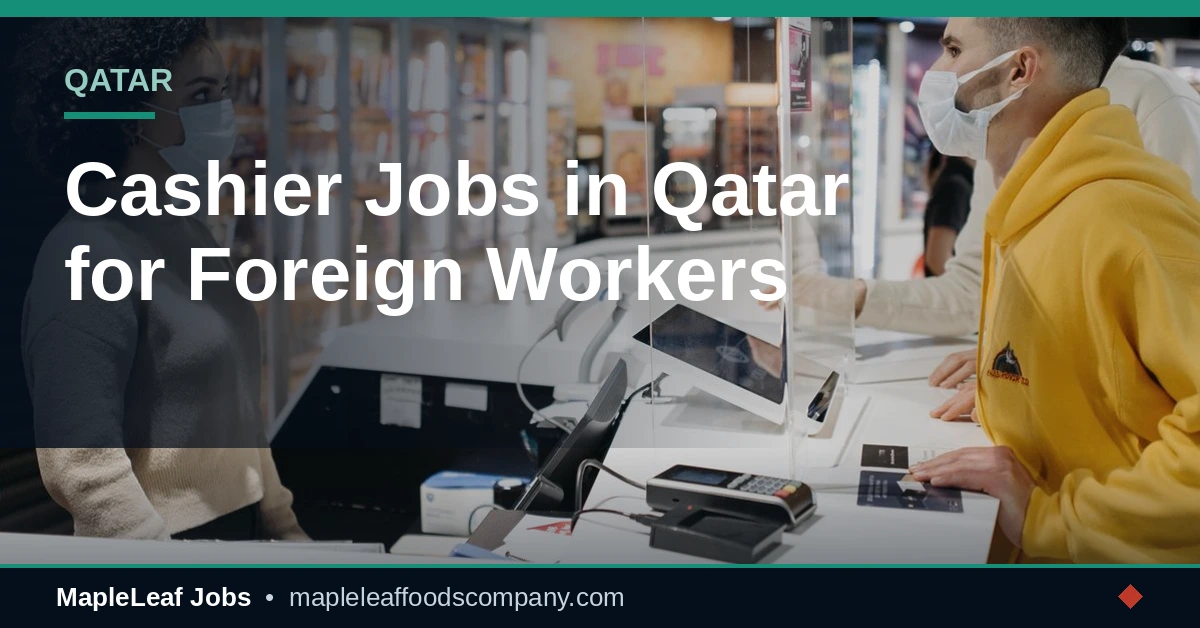
Cashiers in Qatar work in several kinds of stores. Hypermarkets and supermarkets are the biggest employers, with long rows of tills and steady customer traffic from morning until late evening. Shopping mall stores, including clothing, electronics and homeware shops, also employ cashiers, and the pace there rises sharply during sales and holiday seasons. Smaller grocery shops and convenience stores employ fewer cashiers, but the role is often broader there, with the cashier also helping to arrange shelves and receive deliveries.
Each setting has its own rhythm. A hypermarket cashier serves a constant flow of families doing a weekly shop, while a mall cashier may have quiet spells followed by sudden rushes when a promotion begins. A worker applying for a cashier role should ask which type of store the job is in, because the pace, the hours and the training differ. Workers can look over current openings on jobs and wider background reading in articles while they prepare.
Till Work, Card Payments and Accuracy
Qatari stores use modern till systems, and new cashiers are trained on the system during their first days. Training usually covers scanning barcodes, weighing fresh items, applying discounts and vouchers, and taking payments by card, mobile wallet and cash. Card payments are very common in Qatar, so a cashier must be confident with card machines and with checking that a payment has gone through before handing over the receipt.
Accuracy matters on every transaction. Items must be scanned once and only once, promotions must be applied as the store intends, and the cash drawer must match the system record at the end of the shift. Stores have procedures for mistakes, such as a wrongly scanned item or a failed card payment, and a cashier should learn those procedures early rather than trying to fix problems alone. A careful worker who counts change slowly and checks the screen before finishing a sale will avoid most errors.
Serving Qatar's International Customers
Doha is home to people from many countries, and a cashier may serve customers from a dozen nationalities in a single shift. English is widely spoken in shops and malls, and many customers also speak Arabic, Hindi, Urdu, Tagalog or other languages. A cashier who greets customers warmly, listens carefully and stays patient when a customer is unsure about a price or a product will do well, even without speaking every language.
Good manners are noticed. Helping an elderly customer with bags, waiting patiently while a customer checks a wallet, or explaining a promotion clearly all build a good reputation with the store manager. During busy times, such as the evenings before a public holiday, queues grow long, and a cashier who stays calm and keeps a steady pace helps the whole store run smoothly.
The Visa Journey From Application to Arrival
Applying for a cashier job in Qatar starts at home, with the worker gathering the papers that only they can provide: a passport with enough validity left, and a police clearance certificate, which is best requested early because it can take a while. Once an employer offers the role, the employer takes over the work visa, and the worker should ask for the visa steps to be explained in writing so there are no surprises. A medical fitness check follows, usually arranged by the employer, and the worker should find out where it happens and what it involves.
The contract is the document that ties everything together. It should name the shop or mall, describe the cashier role, set out the hours and the rest days, and explain what is provided for housing and medical care. A worker who reads it fully, keeps a copy, and asks about anything unclear before travelling is far safer than one who signs in a hurry. A clear CV helps: till work, shelf work or any customer-facing job is relevant, and the languages spoken are worth listing. When everything is ready, the application can go in through apply. The guide to retail and sales jobs in Qatar describes nearby shop roles, and the guide to fake job offer letters shows what to check before signing.
Mall Hours, Split Shifts and Rest Days
Malls and supermarkets in Qatar open long hours, so cashier rotas move between morning and evening work, and some stores use split shifts with a break in the middle of the day. Evenings are the busiest stretch, when shoppers arrive after work, and weekends bring the heaviest crowds, especially during sales and the run-up to public holidays. A cashier spends most of the shift standing, and the first weeks can be tiring until the body adjusts.
Because shops open every day, a cashier's rest day is fixed by the employer and often falls on a weekday rather than a weekend. The contract should spell out the shift pattern, the break arrangements and the rest day, and a worker who understands all three before departure will settle in much faster. Recruiters can be checked through the guide to checking an agent's licence by country, and the guide to cashier jobs in the UAE looks at the same role in a nearby market.
Scam Protection
Never share full passport details, a passport copy, bank details, passwords or one-time codes (OTPs) with anyone unverified. Verify the employer and any agent's licence through official channels first. Never pay a fee just because someone promises a guaranteed job or visa. Never send money to a personal bank account. Nobody can sell you a job, a work permit or a visa, and nobody can promise you a guaranteed outcome. Anyone who claims they can is almost certainly running a scam. Be careful of offers that arrive only through chat apps, agents who will not name the store or the mall, and anyone who asks for money before a written contract and a visa process exist.
Frequently asked questions
Do I need previous cashier experience to work in Qatar?
Previous till or shop experience is helpful but not always required, because employers usually train new cashiers on their till system, and customer service experience counts as well.
Do cashiers in Qatar need to speak Arabic?
Arabic is helpful, but English is widely spoken in Qatar's shops and malls, and many employers accept workers who can manage simple phrases in English.
What documents do I need before applying?
A valid passport, a work visa arranged through the employer, a medical fitness result and usually a police clearance certificate are needed, along with a signed employment contract.
Are cashier shifts in Qatar mainly in the evening?
Shifts rotate between mornings and evenings, but evenings and weekends are the busiest times in most malls, supermarkets and hypermarkets.
Is till training provided by the employer?
Yes, employers usually train new cashiers during the first days of work, covering scanning, card payments, discounts, vouchers and cash handling.
Disclaimer
No job, sponsorship or visa is promised. Final decisions rest with employers and immigration authorities. Rules vary by job, employer and programme and change over time. Pay is to be confirmed with the employer during recruitment. This guide is general information only, not legal or immigration advice.
Apply for jobs abroad
Ready to apply? Browse current jobs and apply with your documents ready.