Cashier Jobs in Kuwait for Foreign Workers
Cashier jobs in Kuwait for foreign workers: co-ops, supermarkets, till work, documents, daily shifts, and how to apply safely through verified channels.
Kuwait · Working Abroad · Jobs & Visa Guidance
Kuwait's cooperative societies, supermarkets and shopping centres employ many foreign cashiers, and the role is a steady entry point for workers arriving in the country. The cooperative, known locally as the jamiya, sits at the centre of most residential areas, and its tills are busy from morning until late evening. This guide explains what cashier work involves in Kuwait, which skills and papers are usually needed, what a shift looks like, and how to apply safely. What a cashier is paid is agreed with the employer during recruitment, and is to be confirmed there.
MapleLeaf Jobs is an independent international jobs and visa guidance service. It is not affiliated with Maple Leaf Foods, the food company.
The Cooperative and the Supermarket: Where Cashiers Work
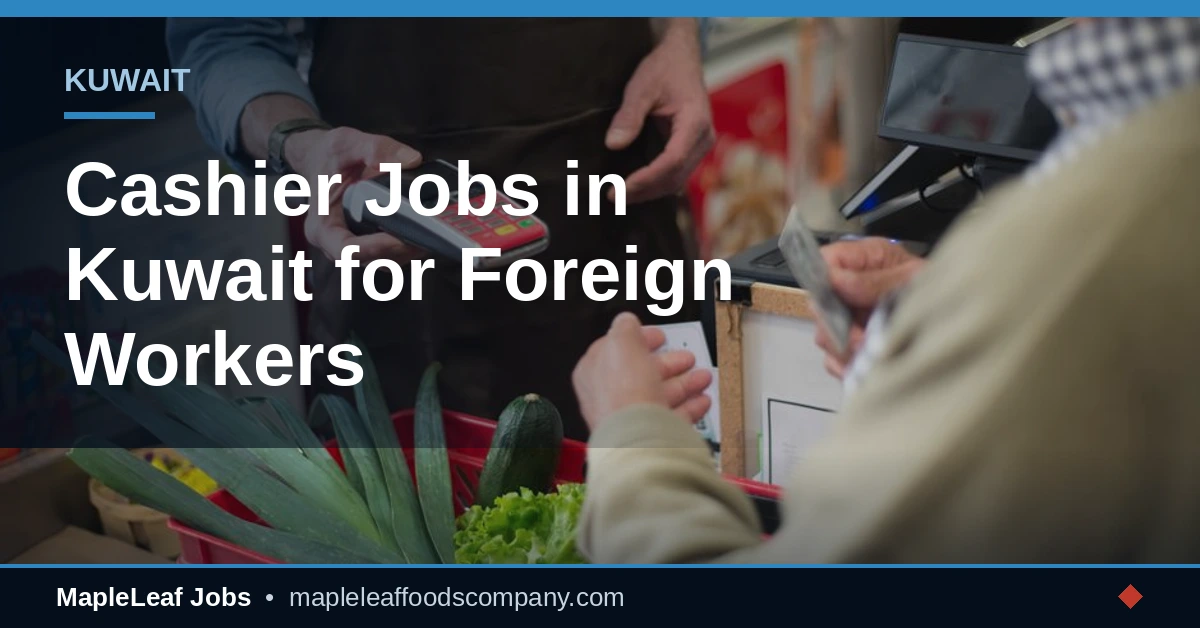
A distinctive feature of Kuwait is the cooperative society in each residential area. These co-ops sell groceries, household goods and fresh produce to local families, and they employ cashiers, shelf staff and supervisors, many of whom are foreign workers. A cashier in a co-op often serves the same families week after week, so regular customers come to know the staff by sight, and a friendly, reliable cashier is remembered.
Alongside the co-ops, Kuwait has large supermarkets, hypermarkets and shopping centres in areas such as Hawalli, Salmiya and Kuwait City, where cashiers handle a faster flow of customers. The pace in a hypermarket is quicker, the range of goods is wider, and the till system is more complex. A worker should ask which type of store the job is in before accepting, because the daily routine differs. Workers can look over current openings on jobs and wider background reading in articles while they prepare.
Till Systems, Weighing and Cash Handling
Kuwaiti stores use computerised till systems, and new cashiers are trained on the system during the first days of work. Training covers scanning barcodes, weighing fruit and vegetables, applying promotions, and taking payments by card and in cash. Fresh produce needs particular care, because the cashier must select the right item on the screen before weighing it, and a mistake there can change the price.
Cash handling is a core skill. Notes and coins must be counted carefully, change must be given correctly, and the drawer must balance with the system record at the end of the shift. Card payments are common in Kuwait, so a cashier must also know how to run a card machine and confirm that a payment has succeeded before finishing the sale. A worker who has handled money in a shop at home will recognise the habits involved, even though the till system itself will be new.
Customers, Language and Everyday Manners
Cashiers in Kuwait serve Kuwaiti families, long-term foreign residents and short-term visitors, so a single shift can bring many nationalities to one till. Arabic is the language of the country, and a few polite Arabic phrases for greetings and numbers are warmly received, while English is also widely used in larger stores. A cashier who listens carefully, speaks clearly and stays patient will manage well even while learning the language.
Manners matter in a co-op setting, where the same customers return again and again. Remembering a regular customer's usual bag, greeting children politely, or helping an older customer with heavy bags all build trust. During the evening rush and the period before major holidays, queues grow long, and a cashier who remains calm and keeps a steady pace helps the whole store.
A Paperwork Checklist, in Order
It helps to tackle the paperwork for a Kuwaiti cashier job in order. First comes the passport, which needs plenty of validity left, and then a police clearance certificate from the home country, best requested early because it can take time. Next the employer arranges the work visa, and a genuine employer will walk the worker through each step without demanding payment for the job itself. A medical fitness result is also part of the process, and the employer should explain where it takes place.
The last item on the checklist is the contract, and it should be signed only after it has been read in full. It needs to name the store or cooperative, describe the role, set out the hours and rest days, and explain what is provided for housing and medical care. A worker should keep a copy of everything. A CV showing till work, shop work or any job serving customers will strengthen the application, and listing the languages spoken helps too. Once the checklist is complete, the application can go in through apply. The guide to retail and sales jobs in Kuwait describes nearby shop roles, and the guide to fake job offer letters shows what to check before signing.
A Day Shaped by the Evening Rush
In a Kuwaiti co-op or supermarket, the day has a clear shape. Mornings are steady, with regular customers picking up bread and fresh items. The afternoon often quiets down, and then the evening brings the rush, when families arrive after work and the tills run non-stop until closing. Weekends are heavier still, and the days before a major holiday can be the busiest of the year, with shoppers buying for gatherings. A cashier should expect to stand through most of this, with breaks fitted around the busy spells.
Because the shops open daily, rest days are arranged by the employer rather than falling on a fixed weekend. A new cashier should ask how the rota works, when breaks fall, and which day is the rest day, before signing the contract. Knowing the pattern in advance makes the first month far easier. Recruiters can be checked through the guide to checking an agent's licence by country, and the guide to cashier jobs in the UAE looks at the same role in a nearby market.
Scam Protection
Never share full passport details, a passport copy, bank details, passwords or one-time codes (OTPs) with anyone unverified. Verify the employer and any agent's licence through official channels first. Never pay a fee just because someone promises a guaranteed job or visa. Never send money to a personal bank account. Nobody can sell you a job, a work permit or a visa, and nobody can promise you a guaranteed outcome. Anyone who claims they can is almost certainly running a scam. Be careful of agents who demand money before an interview, who refuse to name the store or the cooperative, or who send an offer with no company address and no written contract.
Frequently asked questions
Do I need previous cashier experience to work in Kuwait?
Previous till or shop experience is helpful but not always required, because employers usually train new cashiers on their till system, and customer service experience is valued as well.
What is a cooperative society in Kuwait?
A cooperative society, known locally as a jamiya, is a community supermarket in a residential area that sells groceries and household goods to local families and employs many foreign cashiers.
Do cashiers in Kuwait need to speak Arabic?
Arabic is helpful and appreciated by customers, but English is widely used in larger stores, and many employers accept workers who can manage simple phrases in English.
What documents do I need before applying?
A valid passport, a work visa arranged through the employer, a medical fitness result and usually a police clearance certificate are needed, along with a signed employment contract.
Are cashier shifts in Kuwait mainly in the evening?
Shifts rotate between mornings and evenings, but evenings and weekends are the busiest times in most co-ops, supermarkets and hypermarkets.
Disclaimer
No job, sponsorship or visa is promised. Final decisions rest with employers and immigration authorities. Rules vary by job, employer and programme and change over time. Pay is to be confirmed with the employer during recruitment. This guide is general information only, not legal or immigration advice.
Apply for jobs abroad
Ready to apply? Browse current jobs and apply with your documents ready.