Canada Truck Driver Jobs: Licence, LMIA Route and Requirements
Canada Truck Driver Jobs: Licence, LMIA Route and Requirements
By MapleLeaf Foods Company | Published 9 November 2026
Published 9 November 2026
Truck driving is one of the most consistently in-demand occupations in Canada, and one of the most realistic routes for experienced foreign drivers. But it is also one of the most misunderstood. Your home-country heavy vehicle licence does not transfer directly, the LMIA rules got harder in 2026, and a job offer alone does not guarantee a work permit or permanent residence. This guide explains the licence, the LMIA route and the requirements as they stand in 2026.
MapleLeaf Jobs is an independent international jobs and visa guidance service. It is not affiliated with Maple Leaf Foods, the food company. This guide is general information only, not legal or immigration advice.
What Truck Driver Jobs in Canada Look Like
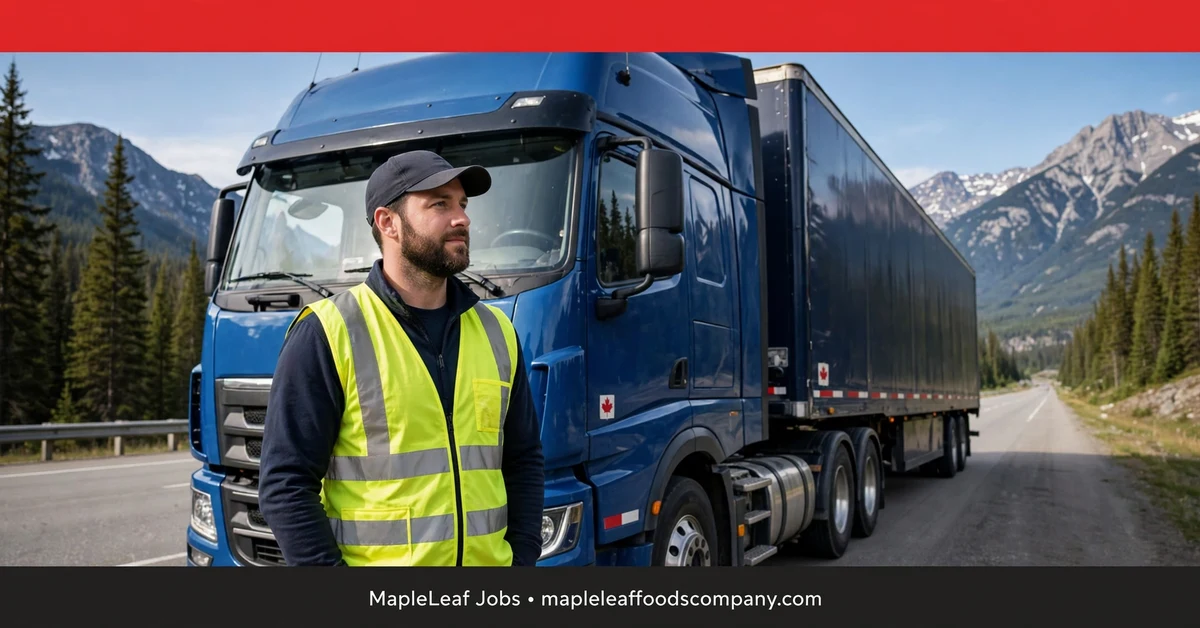
Transport truck drivers in Canada fall under NOC 73300, in TEER 3. The occupation covers drivers of heavy trucks used for long-haul and local transport of goods, including tractor-trailers, tankers, flatbeds, reefers and dump trucks.
Long-haul drivers move freight across provinces and sometimes across the border into the United States, spending days or weeks on the road and sleeping in the truck. Regional and local drivers run shorter routes and usually return home more often. The work involves driving for long hours, loading and unloading, checking the vehicle, keeping logs, and dealing with weather, road conditions and delivery schedules. Winter driving in Canada is a serious skill: snow, ice and long dark hours are part of the job for much of the year.
Pay for truck driver roles is to be confirmed with the employer during recruitment. Do not trust a post that promises a specific high wage with no experience and no interview. Real employers state pay in the job offer and the contract.
The Licence: Class 1, Class AZ and MELT
To drive a tractor-trailer in Canada you need the provincial commercial licence for combination vehicles. In most provinces it is called Class 1. In Ontario it is called Class AZ. A Class 3 licence covers smaller straight-body trucks without a full trailer, and is used for some regional and local roles. An air brake endorsement is required for most tractor-trailers.
Licensing is a provincial responsibility, so the exact process depends on where you will live. But one rule applies almost everywhere: your foreign heavy vehicle licence cannot simply be swapped for a Canadian Class 1 or AZ licence. Canada has no general exchange for foreign commercial licences. Even drivers from countries with a car-licence agreement usually get only a regular passenger licence in exchange, and must then test for the commercial class.
Most provinces require Mandatory Entry-Level Training (MELT) before you can take the road test for a Class 1 or AZ licence. The hours vary by province: Ontario's Class A MELT is at least 103.5 hours, Saskatchewan and Manitoba require at least 121.5 hours for Class 1, Alberta's Class 1 MELT is around 113 hours, and British Columbia has its own Class 1 MELT programme. You should also expect a knowledge test, an air brake endorsement where required, a medical report and a road test. In Ontario you need a full G licence before you can apply for AZ; other provinces have their own steps.
This means a foreign driver usually needs time in Canada, and training in Canada, before they can legally drive a tractor-trailer there. Some employers sponsor drivers and support them through licensing after arrival, but you should confirm the exact arrangement in writing before you accept an offer. Do not pay a large fee to an agent for a "Canadian truck licence" before you have a job and a work permit route.
The LMIA Route: How Foreign Drivers Are Usually Hired
For most foreign truck drivers, the employer must obtain a positive Labour Market Impact Assessment (LMIA) before you can apply for a work permit. The LMIA is issued by Employment and Social Development Canada (ESDC) and confirms that the employer tried to hire Canadians and permanent residents first, and that hiring you will not harm the local labour market. Read LMIA explained for the full process.
Most trucking jobs fall under the low-wage LMIA stream, because driver pay is generally below the high-wage threshold in each province. Low-wage LMIAs have stricter rules, including a cap on the share of low-wage foreign workers at a work location. In 2026 the rules tightened further: from 9 October 2026 to 7 January 2027, ESDC is not processing low-wage LMIAs for jobs located in 30 census metropolitan areas where unemployment is above 6%, including Toronto, Calgary, Edmonton, Vancouver, Montreal, Halifax and others. Trucking is not one of the exempt sectors. This does not close the route, but it means the location of the job matters more than ever.
It is illegal in Canada for an employer or recruiter to charge a foreign worker for an LMIA or a job offer. Legitimate employers cover the LMIA process themselves. If someone asks you to pay for an LMIA, stop.
Once the LMIA is positive, you apply to IRCC for an employer-specific work permit using the job offer and the LMIA confirmation number. That permit ties you to the sponsoring employer. You cannot simply change employers without a new permit.
Requirements Employers Look For
Most employers sponsoring foreign drivers want one to three years of verifiable heavy vehicle driving experience, ideally long-haul or intercity experience, and experience with refrigerated, tanker or flatbed trailers is an advantage. You need a clean driving record, and you will need to provide it. A criminal record check and a medical examination are normally required.
Language matters more than many drivers expect. You need enough English or French to pass the licence knowledge test, to communicate with dispatchers and customers, to read road signs and delivery paperwork, and to keep accurate logs. For immigration, NOC 73300 is TEER 3, so a year of Canadian driving can make you eligible for the Canadian Experience Class with CLB 5, but check the current Express Entry rules before planning around that. Truck driving was dropped from Express Entry's transport category, and drivers are not in any 2026 Express Entry category, so do not plan on a category-based draw.
Prepare the documents in the documents checklist: passport, driving licence and driving record from your home country, employment references from previous trucking employers, and a CV in English listing your real driving experience with dates, vehicle types and routes.
Routes from Truck Driving to Permanent Residence
Several Provincial Nominee Programs run streams for truck drivers, including programmes in British Columbia, Saskatchewan, Alberta, Ontario, Nova Scotia and New Brunswick, often pairing a job offer with nomination towards permanent residence. The exact streams, caps and occupation lists change regularly, so check the province you are targeting before you rely on a particular stream.
The Rural Community Immigration Pilot and the Atlantic Immigration Program can also suit drivers whose employers are in a participating community or an Atlantic province. Read the RCIP guide and the Atlantic Immigration Program guide to compare them with a PNP route.
Whatever the route, the pattern is the same: a genuine job, Canadian driving experience, a valid Canadian commercial licence, language ability and a clean record. No agent can shortcut the licence or the LMIA.
Scam Protection
Never share full passport details, a passport copy, bank details, passwords or one-time codes (OTPs) with anyone unverified. Verify the employer and any agent's licence through official channels first. Never pay a fee just because someone promises a guaranteed job or visa. Never send money to a personal bank account. Truck driving is heavily used in scams: a message offering a guaranteed Canadian trucking job with LMIA, free licence conversion and a high wage, with no interview and an urgent fee, is almost certainly a scam. Real carriers post genuine jobs on Job Bank Canada, interview drivers, and never charge for an LMIA. For help checking an agent, read how to check an agent's licence by country and how to spot fake job offer letters.
Frequently Asked Questions
Can I use my home-country heavy vehicle licence in Canada?
Not permanently. Your foreign commercial licence cannot simply be swapped for a Canadian Class 1 or AZ licence. You should expect to complete Mandatory Entry-Level Training (MELT), pass a knowledge test, an air brake endorsement where required, a medical report and a road test in the province where you will live.
What licence do I need to drive a tractor-trailer in Canada?
In most provinces you need a Class 1 licence; in Ontario it is called Class AZ. An air brake endorsement is required for most tractor-trailers. A Class 3 licence covers smaller straight-body trucks for some regional roles.
Do truck driver jobs in Canada need an LMIA?
In most cases, yes. The employer must obtain a positive LMIA before you can apply for an employer-specific work permit. The employer applies and pays for the LMIA; it is illegal to charge the worker for it.
How much experience do I need as a foreign truck driver in Canada?
Most sponsoring employers want one to three years of verifiable heavy vehicle driving experience, with long-haul experience preferred. You will need a clean driving record and references from previous employers.
Can truck driving lead to permanent residence in Canada?
Yes, it can, usually through a Provincial Nominee Program stream for truck drivers, or through the RCIP or AIP if your employer is in a participating community or Atlantic province. A year of Canadian driving in NOC 73300 can also support a Canadian Experience Class application, subject to the current Express Entry rules.
Disclaimer
No job, sponsorship or visa is guaranteed. Final decisions rest with employers and immigration authorities. Rules vary by job, employer and programme and change over time. Check official government sources before applying. You can browse current guidance on jobs, read more in articles, or start an application through apply when you are ready.
Apply Now
Apply Now: If you decide to apply through this site, use the Apply Now option on the Jobs page and follow the steps shown there. Do not send passport copies, bank details, passwords or payments by email or message to an unverified person. Apply only through the official route shown on this site, and check the details on the application page before you submit anything.