Jobs in Canada Without IELTS for Foreign Workers
Jobs in Canada without IELTS for foreign workers: language rules, employer expectations, routes, documents and scam warnings in one guide.
Canada · Working Abroad · Jobs & Visa Guidance
The idea that Canada is closed to you without an IELTS score is one of the most common misunderstandings foreign workers carry into a job search. IELTS is a language test, and it does matter — but mainly inside immigration programmes that award points for English ability, such as some permanent residence streams. A large share of foreign workers, however, arrive through an employer who offers a job and supports a work permit, and on those routes a test result is often not part of the file at all. What the employer cares about is simpler: can you follow a safety briefing, understand your supervisor, read a label or a roster, and tell someone when something has gone wrong? That is usually judged in conversation, not on a score sheet. What any role pays is settled with the employer during recruitment.
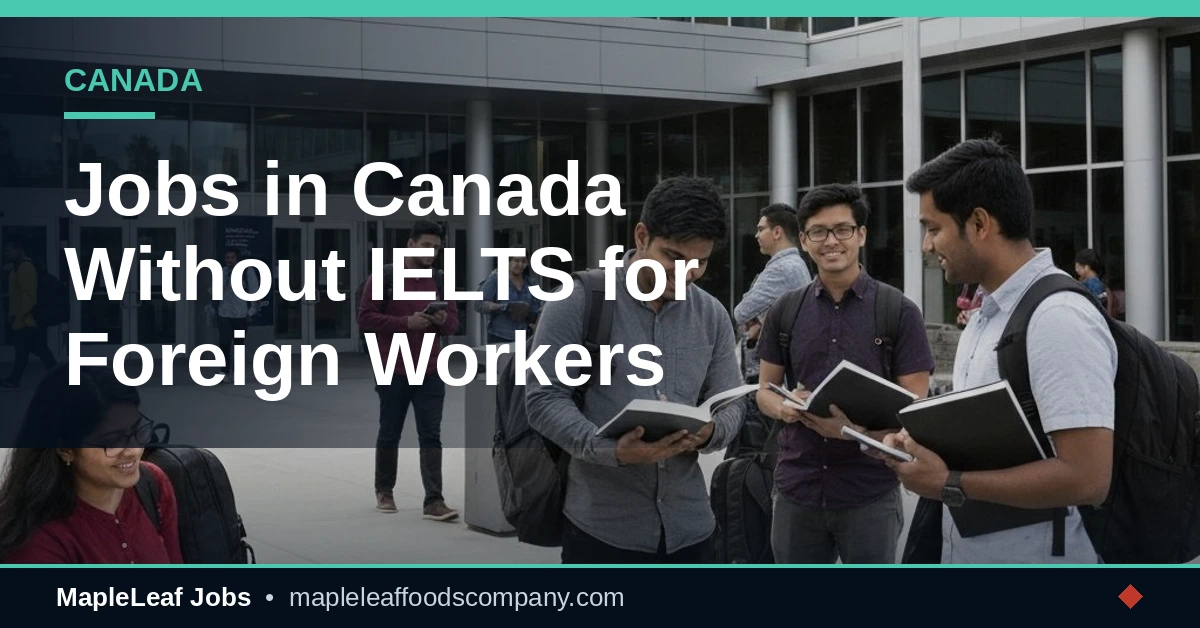
MapleLeaf Jobs is an independent international jobs and visa guidance service. It is not affiliated with Maple Leaf Foods, the food company.
When IELTS Is and Is Not Required
Think of IELTS as a tool for one kind of application, not a ticket for every job. Points-based streams use language scores to rank candidates, so a test result will usually be on the checklist if you apply through one, and the stream sets the level it wants. The picture changes on employer-led routes. There, the employer offers the job and supports the work permit, and the immigration file centres on the offer, the employer's paperwork and your identity documents — a language test is often simply not requested. Which side of that line your application falls on depends on the programme, occupation and province, so read the rules of the exact route you are considering on an official source before deciding whether to book a test. Do not assume a test is needed everywhere, and do not assume it is needed nowhere — check first.
What Level of English Employers Usually Expect
No test does not mean no English. For hands-on roles — warehouse picking, factory packing, farm work, food processing, kitchen help — employers generally look for working English: you hear an instruction once and carry it out, read a short notice, ask when unsure, and can say plainly that a machine has stopped or a delivery is short. That is a lower bar than fluent conversation, but a real one, and a supervisor will feel it within the first hour of a shift. Public-facing roles set the bar higher. Serving customers, answering a phone, caring for a resident or handling a till all require listening, explaining and responding in the moment, and employers there will probe your English harder at interview. The level is judged against the job, not against a textbook: a forklift driver and a receptionist are not measured by the same yardstick. If your English is shaky, building it up before you apply pays off twice — the work gets safer, and better roles open up sooner. You can browse current guidance on jobs and read more in articles.
Ways to Show Your English Without a Test
Without a test score, your application itself becomes the evidence. A resume written in clear, plain English tells an employer you can write; a short, polite cover note does the same. A video interview is the strongest proof of all, because the employer hears you listen, think and answer in real time — practise the usual questions out loud beforehand, rather than memorising answers. Past work is useful too: if a previous job was done in English, name it and describe what you did in that language, and ask a former supervisor who saw your English at work to act as a reference. Course certificates from an English class can help, especially if they name the level you reached. What you must never do is invent a score or buy a certificate. A false language result is easy for an officer to question, and being caught with one can close doors on later applications as well.
How the Hiring and Work Permit Process Usually Works
The sequence is familiar: a vacancy is listed, applications come in, a shortlist is interviewed, and one candidate gets an offer. On no-IELTS routes the interview carries extra weight, doubling as the employer's language check — expect questions about your last job, about safety, and about handling a problem on the floor, and answer in English even if the interviewer offers another language. Once an offer is made, the employer's paperwork begins. In many cases that means a Labour Market Impact Assessment, or LMIA: the employer applies to show that no local worker was available for the role, and only then can the work permit application move forward. Our LMIA guide explains how that process works in more detail. After that, you normally lodge the permit application, give biometrics and attend a medical examination if asked, then wait. The wait varies from case to case, so keep your documents ready and avoid booking travel until the decision arrives in writing.
Documents to Prepare Before You Apply
A Canadian-style resume is the first document to get right. It lists jobs newest first, with employer, dates, workplace and duties, and leaves out personal details used on resumes elsewhere — no photo, no date of birth, no marital status, no mention of religion. Keep it to two pages, keep the language simple, and keep every claim true: an interviewer will ask about anything on the page. References help more than most applicants realise, so ask two former employers to confirm your work and keep their contact details at hand. Collect training certificates, licences and any English course certificates, and keep colour scans of everything in one folder. Our documents checklist lists the papers most applicants need and explains how to organise them. A passport with plenty of validity left is essential, and papers in a language other than English or French generally need a certified translation. Originals stay with you; copies go to the employer at the application stage. When you are ready to proceed, you can start through apply.
Scam Protection
Never share full passport details, a passport copy, bank details, passwords or one-time codes (OTPs) with anyone unverified. Verify the employer and any agent's licence through official channels first. Never pay a fee just because someone promises a guaranteed job, LMIA or visa. Never send money to a personal bank account. Nobody can sell you a work permit, a job offer or a visa, and nobody can promise you a guaranteed outcome. Anyone who claims they can is almost certainly running a scam. Be especially careful with offers that claim no IELTS, no experience and no interview are needed, because a real employer will always want to check that you can communicate and do the job. For help checking an agent, read how to check an agent's licence by country and how to spot fake job offer letters.
Frequently asked questions
Can I get a job in Canada without taking IELTS?
Yes, in many cases. Many employer-led work permit routes do not require an IELTS result, although some immigration programmes do. The requirement depends on the programme and the route, so check the rules for the route you are considering.
Will an employer still check my English if IELTS is not required?
Yes, usually through an interview or a practical assessment. Employers need to know that you can understand safety instructions and communicate with your supervisor and colleagues, so prepare for the interview in English.
Which jobs in Canada are most open to workers without IELTS?
Practical roles such as warehouse work, factory work, farm work, food packing, construction labour and kitchen work often do not require a test result, but the employer will still expect basic working English.
Should I take IELTS anyway?
It can help, especially if you later want to apply for permanent residence through a points based programme. Even without a test, improving your English before you apply will help you work safely and settle in faster.
How can I tell if a no-IELTS job offer from Canada is real?
Check the employer online, look for a real company website, address and contact details, and be cautious if you are asked to pay a fee, share sensitive documents, or accept quickly without an interview.
Disclaimer
No job, sponsorship or visa is promised. Final decisions rest with employers and immigration authorities. Rules vary by job, employer and programme and change over time. Pay is to be confirmed with the employer during recruitment. Fees and other costs vary — check official sources such as the relevant embassy and the employer before applying. This guide is general information only, not legal or immigration advice.
Apply for jobs abroad
Ready to apply? Browse current jobs and apply with your documents ready.