Farm Worker Jobs in Canada for Foreign Workers
Farm worker jobs in Canada for foreign workers: seasons, duties, skills, documents, hiring steps and scam warnings in one plain guide.
Canada · Working Abroad · Jobs & Visa Guidance
From cherry orchards in British Columbia to market gardens outside Toronto and grain fields across the Prairies, Canadian farms depend on seasonal hands to get crops planted, tended and gathered in. A foreign worker who is ready for outdoor work, early starts and a full day on their feet can find a place in that cycle. Employers look for steadiness instead: someone who turns up, follows instructions and treats the crop with care. The work changes with the weather, and living far from town is part of the picture on many farms. This guide explains the jobs, the farms, the hiring and permit steps, and the papers to prepare.
MapleLeaf Jobs is an independent international jobs and visa guidance service. It is not affiliated with Maple Leaf Foods, the food company.
What Farm Worker Jobs in Canada Involve
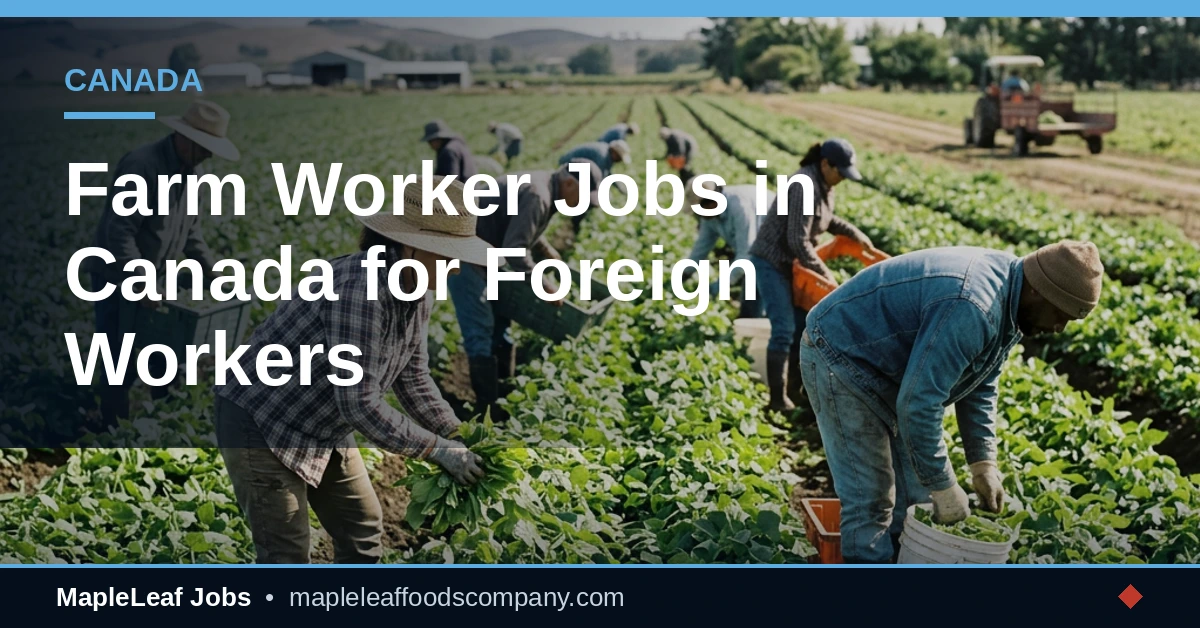
Farm work follows the crop, so the tasks change as the season moves on. In spring, workers prepare beds, sow seed, set out young plants and thin rows so each plant has room to grow. Through summer, the job is mostly tending and picking what ripens. Picking is done by hand for soft fruit and vegetables, choosing only what is ready and setting it down gently so it is not bruised. The harvest is then graded, boxed and stacked for the truck.
Autumn brings the main harvest on many farms, with longer days and a faster pace as the crop comes in before the weather turns. Grain and vegetable farms use machines for much of this stage, and workers may drive tractors or operate harvest equipment, but only once the farmer has trained and authorised them. On dairy farms, cows are milked twice a day, stalls are cleaned and calves are checked, whatever the season. In a greenhouse, workers tend rows of vegetables in a warm, humid space. Whatever the setting, follow the farmer's method.
Types of Farms and Seasons Hiring Foreign Workers
The kind of farm sets the calendar. Fruit farms in British Columbia and Ontario hire most heavily from late spring, when cherries, berries and apples ripen in turn, and the work runs through to the autumn pick. Market gardens near cities grow a wide mix, with steady picking through the summer and a big lift at harvest. Grain farms on the Prairies need fewer hands but for longer stretches, around seeding and harvest. Vineyards need pruners in winter and pickers in the autumn.
Some farm work carries on all year: dairy and poultry farms milk, feed and clean every day, and greenhouses grow through the winter under glass. Some farms are a short drive from a town, while others are well out in the country, where workers often live in farm housing. Before saying yes, find out how long the season runs, what the hours look like and where you would sleep. More background on farm roles is in articles, and current guidance is on jobs.
Skills, Fitness and Safety at Work
A farmer judges a new worker quickly, and the signs are small: fruit set down without a bruise, a row weeded without pulling the crop, an animal handled calmly, a crate stacked so it does not topple. Pace matters at harvest, but speed that damages the crop is worse than a careful hand. If you have worked with crops, animals or a garden before, describe it in your application in plain terms.
The work is demanding on the body. Days start early, and much of the time is spent bending, reaching, carrying crates and walking uneven ground, in sun, rain or cold. Dress for the weather, and drink water through the day. Lift a full crate the safe way, and share a heavy load. Machinery is used only by workers the farmer has trained. Sprays are handled only by trained staff, and animals are always approached calmly. If a job looks dangerous, stop and ask the person in charge.
How the Hiring and Work Permit Process Usually Works
Farm hiring usually begins with the employer listing a vacancy and reading through applications for people whose background fits the season and the work. Those who fit are often invited to a video or telephone call about past farm work and whether they can stay for the full season. If the employer wants to proceed, they send a written offer with the role, the farm location and the main terms.
An offer alone does not allow you to start work or to travel. For many farm roles the employer first asks the government to confirm that the job could not be filled by a worker already in Canada, and that confirmation is called an LMIA. Our LMIA guide describes that process in more detail. Once the employer holds what is needed, you usually apply for a work permit, give biometrics and attend a medical examination if asked, then wait for a decision.
Documents to Prepare Before You Apply
Start with a resume written in the Canadian style: jobs in order, most recent first, each with the employer's name, the dates, the type of farm and the tasks you did. A Canadian resume usually skips personal details and photographs, so leave those out. Keep it to one or two pages. Ask earlier employers for short reference letters, and gather any training certificates you hold.
Your passport should still have a good stretch of validity left, and clean scans of the photo page are worth keeping. Keep education records and proof of past work together. Papers in another language may need an official translation. The documents checklist walks through the papers most applicants need and a simple way to keep them in order. Keep the originals with you. When the folder is complete, you can begin through apply.
Scam Protection
Never share full passport details, a passport copy, bank details, passwords or one-time codes (OTPs) with anyone unverified. Verify the employer and any agent's licence through official channels first. Never pay a fee just because someone promises a guaranteed job, LMIA or visa. Never send money to a personal bank account. Nobody can sell you a work permit, a job offer or a visa, and nobody can promise you a guaranteed outcome. Anyone who claims they can is almost certainly running a scam. For help checking an agent, read how to check an agent's licence by country and how to spot fake job offer letters.
Frequently asked questions
Do I need previous farm experience to work in Canada?
Not always. Some employers hire workers with no farm experience and provide training, while others prefer applicants who have worked on a farm or with animals or crops before. Experience helps, but fitness, reliability and a willingness to work outdoors are also valued.
Can I apply for farm jobs in Canada from outside Canada?
Yes, you can apply from outside Canada, but only to employers who are willing to hire foreign workers. Read each posting carefully, check who can apply, and ask the employer whether they will support a work permit application before you assume anything.
Does a job offer mean I can start work in Canada straight away?
No. A job offer is only the first step. You usually still need a work permit, and in many cases the employer needs an LMIA first. Do not travel to Canada for work until you have a work permit decision in writing from immigration authorities.
Is farm work in Canada seasonal?
Much of it is. Crop work follows planting and harvest seasons, so some roles last for part of the year, while dairy, livestock and greenhouse work often continues all year round. Ask the employer how long the role lasts and what happens when the season ends.
How can I tell if a farm job offer from Canada is real?
Check the employer online, look for a real farm or company website, address and contact details, and be cautious if you are asked to pay a fee, share sensitive documents, or accept quickly without an interview.
Disclaimer
No job, sponsorship or visa is promised. Final decisions rest with employers and immigration authorities. Rules vary by job, employer and programme and change over time. Pay is to be confirmed with the employer during recruitment. Fees and other costs vary — check official sources such as the relevant embassy and the employer before applying. This guide is general information only, not legal or immigration advice.
Apply for jobs abroad
Ready to apply? Browse current jobs and apply with your documents ready.