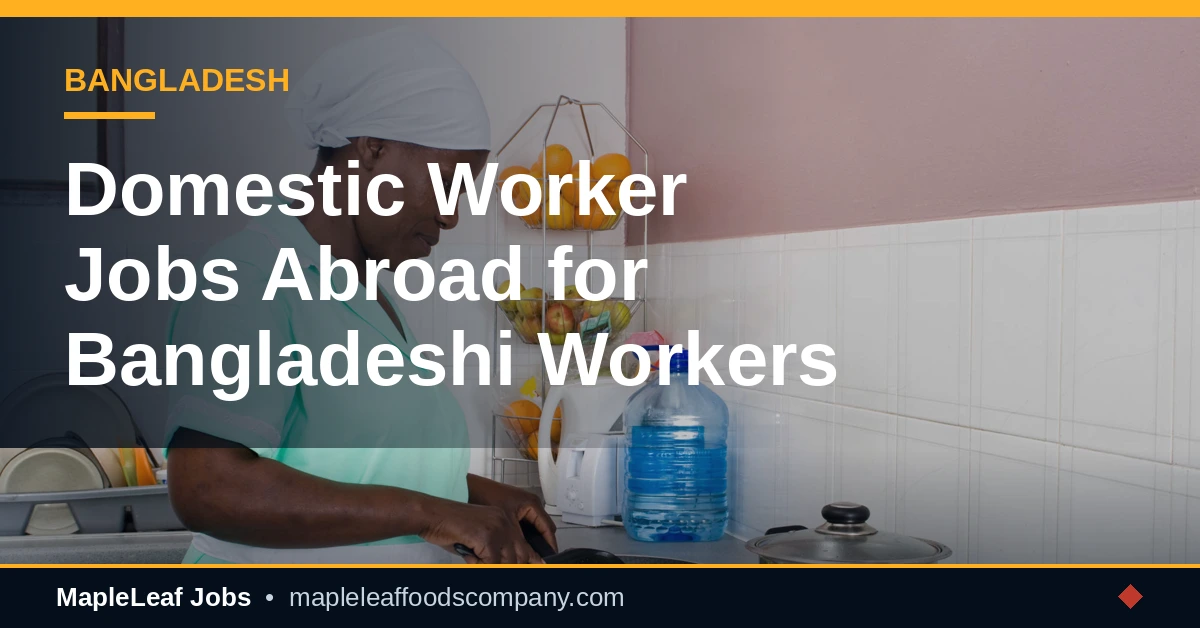
Domestic Worker Jobs Abroad for Bangladeshi Workers
Domestic worker jobs abroad for Bangladeshi workers: household roles, skills, contracts, documents, hiring steps and scam warnings in one plain guide.
Bangladesh · Working Abroad · Jobs & Visa Guidance
For many Bangladeshi workers, a domestic job abroad means joining a household overseas as a live-in helper — cooking the family meals, keeping the home clean, looking after children, or caring for an older relative, all under one roof. Homes in Saudi Arabia, the United Arab Emirates, Qatar and Kuwait regularly look for this kind of help, and many of those families prefer a worker who stays with them for a longer stretch rather than changing helpers every few months. What usually decides whether the placement works is not a certificate, but whether the worker is steady, honest and quick to learn the family's routines. Exact pay is confirmed by the employer while you are being recruited.
MapleLeaf Jobs is an independent international jobs and visa guidance service. It is not affiliated with Maple Leaf Foods, the food company.
A Working Day in a Household Abroad
Most live-in domestic days start early. You might wake the children, get them dressed and ready for school, and prepare breakfast while the house is still quiet. After the school run, the morning often belongs to cleaning: making beds, sweeping and mopping floors, wiping surfaces, running the washing machine and hanging laundry to dry. Lunch is usually the main cooked meal of the day, and in a Gulf home that can mean rice dishes, grilled meat or fish, salads and bread. Evenings bring the family back together, so dinner, clearing up and getting children ready for bed round off the day.
The Households That Hire Bangladeshi Domestic Workers
Not every household wants the same thing, and knowing the difference helps you choose well. A large villa family in Riyadh or Jeddah may have several children, a big house and frequent visitors, so the work is broad and the days are full. A working couple in a Dubai or Doha apartment may mainly need someone to look after a toddler through the day and keep the flat tidy. Before you say yes, ask who lives in the home and what a normal day looks like. More guidance is on the jobs page and in articles.
Cooking, Cleaning and Childcare: What Families Expect
Food is often the first thing a family notices. Many Bangladeshi workers cook rice, fish, lentils and vegetables confidently, and families abroad appreciate that — but a Gulf household will also expect you to learn its own dishes, such as spiced rice with meat, flatbreads, soups and salads, and to follow the family's tastes, including how spicy or salty the food should be. Cleaning is judged by the details: properly mopped floors, scrubbed bathrooms, and clothes washed, dried and ironed without being asked twice. If you have looked after children, cooked for a family, or worked in a hotel or a hospital kitchen before, say so plainly in your application, with the kind of place it was, what you did there and how long you stayed.
Language and Everyday Communication
You do not need fluent English to work in a household, but you do need enough to understand instructions and to ask questions. Most Gulf families speak to their domestic worker in English, sometimes mixed with Arabic, so a few Arabic words for the kitchen, the market and the children's school routine go a long way. Families value a worker who speaks up early when something is unclear instead of guessing, and who tells them straight away if something is broken or a child is unwell.
Your Contract: Read It Before You Sign
A written contract is what turns promises into something you can rely on. Before you sign, go through it slowly and make sure it names the duties, the daily hours, the weekly day off, any annual leave, the room you will sleep in, whether meals are included, and how much notice either side must give to end the arrangement. If a clause is written in a language you do not read well, ask for an explanation in words you understand, and do not sign a blank or half-filled page. Keep your own copy somewhere safe. Official labour channels or the Bangladesh embassy can advise if a problem cannot be settled with the family.
How Hiring Usually Happens, Step by Step
Most hiring starts when a family or a licensed agency puts out a vacancy and looks through the applications for people whose background and availability fit. Those who fit are usually invited to speak with the family on a video call, where the family will ask about your cooking, your cleaning, and how you handle children. An offer is a step forward, but it is not permission to travel — the visa process comes next, and it is usually the employer or sponsor who starts it. The exact route varies with the country, the job and the programme, and our Bangladesh jobs guide sets out the wider picture for Bangladeshi workers. After the paperwork is lodged, you may be asked for a medical check or fingerprints before the immigration authorities decide. Do not book travel until the visa decision is in your hands in writing.
Getting Your Documents Ready
Start with your passport, and check that it stays valid well beyond your planned travel date. Then put together a short, honest resume that lists your household experience in order — the kind of home or workplace, the duties you handled, and how long you worked there — and leave out anything the employer has not asked for. Scan every paper clearly and keep the originals safe. Bangladeshi workers should also follow the government's own guidance for overseas employment and check the rules of the country they are going to. Never hand your original papers to any employer or agent unless an official channel tells you to. The documents checklist walks through the usual papers and how to keep them organised. Once your papers are ready, you can begin through apply.
Scam Protection
Never share full passport details, a passport copy, bank details, passwords or one-time codes (OTPs) with anyone unverified. Verify the employer and any agent's licence through official channels first, and check that any recruitment agent in Bangladesh is properly registered before you deal with them. Never pay a fee just because someone promises a guaranteed job or visa. Never send money to a personal bank account. Nobody can sell you a work permit, a job offer or a visa, and nobody can promise you a guaranteed outcome. Anyone who claims they can is almost certainly running a scam. Be especially careful with agents who offer domestic work but will not name the employer, show a contract or explain the destination country's rules, because those are warning signs. For help checking an agent, read how to check an agent's licence by country and how to spot fake job offer letters.
Frequently asked questions
Do I need previous domestic work experience to work abroad?
Not always. Some employers hire workers with no domestic experience and train them in the household, while others prefer applicants who have worked in a household, hotel or childcare role before. Experience helps, but trust, honesty and a willingness to learn are also valued.
Can I apply for domestic worker jobs abroad from Bangladesh?
Yes, you can apply from Bangladesh, but only to employers who are willing to hire foreign workers. Read each posting carefully, check who can apply, and ask the employer whether they will support a work visa application before you assume anything.
Does a job offer mean I can start work abroad straight away?
No. A job offer is only the first step. You usually still need a work visa and residence procedures, and the employer or sponsor is usually involved in that process. Do not travel abroad for work until you have a visa decision in writing from immigration authorities.
What should be in a domestic worker contract?
The duties, working hours, weekly rest day, leave, accommodation, food arrangements and notice period should all be written down. Read the contract before signing, ask about anything unclear, and keep a copy safe.
How can I tell if a domestic worker job offer from abroad is real?
Check the employer online, look for a real household or agency with clear contact details, and be cautious if you are asked to pay a fee, share sensitive documents, or accept quickly without an interview or a written contract.
Disclaimer
No job, sponsorship or visa is promised. Final decisions rest with employers and immigration authorities. Rules vary by job, employer and programme and change over time. Pay is to be confirmed with the employer during recruitment. Fees and other costs vary — check official sources such as the relevant embassy and the employer before applying. This guide is general information only, not legal or immigration advice.
Apply for jobs abroad
Ready to apply? Browse current jobs and apply with your documents ready.