Warehouse Worker Jobs in Bahrain for Foreign Workers
Warehouse worker jobs in Bahrain for foreign workers: roles, skills, safety, documents, hiring steps and scam warnings in one plain guide.
Bahrain · Working Abroad · Jobs & Visa Guidance
Nearly everything Bahrain eats, wears or builds arrives by sea or across the King Fahd Causeway, and before any of it reaches a shop shelf it passes through a warehouse. That short journey — from a container at Khalifa Bin Salman Port to a storeroom in Manama or a hypermarket in Riffa — is where warehouse workers spend their day. Foreign workers fill many of these roles, and the work suits people who are practical, steady and comfortable on their feet. This guide gives no pay figure for any role; what a job pays is a question to raise with the employer during recruitment.
MapleLeaf Jobs is an independent international jobs and visa guidance service. It is not affiliated with Maple Leaf Foods, the food company.
Where the Goods Come From — and Where the Warehouses Sit
Bahrain is a small island, so warehouses are never far from a port, an airport or a main road. Containers land at Khalifa Bin Salman Port, trucks roll in from Saudi Arabia over the causeway, and air freight arrives at Bahrain International Airport. Much of what is unloaded is food: Bahrain imports most of its fresh produce, rice, meat and packaged groceries, so cold storage and chilled rooms are a large part of warehouse work here. Other common cargo includes household goods for the malls, building materials for construction sites, and spare parts for garages and workshops.
What a Shift on the Floor Looks Like
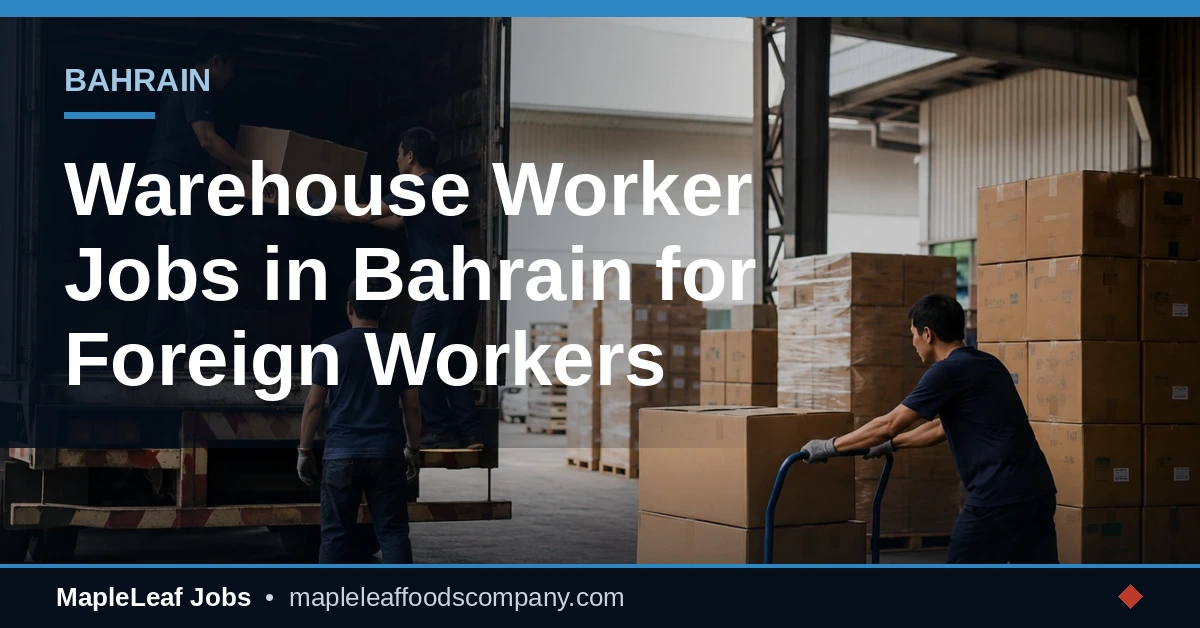
A typical day starts with a delivery. You help unload cartons and pallets, count them, and check the labels against the paperwork that came with the truck. Anything broken, short or past its date gets set aside and reported — a damaged carton that slips through becomes a complaint later. Once goods are accepted, they are carried or driven to their shelf or rack, and the location is recorded so the next person can find the item without hunting for it. Later in the day the flow reverses: orders arrive, you collect the items listed, wrap or box them, stick on the right label, and stack them ready for the delivery van. Some days are mostly unloading, others mostly packing. A supervisor usually sets the plan at the start of the shift.
Who Hires Warehouse Workers in Bahrain
The largest employers are the retail chains and their distribution centres — the big supermarkets and hypermarkets that supply dozens of branches from one site. Food importers and cold-storage companies are another large group, and they look for people who can work in chilled rooms and follow hygiene rules carefully. Then there are the freight and logistics firms around the port and airport, moving mixed cargo for many different customers, and the smaller trading houses that import one or two product lines and need a small team to handle everything. New starters usually get a short induction, and in a smaller firm you may be expected to pick up several jobs at once. Current openings and guidance are listed under jobs, with more background in articles.
Heat, Lifting and Staying Safe
Bahrain is warm for most of the year, and the summer months are hot and humid. Many warehouses are air-conditioned, but loading bays and outdoor yards are not, so drink water often and take the rest breaks the employer provides rather than pushing through. A chilled store can be near freezing, so wear the jacket the employer supplies. Lifting is part of the job, and the safe way to do it matters more than speed — bend your knees, keep the load close, and ask for a second person or a trolley when a carton is too heavy. Wear the safety shoes and any other protective gear you are given, stay inside the marked walkways where forklifts operate, and tell a supervisor straight away if you spot a spill, a damaged rack or a blocked exit. Never operate a forklift, pallet jack or any other machine until someone trained has shown you how and said you may use it.
From Application to Arrival
Most hiring starts with a vacancy notice: the employer lists the role, the shift pattern and what experience it wants, then reads the applications and picks a shortlist. Shortlisted applicants are usually contacted for a phone or video call, where the employer asks about past warehouse or factory work, shift availability and when the person could travel. If the employer wants to proceed, it sends a written offer — and that offer is only the start of the paperwork, not permission to travel. The employer normally handles the work visa and residence permit, and a medical check is usually part of the process before travel. Our Bahrain work visa guide explains the steps in more detail. Waiting times are not fixed and can stretch, so wait until the visa is actually issued before leaving a current job or booking a flight. If you decide to go ahead, the apply page is where the process starts.
Paperwork to Have Ready
Put your file together before you apply, not after an employer asks for it. A short resume works best: list your jobs in order, newest first, with the employer, the dates, the kind of workplace and what you actually did there — unloading, picking, packing, stock counts, driving a forklift. One or two pages is enough. Ask a former employer for a written reference if you can get one, and gather any certificates you hold, such as forklift or safety training. Your passport should have plenty of validity left, and it helps to hold clear scans of it plus your education and employment records in one folder. The documents checklist sets out the papers most applicants need and how to keep them in order. Papers in a language other than English or Arabic may need a certified translation. Hand over originals only through an official channel that you have verified — never to a stranger who asked for them by message. Workers in other trades can also read our construction and cleaning guide for Bahrain for comparison.
Scam Protection
Never share full passport details, a passport copy, bank details, passwords or one-time codes (OTPs) with anyone unverified. Verify the employer and any agent's licence through official channels first. Never pay a fee just because someone promises a guaranteed job, work visa or work permit. Never send money to a personal bank account. Nobody can sell you a work visa, a job offer or a residence permit, and nobody can promise you a guaranteed outcome. Anyone who claims they can is almost certainly running a scam. For help checking an agent, read how to check an agent's licence by country and how to spot fake job offer letters.
Frequently asked questions
Do I need previous warehouse experience to work in Bahrain?
Not always. Some employers hire workers with no warehouse experience and provide training, while others prefer applicants who have worked in a warehouse, factory or logistics role before. Experience helps, but reliability, fitness and a willingness to learn are also valued.
Can I apply for warehouse jobs in Bahrain from outside Bahrain?
Yes, you can apply from outside Bahrain, but only to employers who are willing to hire foreign workers. Read each posting carefully, check who can apply, and ask the employer whether they will support a work visa application before you assume anything.
Does a job offer mean I can start work in Bahrain straight away?
No. A job offer is only the first step. You usually still need a work visa and a residence permit, and you may need a medical examination first. Do not travel to Bahrain for work until your visa has been issued.
Do warehouse workers in Bahrain work nights and weekends?
Many warehouses operate in shifts, including evenings, nights and weekends, so these hours are common. The exact pattern depends on the employer and the role, so ask about shifts, start times and rest breaks before you accept a job.
How can I tell if a warehouse job offer from Bahrain is real?
Check the employer online, look for a real company website, address and contact details, and be cautious if you are asked to pay a fee, share sensitive documents, or accept quickly without an interview.
Disclaimer
No job, sponsorship or visa is promised. Final decisions rest with employers and immigration authorities. Rules vary by job, employer and programme and change over time. Pay is to be confirmed with the employer during recruitment. Fees and other costs vary — check official sources such as the relevant embassy and the employer before applying. This guide is general information only, not legal or immigration advice.
Apply for jobs abroad
Ready to apply? Browse current jobs and apply with your documents ready.