AC Technician Jobs in the UAE for Foreign Workers
AC technician jobs in the UAE for foreign workers: cooling system work, repair skills, safety, shifts, documents and how to apply safely.
UAE · Working Abroad · Jobs & Visa Guidance
Air conditioning is essential in the United Arab Emirates, where the heat lasts for much of the year and every home, office, shop, hotel and villa depends on cooling. AC technicians keep those systems running: installing new units, servicing them, finding faults and fixing them when they stop cooling. For foreign workers with technical skills, this is a steady trade, because demand stays high all year and rises sharply in the hottest months. Employers look for technicians who understand cooling systems, work safely with electricity and refrigerant, and treat customers politely in their homes and workplaces. This guide sets out the duties, the abilities employers want, and the route to apply. For any AC technician role, pay is to be confirmed with the employer before you start.
MapleLeaf Jobs is an independent international jobs and visa guidance service. It is not affiliated with Maple Leaf Foods, the food company.
What an AC Technician Does Every Day
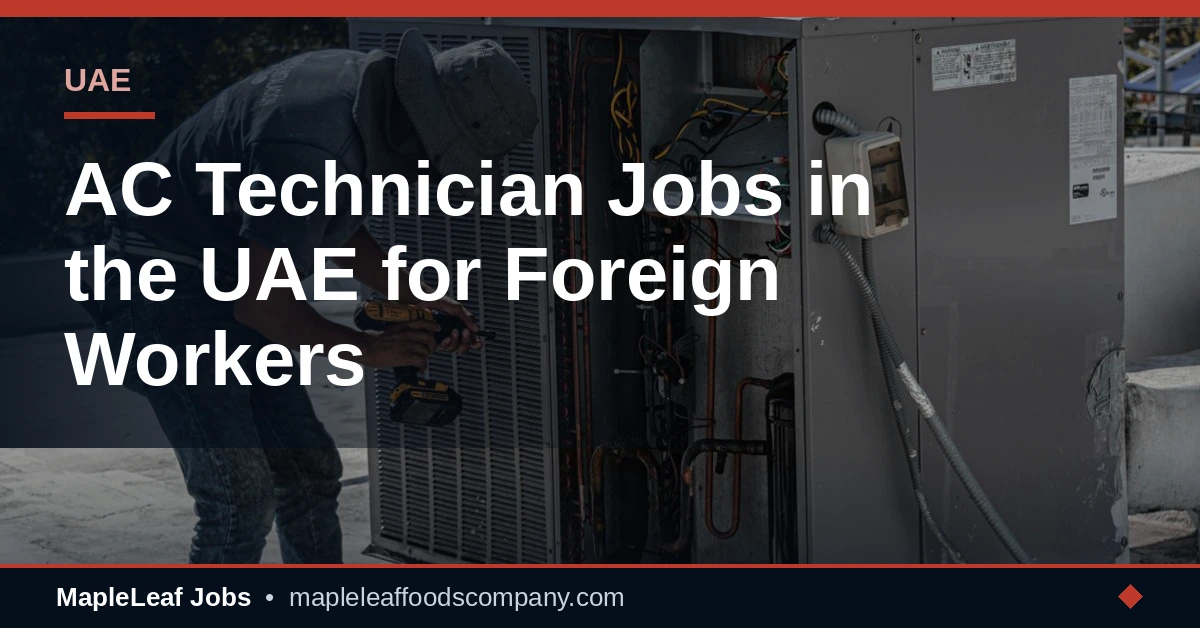
An AC technician's day is a mix of planned service visits and call-outs to fix breakdowns. A typical service visit means cleaning filters and coils, checking the outdoor condenser unit, testing the thermostat, and making sure the system cools evenly and drains properly. A repair visit starts with diagnosis: listening to the customer's description, checking power, controls and refrigerant, and finding the fault before replacing a part. The work moves between villas, apartments, offices, shops and hotels, so every day brings different buildings, different systems and different customers. Customers remember the technician who works tidily, explains the fault clearly, and leaves the system cooling properly. See the latest guidance on jobs and explore more background in articles.
Cooling Systems, Tools and Technical Skills
AC technicians in the UAE work on several kinds of systems, and the type you know shapes the roles you can take. Split units are the most common in homes and small offices, with one indoor unit and one outdoor condenser. Larger buildings use ducted systems, packaged units or central chilled-water systems, which need more knowledge and teamwork. Whatever the system, employers value the same core skills: understanding how cooling works, reading gauges and wiring diagrams, using hand tools and meters safely, and finding faults step by step instead of guessing. A certificate from a recognised technical training body helps, and a record of past work, including the systems you have serviced and the faults you have fixed, helps an employer judge your level.
Safety, Electricity and Working in Homes
AC work mixes electricity, refrigerant, heights and heat, so safety rules are not optional. Always isolate the power before opening a unit, test that it is dead, and never work on live wiring. Handle refrigerant only in the way you were trained, and never vent it carelessly. When working on rooftops or ladders, check that the ladder is secure, wear suitable footwear, and never lean out beyond a safe reach. In the UAE heat, drink water during breaks, rest in shade, and watch for signs of heat exhaustion in yourself and in colleagues. Inside a customer's home or office, be polite and tidy: use covers where needed, clean up after the work, and leave the area as you found it. A technician who works safely and respectfully protects the customer, the employer and themselves.
Hours, Rotas and the Hot Season
AC technicians in the UAE usually work days, but the rota stretches when the heat arrives and call-outs pile up. Summer brings longer days, evening visits and weekend cover, often shared out on a rota so everyone takes a turn. A failed cooling system in a home or office cannot always wait until morning, so some firms keep an on-call list for urgent jobs. You should know your roster in advance, with rest breaks during the day and a weekly rest day included. Ask before accepting how the summer rota works, how on-call duties are shared, and how travel between jobs is arranged. If the firm supplies a vehicle or tools, ask what the terms are. Rooftops are hot and the days are long, so drink water, rest between shifts, and take your time on jobs that need care.
Applying, Testing and the Visa Steps
Employers hiring AC technicians from abroad start by reading applications and shortlisting people whose experience fits the systems they service. Expect an interview by video call, where you will be asked about the units you have serviced, the faults you have traced, and the tools you use. Shortlisted candidates are often given a practical exercise, such as tracing a cooling fault or talking through a service visit step by step. A successful candidate receives a written offer naming the role, the area, the hours and the start date. After you accept, the employer lodges the work permit and entry permit, and you go for a medical fitness test and biometrics for the residence visa. Gather your papers ahead of time: a short resume of your AC jobs, your technical certificates, a passport with plenty of validity left, and references from earlier employers if you have them. Read the UAE work visa process guide for the full sequence, and gather everything with our documents checklist.
Good Habits That Build Trust
A reliable AC technician tests before replacing parts: check the power, the controls, the filters and the refrigerant first, find the real fault, and explain it to the customer in plain words. Work tidily, keep your tools in order, and check that the system cools evenly and drains properly before you leave. Keep a written note of every visit — fault, parts used, result — so the next technician can follow your work. Learn the faults that come up again and again on the brands and systems you service, and keep learning as new systems arrive. Share what you know with helpers and junior staff, and take advice from senior technicians. If you find wiring or refrigerant work that looks unsafe, report it to your supervisor rather than walking past it. Employers keep the technicians who are honest, careful and courteous with customers, and those are the ones offered longer work. When you feel ready, begin the process through apply.
Scam Protection
Stay cautious with anyone who contacts you about a job and asks for documents or money. Keep your full passport details, passport copy, bank details, passwords and one-time codes private until you are dealing with a verified employer through a proper channel. Check the employer and any agent's licence through official channels, and treat a fee for a promised job or visa as a warning sign. Money sent to a personal bank account is very hard to recover. A work permit, a job offer and a visa cannot be bought from any person, and no one can promise an outcome that only the employer and the immigration authorities can decide. Ask for the employer's full name, website and contact details, and insist on a written offer that sets out the terms clearly. For help checking an agent, read how to check an agent's licence by country and how to spot fake job offer letters.
Frequently asked questions
What AC technician jobs in the UAE are open to foreign workers?
Installation, servicing and repair of split units, ducted systems and packaged units in homes, offices, shops and hotels are the common openings.
Do I need a technical certificate to work as an AC technician in the UAE?
A certificate from a recognised technical training body helps a great deal, and many employers ask for a practical check as well.
Will I have to take a practical test before I am hired?
Many employers ask shortlisted technicians to diagnose a common fault or describe how they would service a unit.
Do AC technicians in the UAE work nights and weekends?
Technicians usually work a regular daytime week, but evenings, weekends and on-call cover are common in the hottest months when call-outs rise.
Can I begin work in the UAE as soon as I get an offer?
Not yet. The offer is only the beginning of the process. The employer still needs to arrange the work permit and entry permit, and you still need to complete the medical fitness test and biometrics. Travel only after those permits are approved.
Disclaimer
Nothing in this guide promises a job, sponsorship or visa. The employer and the immigration authorities make the final decisions, and rules vary by job, employer and programme and change over time. Pay is to be confirmed with the employer during recruitment. This is general information only, not legal or immigration advice.
Apply for jobs abroad
Ready to apply? Browse current jobs and apply with your documents ready.