AC Technician Jobs in Saudi Arabia for Foreign Workers
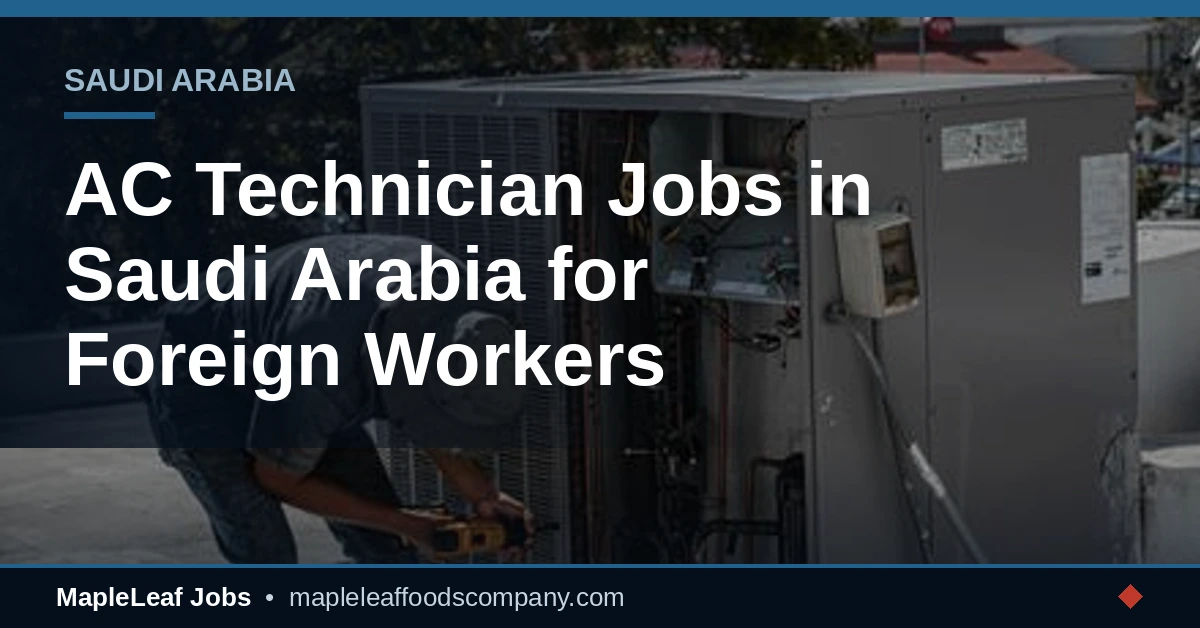
AC technician jobs in Saudi Arabia for foreign workers: split and central cooling, installation and repair, tools, safety, hiring steps and scam warnings.
Saudi Arabia · Working Abroad · Jobs & Visa Guidance
In a country where summer heat is fierce and air conditioning runs for most of the year, the AC technician is one of the most in-demand tradespeople. Every home, office, mosque, mall and hotel depends on cooling that works without fail, and when a unit stops, the call goes out for a technician who can find the fault and fix it fast. Many of those technicians came from abroad, bringing skills learned at home and sharpened on Saudi sites. This guide explains the kinds of cooling work on offer, the skills that matter, how a working day unfolds and what to check before accepting a post. The amount paid for any AC technician role is to be confirmed with the employer during recruitment.
MapleLeaf Jobs is an independent international jobs and visa guidance service. It is not affiliated with Maple Leaf Foods, the food company.
The Cooling Systems Technicians Work On
The most common system in Saudi homes is the split air conditioner, with an indoor unit on the wall and an outdoor condenser on the roof or balcony. Window units are still found in older buildings, while larger villas, offices and malls use ducted systems, packaged units or central chilled-water plants. A technician may also meet VRF systems, where one outdoor unit serves several indoor units, each controlled separately. The work varies by system: a split unit may need a gas top-up, a cleaned filter or a new capacitor, while a central plant may need a pump repair, a valve replacement or a full service schedule. Readers can look at current guidance on jobs and browse wider background reading in articles.
Fault Finding: The Skill That Sets a Technician Apart
Anyone can change a filter; the technician who earns repeat calls is the one who finds the real fault. A unit that cools weakly may have low refrigerant, a blocked coil, a failing fan motor or a sensor giving wrong readings, and guessing wastes time and parts. A good technician listens to the customer, checks the symptoms, measures pressures and temperatures with gauges, tests the electrics with a meter and works through the possibilities in order. The Qatar electrician guide covers the electrical side of trades work in the Gulf.
Installation, Maintenance and Service Contracts
Much of a technician's work is not repair but planned maintenance. Hotels, offices, hospitals and malls sign service contracts under which a technician visits on a schedule, cleans coils and filters, checks gas pressures, tightens electrical connections, tests the drainage and records the readings. Installation is the other large part: fitting a new split unit, running copper pipework and drainage, mounting the outdoor unit securely, vacuuming the lines and commissioning the system. A technician who keeps clear records of each job — unit model, fault found, parts used — builds a reputation for honest work.
Tools, Transport and a Working Day
A technician's day starts with the tool bag: gauges, a multimeter, a vacuum pump, spanners, screwdrivers, a leak detector and spare parts such as capacitors, contactors and filters. Many employers provide a van, since the job means travelling between homes, offices and sites, and a technician may visit several customers in a day. Each visit follows a pattern: greet the customer, listen to the problem, inspect the unit, explain the fault in plain words and carry out the repair. Good technicians explain what they are doing and why, and they clean up after themselves. The work is physical — climbing to roof units, working in hot plant rooms and carrying equipment — so fitness and care with heat matter.
What Employers Look For
Hands-on experience is the first thing an employer asks about, and a technician who can describe real faults found and fixed will impress more than one who only lists course names. A diploma or certificate in refrigeration and air conditioning helps, especially for central systems, and employers often ask to see it. A driving licence is a strong advantage, since many roles involve travelling between jobs. Basic English helps with manuals, parts catalogues and customers, and a little Arabic helps even more. Employers value technicians who are honest about what a repair will cost, who do not invent faults to sell parts, and who turn up when promised.
Hiring and the Visa Steps
AC technicians are usually hired by a maintenance company, a contracting firm or a facilities management company, which acts as the sponsor. Recruitment often starts with an agency in the worker's home country, which collects applications and forwards candidates whose experience matches the employer's needs. A shortlist leads to a phone or video interview, where the employer asks about the systems the technician has worked on, the faults they can diagnose and any certificates held. A practical test after arrival is common. When a post is offered, the terms should arrive in writing, naming the role, the workplace, the working hours, the weekly day off and the transport and accommodation arrangement, and the worker should read them carefully before agreeing. After that, the employer starts the work visa process, while the worker gathers the documents the employer asks for: a travel document with plenty of validity left, a police clearance certificate from home and any trade certificates. A health examination, done before departure and repeated after arrival, is expected along the way. The Saudi work visa process guide sets out the order of these steps, and the documents checklist helps a worker tick off every paper that is usually asked for.
Problems Workers Sometimes Face
The most common difficulty is a job that turns out different from the one described, with a technician hired for repair work being asked to do unrelated labour. That should be raised with the supervisor in writing, with the worker keeping a copy. Another is wages that arrive late, which can be taken to the official labour channels, backed by the contract and any pay slips. Some technicians find that tools and spare parts are not supplied as promised, leaving them to buy their own, which is worth clarifying before departure. An AC technician who is ready can begin the process through apply.
Scam Protection
Never share full passport details, a passport copy, bank details, passwords or one-time codes (OTPs) with anyone unverified. Verify the employer and any agent's licence through official channels first. Never pay a fee just because someone promises a guaranteed job or visa. Never send money to a personal bank account. Nobody can sell you an AC technician job, a work permit or a visa, and nobody can promise you a guaranteed outcome. Anyone who claims they can is almost certainly running a scam. Be careful of agents who promise a technician post without asking about experience or certificates, and of anyone asking for payment to "book" a maintenance contract job. For help checking an agent, read how to check an agent's licence by country and how to spot fake job offer letters.
Frequently asked questions
What air conditioning systems will I work on in Saudi Arabia?
Split units are the most common in homes, with window units in older buildings and ducted, packaged or central systems in larger villas, offices and malls.
Do I need a certificate to work as an AC technician?
A diploma or certificate in refrigeration and air conditioning helps, especially for central systems, though demonstrated repair experience often matters just as much.
Is a driving licence useful for an AC technician?
Yes, many roles involve travelling between homes, offices and sites, so a licence is a strong advantage and sometimes a requirement.
What is the busiest time of year for AC work?
The hottest months bring the most breakdown calls, while cooler months are usually the time for servicing, maintenance contracts and new installations.
Who arranges the work visa for an AC technician?
The maintenance or contracting company acting as sponsor starts the work visa side, while the worker provides a travel document, police clearance and trade certificates, and goes through the health examinations.
Disclaimer
No job, sponsorship or visa is promised. Final decisions rest with employers and immigration authorities. Rules vary by job, employer and programme and change over time. Pay is to be confirmed with the employer during recruitment. This guide is general information only, not legal or immigration advice.
Apply for jobs abroad
Ready to apply? Browse current jobs and apply with your documents ready.